SHARE:


Developing innovative business models for the circular economy – The role of digitalization
PAST
EVENT
EVENT
Jun 26, 2018
00:00 - 00:00

Myrthe van der Plas, Manager, PWC
Gaurav Sharma, Director for Circular Business Models, Schneider Electric
Maximilian Müller, Project Manager EU and International Affairs, VDI ZRE
Sira Saccani, Director, Sustainable Production Systems, Climate-KIC
Adrian Wain, Sustainability Lead for UL EHS Sustainability, UL
Edward Vingwe, PhD Fellow, Aalborg University
Vesa Vanhanen, Deputy Head of Unit for Digitisation of the Single Market, DG GROW, European Commission
Annika Hedberg, Senior Policy Analyst, European Policy Centre (Moderator)
Gaurav Sharma, Director for Circular Business Models, Schneider Electric
Maximilian Müller, Project Manager EU and International Affairs, VDI ZRE
Sira Saccani, Director, Sustainable Production Systems, Climate-KIC
Adrian Wain, Sustainability Lead for UL EHS Sustainability, UL
Edward Vingwe, PhD Fellow, Aalborg University
Vesa Vanhanen, Deputy Head of Unit for Digitisation of the Single Market, DG GROW, European Commission
Annika Hedberg, Senior Policy Analyst, European Policy Centre (Moderator)
The EPC’s Europe’s Political Economy Programme (EPE) focuses on EU economic governance, the single market, and digital, industrial, energy, trade, and economic security policies amid significant geo-economic and technological shifts. In a world of rising geopolitical competition and a fragmenting economy, the EPE has been at the forefront of research on Europe’s competitiveness agenda, the "triple" green, digital and economic security transitions and "wartime economy". The EPE's cross-programme flagship initiative, the Brussels Economic Security Forum, examines EU-US-China dynamics, changing international economic rules and statecraft, as well as related EU policy challenges. As fast-advancing components of economic security, critical emerging technologies in clean tech, semiconductor and AI value chains and quantum are priority areas of focus. Using its convening power and multistakeholder taskforce model, the Programme aims to provide in-depth analysis and actionable recommendations to tackle key policy challenges. The EPE team comprises a diverse group of analysts with backgrounds from government, the private sector, academia, and journalism, bringing a broad range of expertise to its work.
The Sustainable Prosperity for Europe (SPfE) Programme explores the foundations and drivers for achieving a sustainable, resilient and competitive European economy.
Prospering within the planetary boundaries requires rethinking our economic model, including our production and consumption patterns, as well as our energy, mobility and food systems. It requires addressing the climate emergency and environmental degradation, as well as becoming smarter with the resources we have. The transition to the world we want must bring both businesses and people along, if it is to succeed.
The Paris Agreement and the Sustainable Development Agenda provide the direction for travel globally and in Europe, and the SPfE Programme engages in a debate on the drivers and the means for achieving our goals. The Programme focuses on areas where working together across the EU can bring significant benefits to the member states, citizens and businesses and can ensure sustainable prosperity within the limits of this planet.
Coming next
Oct 28, 2026
14:00 - 15:30

Hybrid
Oct 29, 2026
11:00-12:30
Hybrid

Nov 06, 2026
12:30 - 13:30

In Person
Nov 12, 2026
09:00 - 10:00

Online

Dec 02, 2026
14:00-18:30
In Person
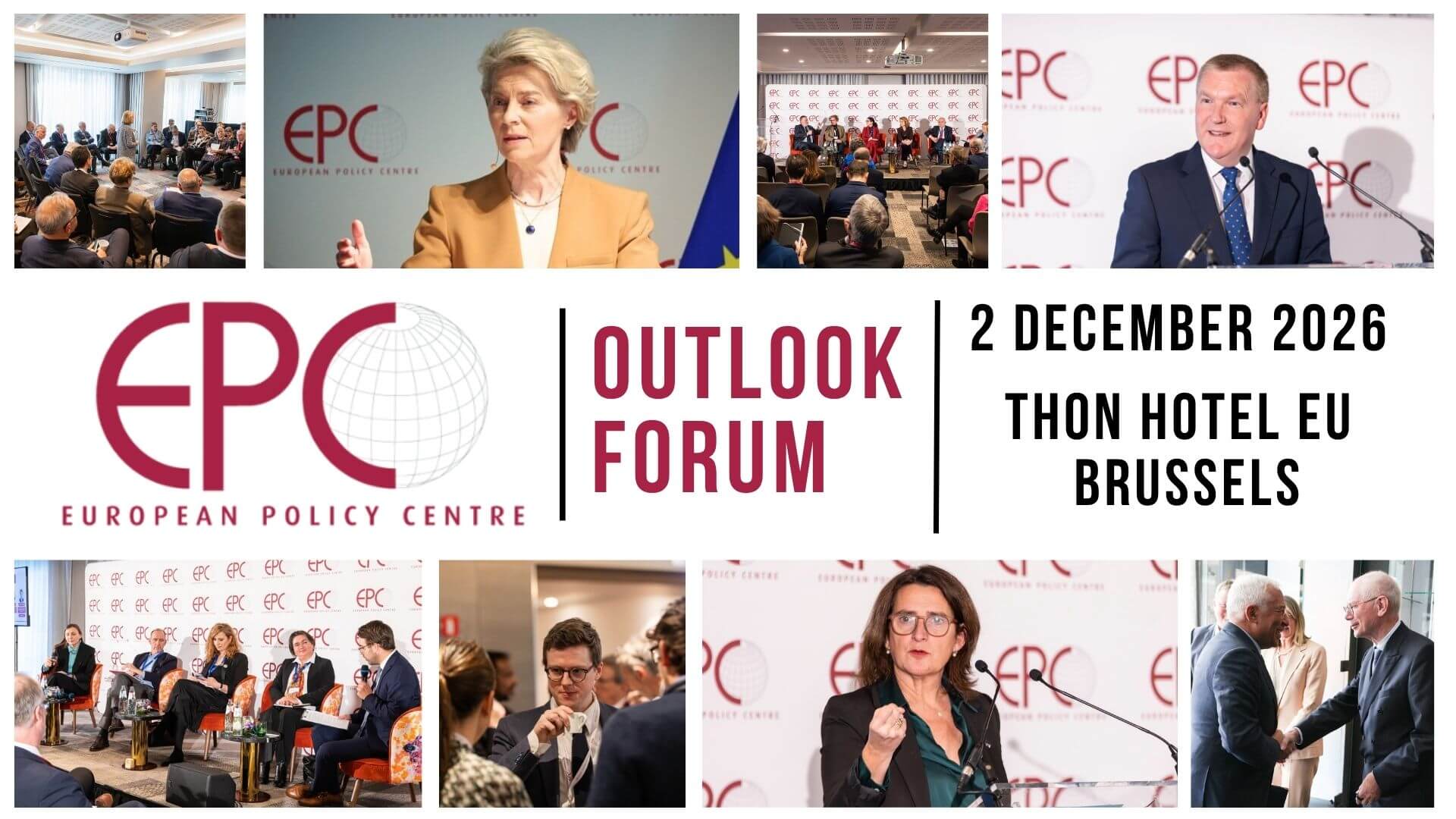
Inaugural EPC Outlook Forum