

EVENT
 In Person
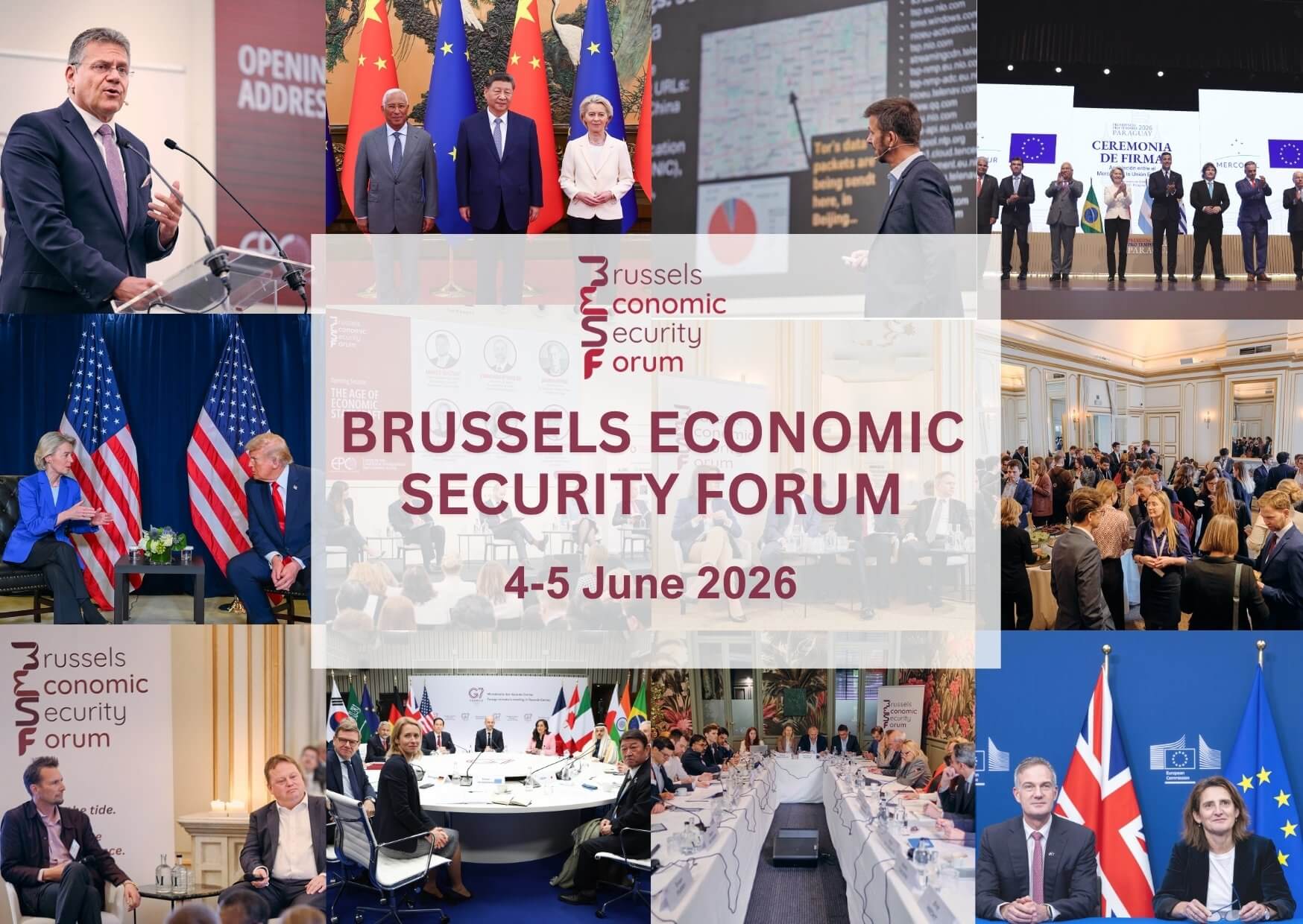
Please read about #BESF2026 here (link to x and web post) and see the pictures from the BESF 2026 Summit here.
Follow the BESF LinkedIn page for updates on ongoing Brussels Economic Security Forum activities.
For any questions, please contact Ian Hernandez i.hernandez@epc.eu
Stay tuned for #BESF2027.
Programme
The final agenda of #BESF2026 in PDF version is available here.
Thursday 4 June
08:00 - 12:30 Closed-door Sessions (by invitation only)
Early Bird Breakfast Discussions
- 08:00-8:45 | From Diversification to Deal-Making: Europe’s New Geoindustrial Deal
- 08:00-8:45 | Can Europe Keep its Critical Technological and Industrial Assets?
Morning Roundtables First Session
- 09:00-10:30 | Roundtable 1: Breaking Dependencies: Can Europe Build its Own Digital Ecosystems?
- 09:00-10:30 | Roundtable 2: What is Quality FDI? The Automotive Sector as Europe’s Test Case
- 09:00-10:30 | Roundtable 3: European Preference across Strategic Sectors: Defining Vulnerabilities and Capabilities in Pharma and Clean Tech
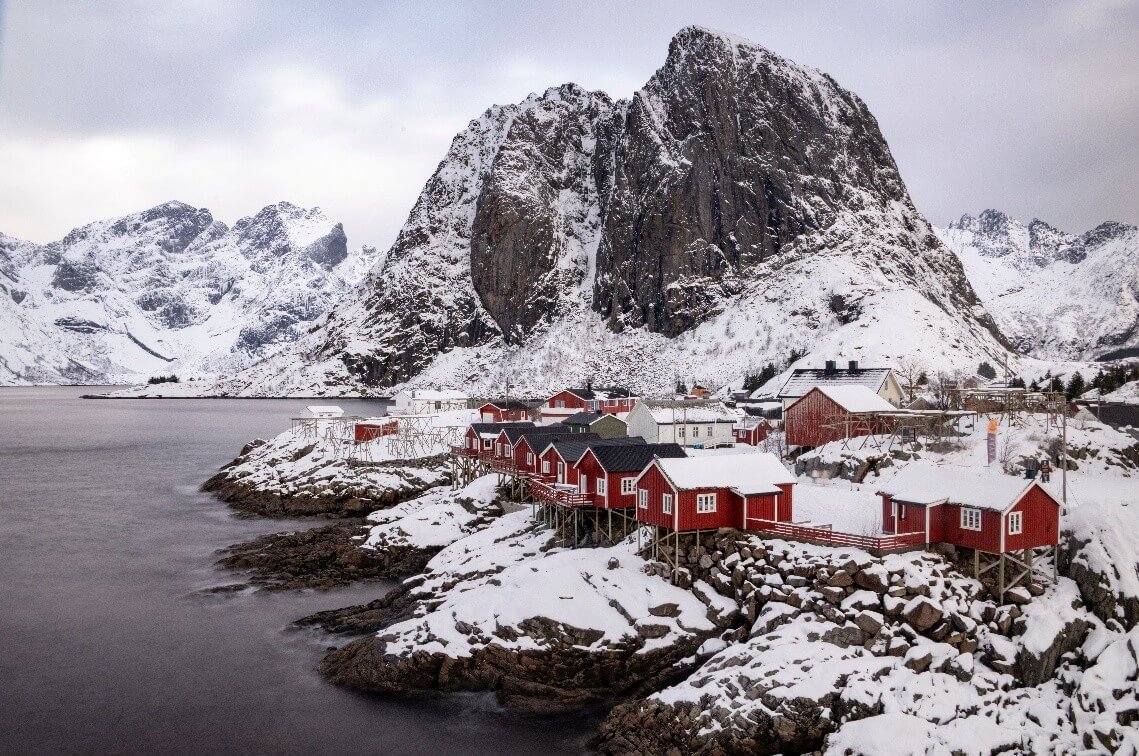
- 09:00-10:30 | Roundtable 4: Economic Security and the Artic
Morning Roundtables Second Session
- 11:00-12:30 | Roundtable 5: From Reliance to Resilience: Rethinking the EU–US Economic Partnership
- 11:00-12:30 | Roundtable 6: Avoiding Friendly Fire: Aligning EU and Indo-Pacific Economic Security Strategies
- 11:00-12:30 | Roundtable 7: Economic Security and China: Where to Draw the Line?
14:00 - 14:30 Opening Keynote and Conversation - Mobilizing Economic Strength for Europe’s Security
- Kęstutis Budrys, Minister of Foreign Affairs of Lithuania
- Fabian Zuleeg, Chief Executive and Chief Economist, European Policy Centre
- Conference Moderator: Shona Murray, European Affairs Correspondent, Euronews
14:30 - 15:30 Opening Session – A World in Crisis: Can We Avoid Global Economic Dislocation?
Successive shocks to trade, supply chains, and energy have laid bare the fragility of economic interdependence, triggering a global race to secure critical inputs, reshore industries, and reduce exposure to external shocks. Yet the pursuit of economic security risks becoming self-defeating: as major economies turn inward, competition over resources, technology, and industrial capacity is hardening into a more fragmented and coercive global order. For import-dependent economies, the stakes are especially high in a world where access to critical inputs is increasingly politicised and where vulnerability is no longer shared equally. In this opening session, leading policymakers and experts will confront a central question: can states secure themselves without accelerating the very fragmentation they seek to guard against, and if not, what does cooperation look like in an era of economic rivalry?
- Richard Baldwin, Professor, IMD Business School
- Julia Friedlander, CEO, Atlantik-Brücke
- V. Anantha Nageswaran, Chief Economic Advisor to the Government of India
- Kinga Redlowska, Head of the Centre for Finance and Security, RUSI Europe
- Denis Redonnet, Deputy Director-General, DG Trade and Economic Security, European Commission
- Satvinder Singh, Deputy Secretary-General, ASEAN
- Moderator: Paweł Świeboda, Brussels Economic Security Forum Co-Director, Senior Visiting Fellow, European Policy Centre
16:00 - 16:45 Global Imbalances in Focus– China’s Export Surge, America’s Retrenchment, Europe’s Squeeze?
China’s slowing domestic economy, overcapacity and export-driven industrial model are colliding with a United States increasingly willing to use tariffs, subsidies and financial power to protect its economy. The result is not just a trade dispute but a structural macro-imbalance shock to the global economic order. For Europe, the risk is acute: a flood of redirected Chinese exports, industrial wipe-out and increasing structural dependencies, and mounting pressure to choose between openness and economic security. Are we entering a new era of persistent global imbalance, currency tension and economic fragmentation? In this high-level fireside chat, leading economists and policymakers debate the emerging fault lines of the world economy and whether Europe is prepared for what comes next.
- Michael Pettis, Professor, Peking University
- Maria Demertzis, Professor, European University Institute
- Martin Sandbu, European Economics Commentator, Financial Times
- Moderator: Georg Riekeles, Co-Director, Brussels Economic Security Forum ; Associate Director, European Policy Centre
16:45 - 17:00 Policy Deep Dive – Europe’s Financial Dependencies
Europe’s financial system remains deeply interconnected with global infrastructures, exposing critical vulnerabilities in payments, clearing, and currency dominance. From reliance on non-European payment networks to the strategic implications of dollar centrality, financial dependencies are emerging as a core dimension of economic security. As debates around a digital euro and sovereign payment systems gain momentum, this session will examine how Europe can strengthen resilience, enhance autonomy, and navigate the balance between integration and control in an increasingly contested financial landscape.
- Maria Demertzis, Professor, European University Institute
- Martin Sandbu, European Economics Commentator, Financial Times
17:00 - 18:00 Second Session – The New Geoeconomics of Energy
A single chokepoint has pushed the global energy system to the brink. The escalation in the Middle East and the disruption of the Strait of Hormuz have exposed just how quickly energy flows and the economies they sustain can be thrown into turmoil, with immediate consequences for prices, markets, and geopolitical stability. But the alternatives offer no easy escape. The clean energy transition is not dissolving dependencies; it is rewiring them towards critical minerals, technologies, and supply chains that are increasingly concentrated and contested. In this landscape, energy is not just a commodity but a tool of leverage. Bringing together ministers and leading experts from across continents, this session will confront the implications of the current crisis: what will it mean for the world’s and Europe’s energy security, and how will it reshape global energy geopolitics, markets, and policy choices in the years ahead?
17:00 - 17:10 Witness Report: Critical Infrastructure Threats – Lessons from Ukraine
- Iryna Skliar, Director, Representative Office in Brussels, Naftogaz
17:10 - 18:00 Panel Conversation
- Heba Aguib, Member of the Board, BMW Foundation Herbert Quandt
- Cristina Lobillo, Director Energy Security and International Relations, DG Energy, European Commission
- Olav Aamlid Syversen, Vice President Political and Public Affairs, Equinor
- Tinne Van der Straeten, CEO, WindEurope ; Former Minister of Energy of Belgium
- Karen Young, Senior Research Scholar, Centre on Global Energy Policy, Columbia SIPA
- Moderator: Wojciech Przybylski, Editor in Chief, Visegrad Insight
Friday 5 June
08:45 - 9:00 Introduction to Day Two – Navigating in an Era of Disruption
- Fabian Zuleeg, Chief Executive and Chief Economist, European Policy Centre
- Joakim Reiter, Chief External and Corporate Affairs Officer, Vodafone Group
09:00 - 9:55 Morning Keynote and Conversations – Winning the Long Game of Frontier Innovation
Europe’s future security and competitiveness depend on sustaining frontier technological and industrial leadership. In this high-level conversation, senior policymakers, ministers and leaders from major technology companies will engage in a fast-paced exchange on the realities of building, scaling and sustaining frontier technological leadership. The discussion will explore how to navigate global competition, translate breakthrough ideas into industrial capacity, and align corporate strategies with Europe’s economic and strategic ambitions at a time when the race for technological leadership is accelerating.
- Session Keynote: Nadia Calviño, President, European Investment Bank
09:15 - 9:30 Building Frontier Champions: Europe’s Scale-up Moment
- Per Franzén, CEO and Managing Partner, EQT
- Conference Moderator: Shona Murray, European Affairs Correspondent, Euronews
09:30 - 9:55 Building Champions: Crafting Europe’s Innovation Mindset
- Joakim Reiter, Chief External and Corporate Affairs Officer, Vodafone Group
- Stefan Rouenhoff, Parliamentary State Secretary, Federal Ministry for Economic Affairs and Energy of Germany
- Moderator: Elizabeth Kuiper, Associate Director, European Policy Centre
10:00 - 10:20 Zooming in on the Future – BESF 2026 Tech Deep Dives
As economic security increasingly extends into data, connectivity, mobility, and space, emerging technologies are creating opportunities but also new vulnerabilities. This forward-looking session will explore how connected systems, from vehicles to satellites and digital infrastructure, are reshaping questions of security, resilience, and strategic dependence.
10:00 - 10:10 Looking Up and Out: Europe’s Race for Space Power
- Hermann Ludwig Moeller, Director, European Space Policy Institute
10:10 - 10:20 Update on “The Lion Cage Project”: What Are Connected Vehicles?
- Arild Tjomsland, Special Adviser, University of South-Eastern Norway
10:45 - 11:40 Third Session – Tech, Power and Security: What is Truly Critical?
Strategic technologies are increasingly drawing the fault lines of global power, making technological leadership inseparable from economic security. As competition intensifies, the question of what is truly “critical” is becoming both more contested and more consequential, spanning semiconductors, AI, quantum computing, critical raw materials, and defence capabilities. In a landscape defined by deepening dependencies and strategic rivalry, criticality is no longer a purely technical assessment but a geopolitical judgement shaped by vulnerability, leverage, and long-term strategic value. Bringing together high-level policymakers, technologists, business leaders and experts, this session will confront a central dilemma: how can Europe and likeminded partners define, prioritise, and protect what truly matters, balancing openness with protection, integrating trusted external technologies where appropriate, and drawing clear lines where strategic autonomy requires restraint in an increasingly fragmented technological order?
10:45 - 11:10 What is Truly Critical: Trusted Trade and Technology in a Fragmented World
- James Appathurai, Deputy Assistant Secretary General, Strategy and Policy for Cyber and Digital Transformation, NATO
- Andrew Puzder, Ambassador of the United States to the European Union
- Sebastian Reyn, Head of Geopolitics and Advocacy, ASML
- Conference Moderator: Shona Murray, European Affairs Correspondent, Euronews
11:10 - 11:40 What is Truly Critical: Europe’s Digital Ecosystem Challenge
- Camille Boullenois, Associate Director, Rhodium Group
- Ignacio M. Llorente, Managing Director, OpenNebula Systems
- Sebastian Reyn, Head of Geopolitics and Advocacy, ASML
- Ben Wreschner, Regulatory Policy Director, Vodafone Group
- Moderator: Georg Riekeles, Co-Director, Brussels Economic Security Forum ; Associate Director, European Policy Centre
11:40 - 12:00 Fireside Chat – Challenges and Cooperation in a Fragmenting World
- Peter Kyle, Secretary of State for Business and Trade of the United Kingdom
12:00 - 12:20 Policy Deep Dive – The Future of the Car
Europe’s automotive industry sits at the centre of intensifying technological, industrial, and geopolitical competition. This conversation will examine how European manufacturers can navigate trade tensions, Chinese overcapacity, electrification, software-defined vehicles, and growing strategic dependencies while remaining globally competitive in the next era of mobility.
- Sigrid de Vries, Director General, European Automobile Manufacturers' Association (ACEA)
- Moderator: Paweł Świeboda, Brussels Economic Security Forum Co-Director, Senior Visiting Fellow, European Policy Centre
12:20 - 13:20 Global Partners Closing Session – From Fracture to Framework: Rebuilding the International Economic Architecture
The global economic order is increasingly shaped by power, leverage, and coercion rather than predictable rules and mutual benefit. While much of international trade still operates within existing frameworks, governments and businesses are adapting to a more fragmented and confrontational geoeconomic landscape. This closing session will examine whether international economic cooperation can be renewed under these conditions: how to rebuild resilient frameworks, manage the tensions between openness and economic security, and preserve effective global governance among like-minded partners in an era of intensifying strategic rivalry. What are the trade-offs between open rules-based trade and economic security and how to deal with them amongst like-minded partners?
12:20 - 12:45 Senior Officials and Executives’ Conversation
- Kevin Buckley, Vice President Global Government Affairs Supply Chain, Johnson & Johnson
- Cathy Raper, First Assistant Secretary, Department of Foreign Affairs and Trade of Australia
12:45 - 13:00 Ministerial Keynote and Conversation
- Session Keynote: Airlangga Hartarto, Coordinating Minister for Economic Affairs of Indonesia
- Moderator: Almut Möller, Director for European and Global Affairs, European Policy Centre
13:00 - 13:20 Closing Keynote and Conversation
- Maroš Šefčovič, Commissioner for Trade and Economic Security, European Commission