SHARE:


Competing priorities at the EU’s external border
PAST
EVENT
EVENT
Jan 01, 2018
00:00 - 00:00

Since the migration management crisis in 2015, electoral demands to fight ‘illegal migration’ and cross-border crime, as well as to respond to perceived terrorist threats, have resulted in the growing politicisation of the EU’s external border. This process of politicisation has, however, not changed the fact that the EU’s current approach to border management is overly technocratic and has become increasingly reactive. By consequence, it has failed to build a long-term strategy that effectively combines border management and foreign policy in order to tackle the EU current geopolitical challenges in a coherent manner.
In the context of this dissemination event in Berlin, analysts from the European Policy Centre and the EU Institute for Security Studies presented the findings of their joint publication “All Things to All Men: Geopolitics and Competing Priorities at the EU’s External Border”. Their work examines the interplay between border management and foreign policy in the context of the internal-external security nexus, with a view to contributing to a more integrated and consistent European approach.
This research project was undertaken in cooperation with the Friedrich-Naumann-Stiftung für die Freiheit (FNF), the Ministry of Foreign Affairs and the Ministry of Interior of Finland.
Other two dissemination events were held in Brussels and Berlin.
Speakers included: Frank Mc Namara, Policy Analyst, European Policy Centre, Roderick Parkes, Senior Analyst, European Union Institute for Security Studies.
The European Migration and Diversity (EMD) Programme provides independent expertise on European migration and asylum policies. The EMD Programme's analyses seek to contribute to sustainable and responsible policy solutions and are aimed at promoting a positive and constructive dialogue on migration and mobility.
The Programme follows the policy debate and conducts analysis taking a multidisciplinary approach, examining both the legal and political aspects shaping European migration policies. EMD analysts focus, amongst other topics, on the reform of the Common European Asylum System; the management of the EU’s external borders and the Schengen governance; cooperation with countries of origin and transit; the integration of beneficiaries of international protection and mobile persons into host societies; the links between migration and populism; the development of resettlement and legal pathways; and the EU''s free movement acquis. The EMD team benefits from a strong network of academics, NGO representatives and policymakers, who contribute regularly to publications and policy events.

Coming next
Nov 23, 2026
14:00 - 15:30

Online

Nov 24, 2026
10:00 - 11:30

In Person
Nov 26, 2026
10:00 - 11:15
Online

Dec 02, 2026
14:00-18:30
In Person
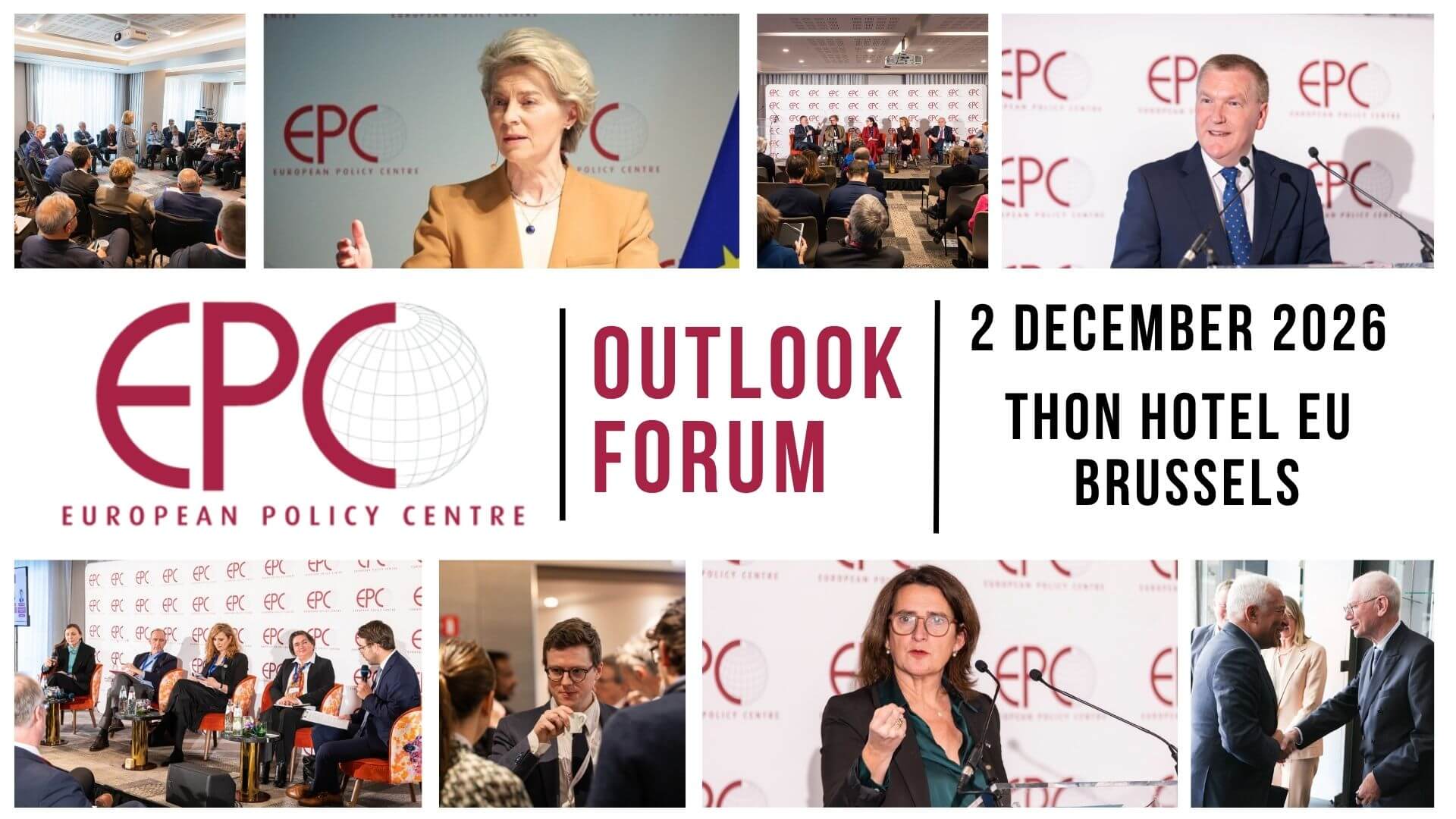
Inaugural EPC Outlook Forum
Dec 03, 2026
09.00 - 10.00
In Person