

EVENT
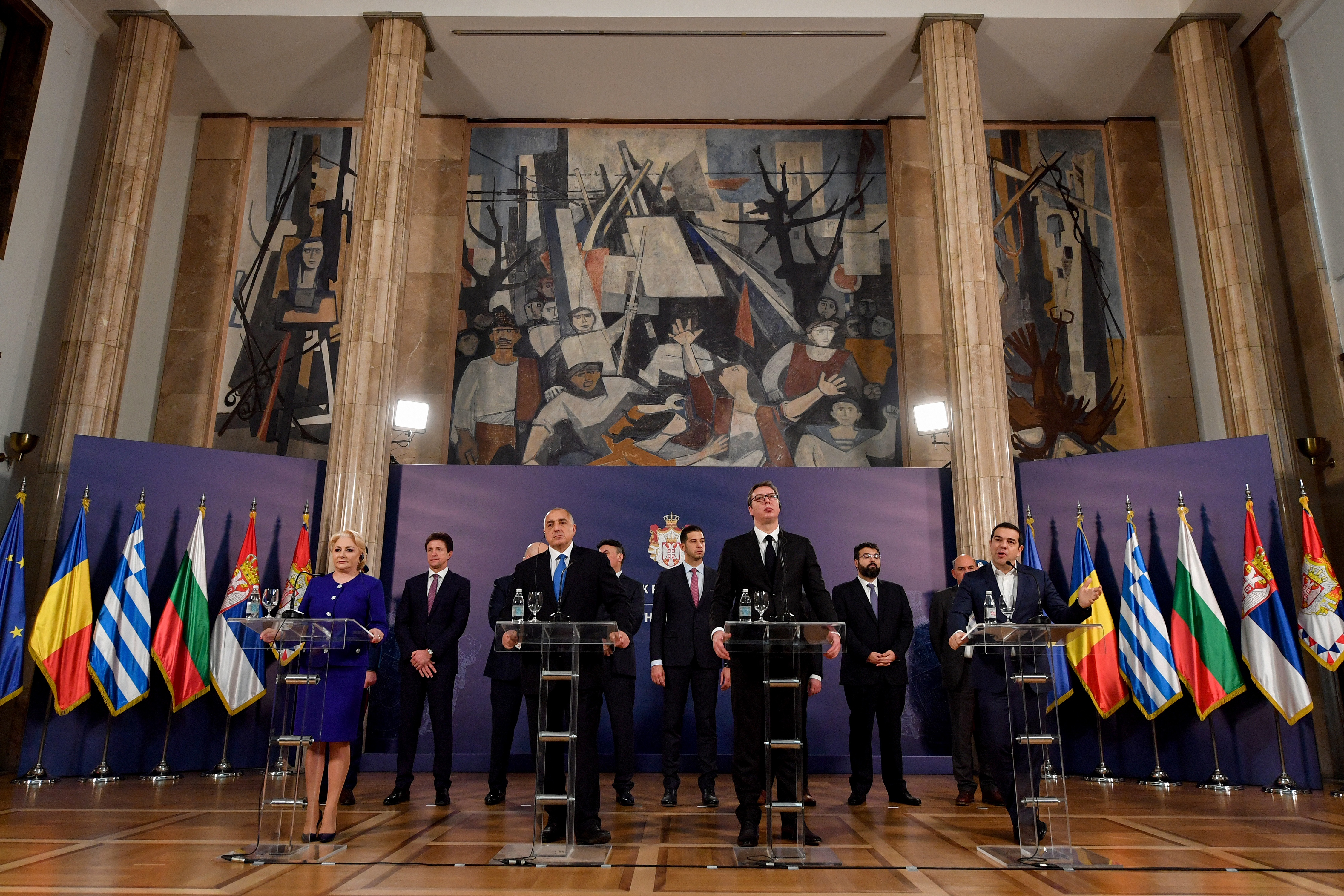
Public administration reform is a central part of the ‘good governance’ criteria that the EU requires of prospective future members on their path towards accession. In the Balkans, civil society oversight of these reforms is facilitated by the Western Balkans Enabling Project for Civil Society Monitoring of Public Administration Reform (WeBER), funded by the European Union and the Netherlands, and managed by a consortium of six think tanks from across the region, known as the Think for Europe Network (TEN).
TEN recently concluded their first round of comprehensive monitoring with a report containing a wealth of data on the openness, transparency, accountability, and meritocracy of Western Balkan administrations. The results show considerable discrepancy between countries and reveal that the ‘frontrunners’ are not always at the front in all the different aspects of public administration reform. This event – the final conference of the WeBER project –explored the project findings in more detail. How does each country’s public administration compare to the others? What examples of good and bad practice can be found throughout the region? Where are the ‘frontrunners’ lagging behind, and why? What should the Balkan countries do to further advance reform and how should the EU help? The Policy Dialogue discussed these and other questions.
Speakers included: Corina Stratulat, Senior Policy Analyst, European Policy Centre, Milena Lazarević, Programme Director and WeBER Project Manager, CEP Belgrade, Miloš Đinđić, Lead WeBER Researcher, CEP Belgrade, Aleka Papa, Programme Manager, Institute for Democracy and Mediation, Tirana, Anida Šabanović, Researcher, Foreign Policy Initiative, Sarajevo, Arbëresha Loxha, Senior Research Fellow, Group for Legal and Political Studies, Prishtina, Aleksandra Ivanovska, Researcher, European Policy Institute, Skopje, Ana Đurnić, Researcher, Institute Alternative, Podgorica.