SHARE:


Reimagining philanthropy’s role after COVID-19 : Towards a more resilient Europe
PAST
EVENT
EVENT
Jul 01, 2020
14:30 - 15:45

For the philanthropic sector the COVID-19 crisis carries considerable risks but also opportunities to protect the social fabric in Europe, enhance cross-border cooperation and support public-private initiatives. In a time of major economic recession, philanthropy can play a key role. It can help bridge the gap in public provision by supporting different sectors in need with, for example, medical and food aid, social assistance or research. At the same time, some philanthropic bodies have been directly affected by the financial uncertainty and parts of the population are sceptical about the role of philanthropy.
Against this background, this online discussion will take stock and discuss future prospects in the philanthropic sector in the light of the COVID-19 crisis. What risks and opportunities has the COVID-19 crisis thrown up? What has been the experience of the last months and how can cross-border philanthropy be enhanced? Is there a role for public-private initiatives between philanthropy and government at the European level? Can we foresee new forms of cooperation in the philanthropic sector? How can philanthropy evolve in a populist and “philanthrophobic” environment?
Moderator
Speakers
The EPC’s Europe’s Political Economy Programme (EPE) focuses on EU economic governance, the single market, and digital, industrial, energy, trade, and economic security policies amid significant geo-economic and technological shifts. In a world of rising geopolitical competition and a fragmenting economy, the EPE has been at the forefront of research on Europe’s competitiveness agenda, the "triple" green, digital and economic security transitions and "wartime economy". The EPE's cross-programme flagship initiative, the Brussels Economic Security Forum, examines EU-US-China dynamics, changing international economic rules and statecraft, as well as related EU policy challenges. As fast-advancing components of economic security, critical emerging technologies in clean tech, semiconductor and AI value chains and quantum are priority areas of focus. Using its convening power and multistakeholder taskforce model, the Programme aims to provide in-depth analysis and actionable recommendations to tackle key policy challenges. The EPE team comprises a diverse group of analysts with backgrounds from government, the private sector, academia, and journalism, bringing a broad range of expertise to its work.

Coming next
Nov 23, 2026
14:00 - 15:30

Online

Nov 24, 2026
10:00 - 11:30

In Person
Nov 26, 2026
10:00 - 11:15
Online

Dec 02, 2026
14:00-18:30
In Person
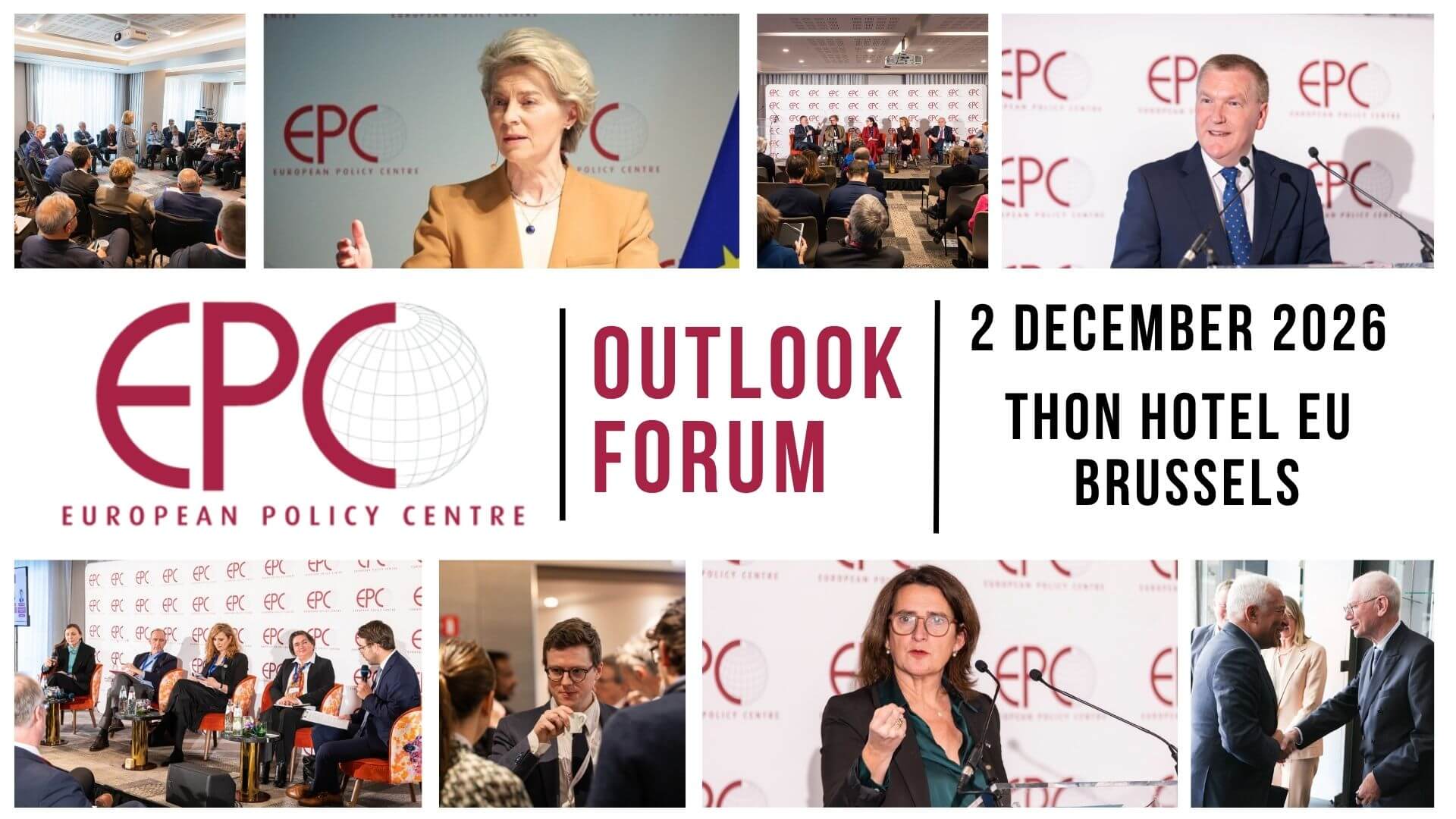
Inaugural EPC Outlook Forum
Dec 03, 2026
09.00 - 10.00
In Person