SHARE:


The Digital Services Act: Where do member states stand?
PAST
EVENT
EVENT
Nov 26, 2020
11:30 - 13:00

The forthcoming Digital Services Act (DSA) will update the Union’s decades-old e-Commerce Directive. While there is broad agreement about the need to update the EU’s regulatory framework of internet governance, the devil is in the detail, as developments in member states indicate there are differing national/regional approaches about which priorities an effective internet governance regulation should address first.
This Policy Dialogue aims to discuss national and regional views among EU member states regarding the delivery of the Digital Services Act, in order to clarify where their views converge or or diverge from the Commission’s overall approach. In this context, speakers will discuss the various positions and developments at member state level, such as Germany’s NetzDG, France’s Avia law, as well as the d9+ and Visegrád 4 positions. Identifying and clarifying the overlaps between the different member states’ positions would bring a unique dimension to the EU-focused debate in Brussels, and could help the Commission to draft a regulation that can foster integration and regulatory consistency among EU member states.
PLEASE CLICK HERE TO REGISTER
Moderator
Speakers
The EPC’s Europe’s Political Economy Programme (EPE) focuses on EU economic governance, the single market, and digital, industrial, energy, trade, and economic security policies amid significant geo-economic and technological shifts. In a world of rising geopolitical competition and a fragmenting economy, the EPE has been at the forefront of research on Europe’s competitiveness agenda, the "triple" green, digital and economic security transitions and "wartime economy". The EPE's cross-programme flagship initiative, the Brussels Economic Security Forum, examines EU-US-China dynamics, changing international economic rules and statecraft, as well as related EU policy challenges. As fast-advancing components of economic security, critical emerging technologies in clean tech, semiconductor and AI value chains and quantum are priority areas of focus. Using its convening power and multistakeholder taskforce model, the Programme aims to provide in-depth analysis and actionable recommendations to tackle key policy challenges. The EPE team comprises a diverse group of analysts with backgrounds from government, the private sector, academia, and journalism, bringing a broad range of expertise to its work.

Coming next
Nov 23, 2026
14:00 - 15:30

Online

Nov 24, 2026
10:00 - 11:30

In Person
Nov 26, 2026
10:00 - 11:15
Online

Dec 02, 2026
14:00-18:30
In Person
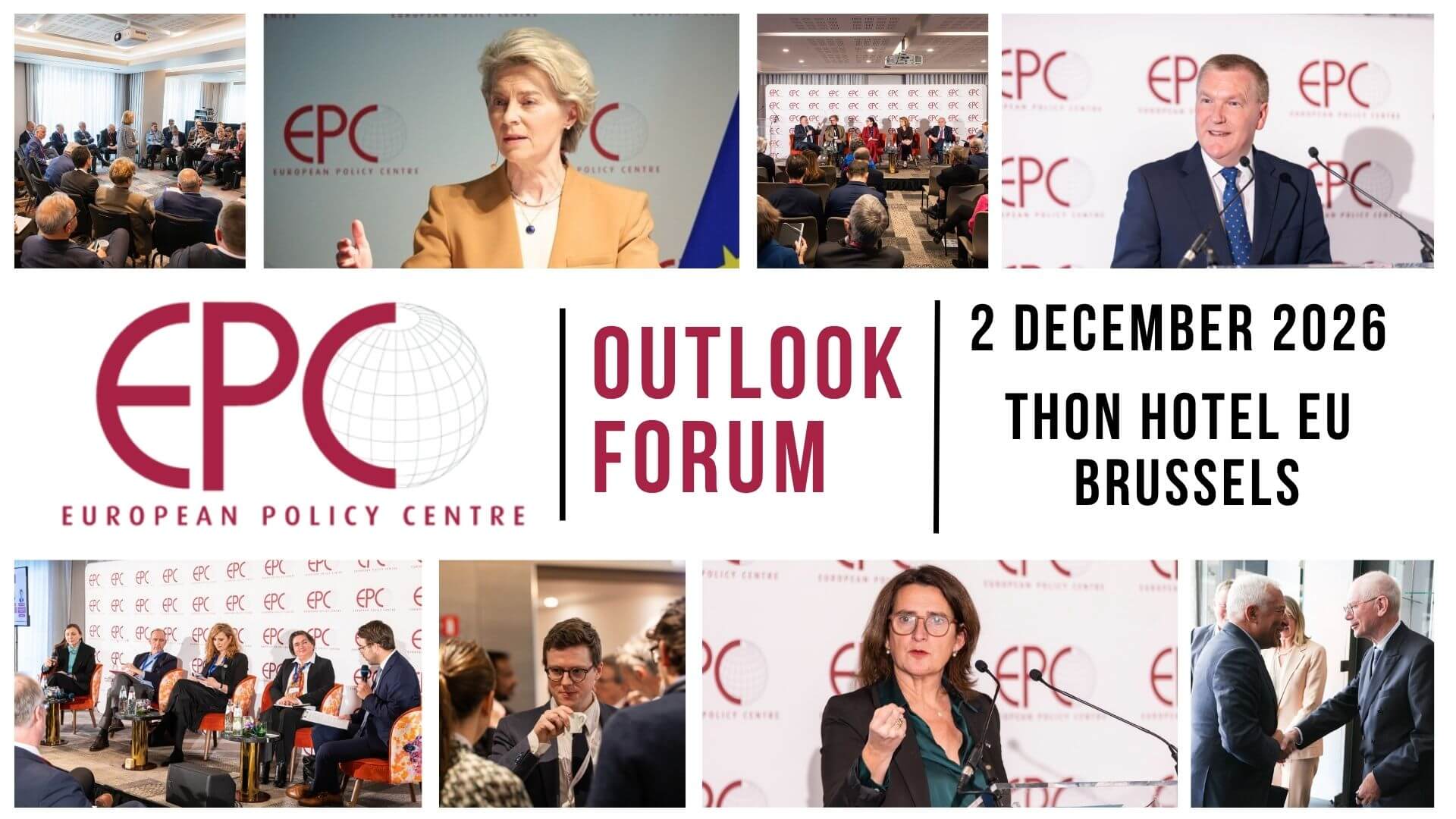
Inaugural EPC Outlook Forum
Dec 03, 2026
09.00 - 10.00
In Person