

EVENT

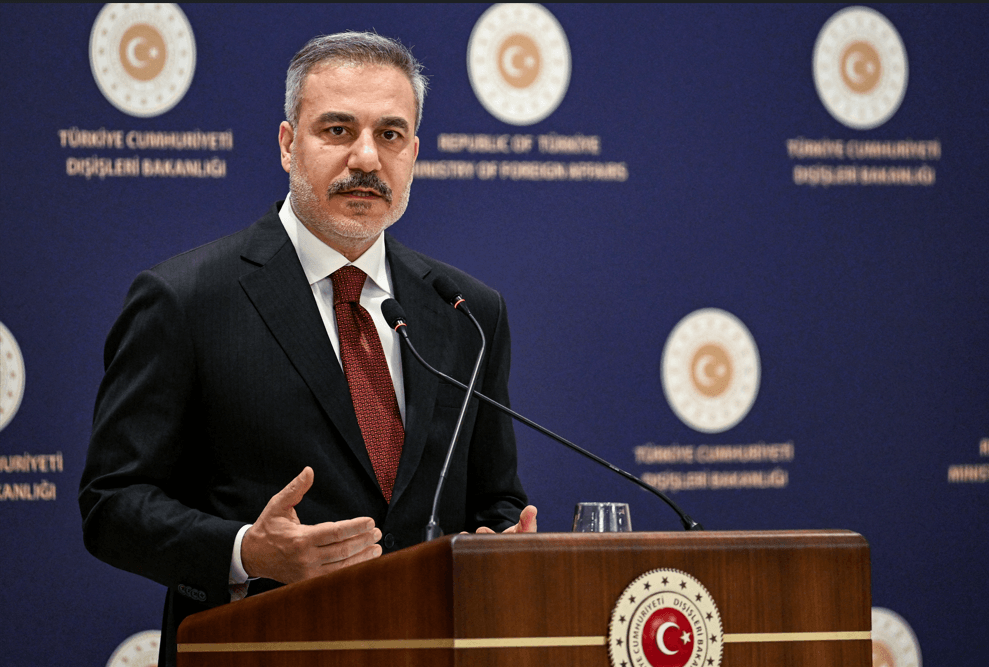
Turkey has been a convergence story. Turkey’s real GDP has outperformed not just its competitors in Central and Eastern Europe, but also Western Europe, said Mehmet Șimșek, Finance Minister of the Republic of Turkey.
Șimșek said that Turkey’s GDP is currently 56% of the EU average when it was 38% a decade ago, and pointed out that Turkey has created five million net jobs since 2007 when the EU has failed to create any.
He argued that Turkey had achieved this primarily due to political stability, fiscal stability and price stability. Between 1923 and 2002, the average period in power of a Turkish government was 17 months, whereas the AK Party has now been in power since 2002.
Șimșek conceded that for decades, Turkey was a textbook case for macro-economic instability and inflation, which he argued makes its current economic performance even more impressive. The Turkish Central Bank is independent and deficits are no longer financed by printing money. Meanwhile, Turkey has been satisfying the Maastricht criteria since 2004.
He pointed out that Turkey is one of the only countries to reduce its debt-to-GDP ratio below pre-crisis levels, and that it started banking sector stress tests in 2004. Meanwhile, loans to households must now be in lira and at fixed rates, he added.
“We’re managing the things we can manage,” he argued, speaking of the Turkish government’s “macro-prudential mind-set”. But he warned nonetheless that there is always the possibility of unexpected shocks.
He argued that Turkey has a flexible exchange rate, a healthy banking sector, accumulated FX reserves, a strong household balance sheet and a dynamic real sector. It is deploying reserves to allow adjustment to take place, he said, arguing that the Turkish lira has been less volatile than other emerging-market currencies. He also pointed to the increasing diversification of Turkey’s exports.
Șimșek insisted that the Turkish banking sector is well-capitalised and pointed out that it had not spent anything on bailouts. He said that the banks had been completely restructured and recapitalised in the wake of Turkey’s earlier crisis.
He cited the reconciliation process with the Kurds, education and boosting human capital, combating the shadow economy, improving labour market flexibility, narrowing regional development gaps and moving up the value chain by investing in R&D among his government’s priorities.
The massive transformation that Turkey has undergone in the past decade is partly due to the engine of the EU accession process, he said, stressing the importance of keeping this going. He called on the EU to show sincerity, lamenting that at present, EU ministers are refusing even to give Ankara a roadmap on many issues – “they’re not even giving us our homework”.