

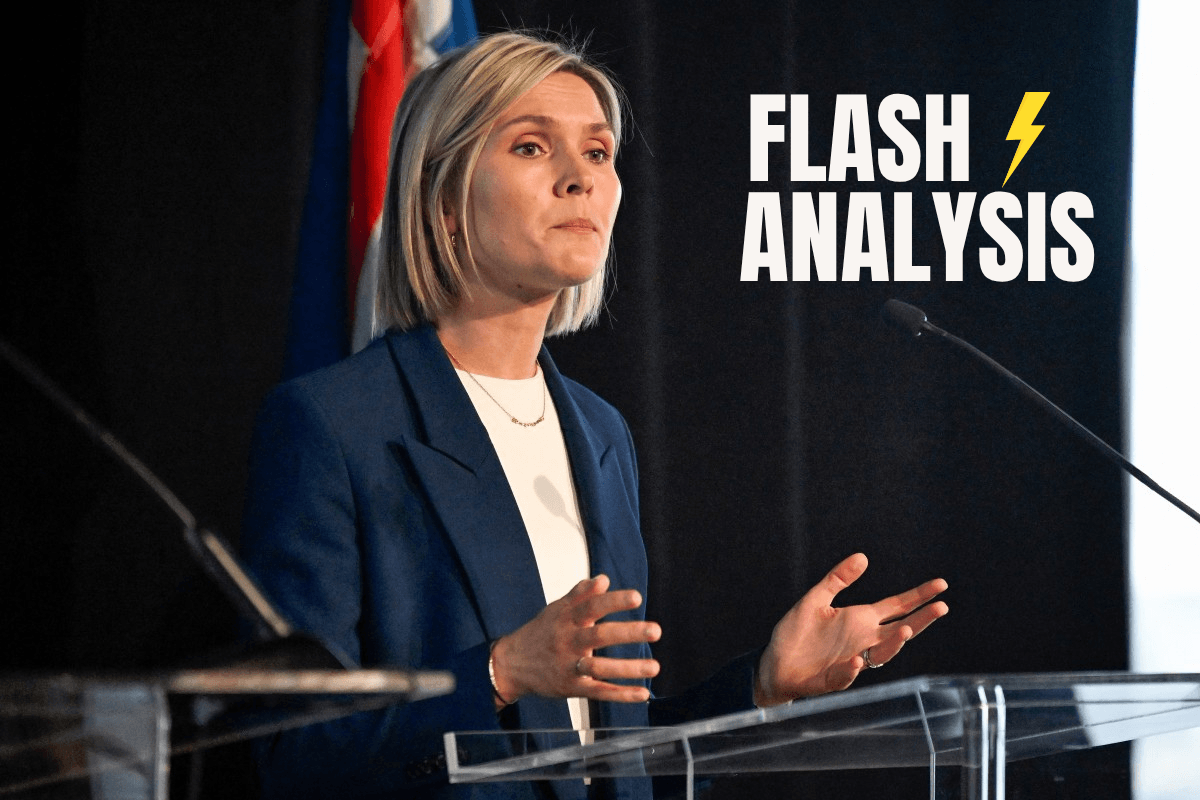
Icelanders have spoken, by a margin of 52.8% to 47.2%, they rejected even reopening EU accession negotiations. Yet this was hardly a vote against European integration.
Through the EEA, Iceland participates deeply in the Single Market, incorporates much of the EU acquis and cooperates closely with the Union, while Schengen removes another important border and NATO membership provides the security guarantee. Icelanders will remain highly integrated with Europe without becoming members of the EU.
For three decades, enlargement has been expected to stabilise Europe's neighbourhood, export democracy, anchor security, extend the Single Market and answer successive geopolitical crises. It has been remarkably successful at many of these tasks. But it was never meant to be Europe's only model of integration.
The EU has become very good at constructing pathways towards membership but is much less good at constructing credible destinations short of it. The EEA demonstrates that deep, rules-based integration without membership can be stable, permanent and politically sustainable. Yet the Union has never developed another model with comparable breadth, permanence and credibility for its wider neighbourhood.
It should. Not as an alternative to enlargement. Where membership has been promised and candidates deliver, the destination must remain membership. Substitutes cannot be used as excuses for keeping candidates permanently outside.
But enlargement cannot exhaust Europe’s strategic imagination either. Not every European partner will want or be able to join.
And the referendum should give Brussels pause for another reason. The case for reopening talks was explicitly framed in geopolitical terms — Arctic rivalry, pressure on Greenland, trade wars — and as a now-or-never moment. It lost. Here, the post-2022 security case for enlargement was put directly to an electorate. Insecurity did not translate into an appetite for membership.
That does not make geopolitics irrelevant to enlargement. Rather, it suggests that geopolitical alignment and institutional integration need not always lead to the same destination.
Europe therefore needs durable relationships that are destinations rather than waiting rooms: offering meaningful integration, rights and obligations without being defined principally by what they may eventually become.
Iceland does not provide a model to copy. It poses a question the EU has neglected: what should European integration look like when accession is not the destination? The time to design that answer is before geopolitics requires it."
Corina Stratulat is Associate Director and Head of the European Politics and Institutions Programme.
The support the European Policy Centre receives for its ongoing operations, or specifically for its publications, does not constitute an endorsement of their contents, which reflect the views of the authors only. Supporters and partners cannot be held responsible for any use that may be made of the information contained therein.