


Taken in isolation, the EU's protectionist turn might be welcomed by its industry. But it will further splinter the global economy, with unenviable knock-on effects that will be difficult to guard against.
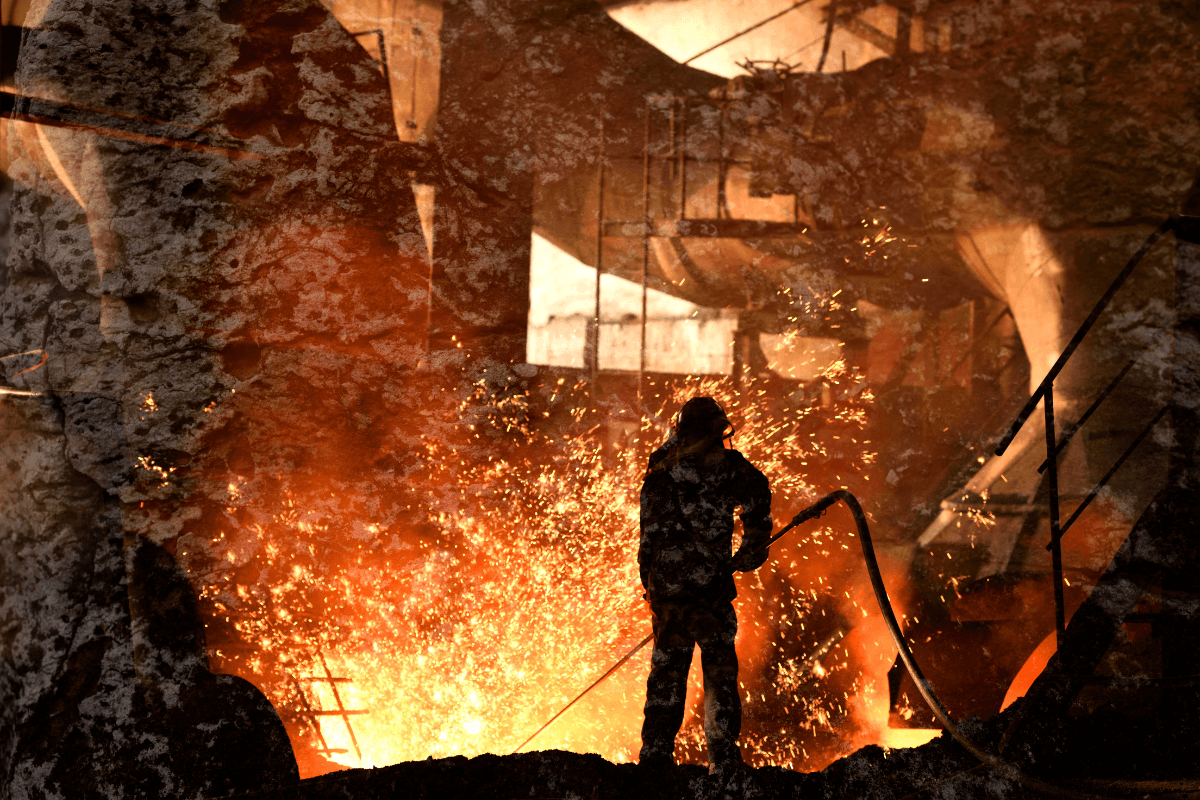
In a bid to prop up the bloc’s crisis-stricken steel industry, the European Commission on Tuesday proposed heavy tariffs on non-EU steel imports – levies that will kick in much earlier, as the quota for foreign steel is almost halved.
The measure smacks of Trumpism. True to its open trade leanings, the Commission’s proposal includes nods to free trade agreement partners and promises to clear the proposal with the World Trade Organization. But there’s no disguising that at its heart, it is a protectionist play to safeguard a vital European industry. What’s more, it’s not the only one.
For anyone who hasn’t been taking refuge under a rock, world trade is going through some serious convulsions. Donald Trump’s aggressive trade policies have cast the international commercial system as we know it into existential doubt.
This is serious business for the EU. The Union is highly dependent on trade for its economic welfare, and the US is the most important export market for EU businesses. In fact, the EU-US trade relationship is the largest in the world.
Unleashing a flood of sectoral and across-the-board tariffs, Trump has struck at the core of the relationship, driving fear into the hearts of export-leading industries in Europe.
At the same time, Europe is facing increasing import competition from cheap Chinese goods. The long-held fears of Chinese manufacturing overcapacity are reaching “fever pitch” as goods that are shut out of the US through steep tariffs start landing on EU shores instead.
This reality is leading to a fundamental rethink in EU economic and trade circles. Rather than maintain its free trade course, Europe must protect its home market from distortions from abroad, goes the thinking. The new trade measure on steel products is the latest, and starkest, proof of this.
In the same vein, the Commission is planning a stronger emphasis on “Made in Europe” requirements for public procurements in the bloc, as championed by Commission President Ursula von der Leyen in her State of the Union speech.
Not long ago, the Union vehemently opposed similar “Made in the US” requirements for tax credits under the Inflation Reduction Act, with European politicians blasting them as protectionist. Times have certainly changed as the EU now prepares to dive into the same protectionist waters.
Taken in isolation, these measures may be welcomed by EU industry. The bloc’s steel sector really is on its knees, shedding almost 100.000 jobs in the last 15 years. Building EU-made preference into public contracts can also boost the competitiveness of European firms and secure more resilient homegrown value chains.
But these measures are also splintering the global economy. As visualised by a downward spiral by the US economist Charles Kindleberger, it was the tit-for-tat responses to the protectionist policies of others that sunk the global economy in the inter-war years of the last century.
One nation starts the ball rolling – in the 1930s, the US led by Herbert Hoover – and the rest respond with measures of their own. While the world has mostly refrained from responding to Trump’s trade fire with fire of their own, the latest EU measure is something new and marks a fundamental change in how the bloc views trade and market access.
The coming years will see the EU grow increasingly protectionist – which will bring knock-on effects, such as making the Union’s diversification drive on trade harder.
Friendly third countries, such as Korea, Japan and South Africa, and their industries, naturally view the policy shift in the Union with apprehension. What are the benefits to closer commercial ties with the EU if the Union narrows access to the Single Market? Even close allies and geographical neighbours like Norway and Iceland are left unscathed. They dread the sting of another upcoming trade wall, this one on ferro alloys, an input in the steel value chain.
Rebalancing who’s able to trade freely in the Single Market and under what conditions is necessary in the name of economic security. But the EU should be mindful of contributing to, and possibly exacerbating, the fracturing of the world economy. It surely will not lead to anything good.
This piece was first published in EURACTIV.
Varg Lukas Folkman is a Policy Analyst in Europe’s Political Economy programme.
The support the European Policy Center receives for its ongoing operations, or specifically for its publications, does not constitute an endorsement of their contents, which reflect the views of the authors only. Supporters and partners cannot be held responsible for any use that may be made of the information contained therein.