


European democracy is not in good health. Though not experiencing the death throes visible in the US, symptoms of a deeper malaise are unmistakable.
Polarisation and illiberalism visible in Central and Eastern Europe 20 years ago have spread to ‘consolidated’ democracies in the EU’s heartland. In Germany, the Alternativ für Deutschland (AfD) – an organisation German intelligence designates a “proven far-right extremist entity” – now polls as the most popular party. In France, the far-right Rassemblement Nationale (RN) is the largest in the national assembly and may win the presidency in 2027. Polarisation there has reached “toxic levels”, according to Varieties of Democracy Institute.
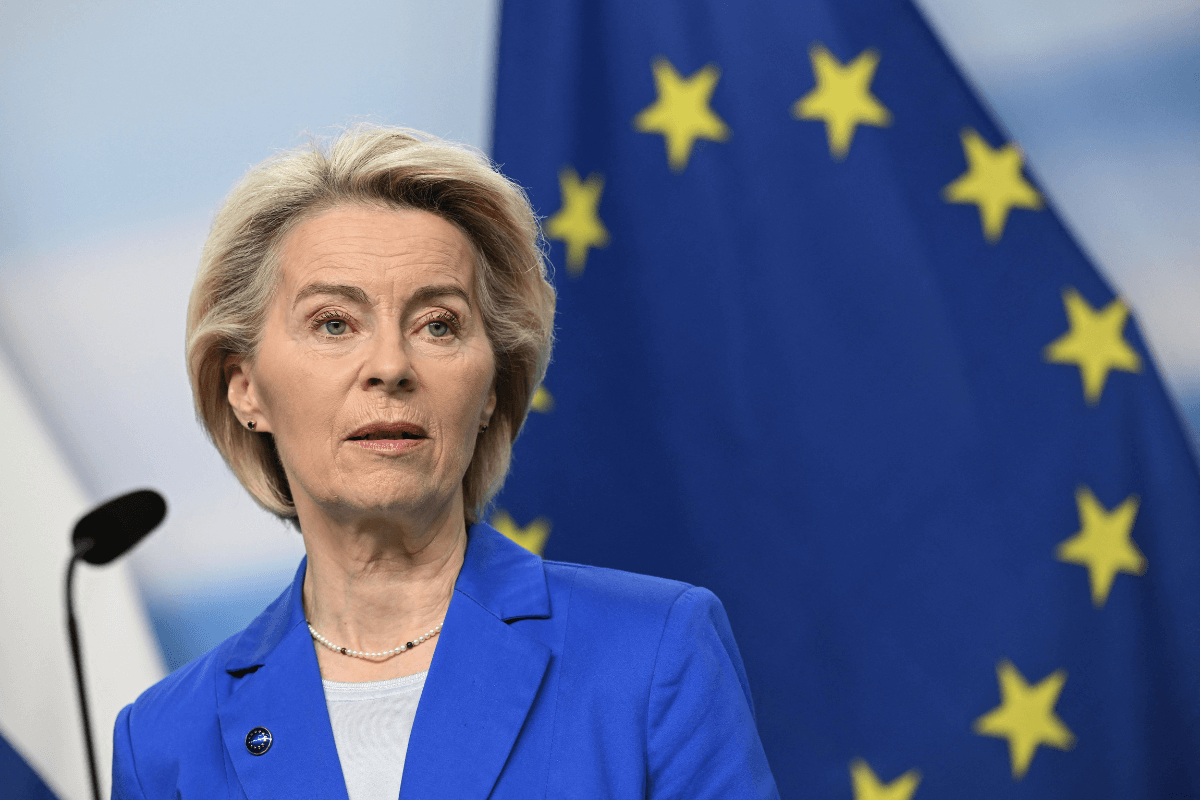
Under these circumstances, the ‘Democracy Shield’ and other measures proposed by the Commission this week should be a boon for anxious democrats. When Ursula von der Leyen’s launched the first democracy action plan in 2020, it was hailed a landmark. Following Russia’s invasion of Ukraine, another Defence of Democracy package appeared in 2023. The forthcoming proposal is therefore the third dedicated democracy initiative of von der Leyen’s term.
Unfortunately, the earlier packages suffered from several defects, and the pattern looks likely to be repeated. The approach has been dogged by problematic narrative framing, policy incoherence and an inadequate toolbox.
The narrative problem: securitising democracy
For the Commission, democratic dysfunction is largely attributed to manipulation of the information space – primarily through digital platforms. While acknowledging domestic sources, the political narrative especially in von der Leyen’s set-piece speeches has placed hostile, authoritarian governments centre-stage. With the war raging in Ukraine, this has produced a creeping securitisation of pro-democracy policies.
This focus on foreign threats was evident in the 2023 package’s sole legislative proposal. That directive proposes to make the influence of foreign governments through third parties more transparent, inspired by the US Foreign Agents Registration Act (FARA). The forthcoming Democracy Shield will also focus on foreign interference and misinformation, inspired by recent approaches in member states such as France and Sweden.
This is problematic for two reasons. First, it implies supporters of undemocratic and extreme movements are simply misled rather than expressing coherent (if unpalatable) worldviews – a dismissiveness that risks fueling polarisation rather than reducing it.
Second, it overstates the role that misinformation plays in generating polarisation in democratic societies. A recent scientific review in Nature concluded that “exposure to problematic content – false and inflammatory views – is rare in general and is heavily concentrated among a small minority of people who already have extreme views”.
The policy gap: civil society weakened rather than strengthened
The Commission’s official commitment to supporting democratic resilience via promised financial and moral support to civil society is undercut by its own initiatives.
The FARA-inspired legislation designed to counter foreign influence, currently under Parliament and Council negotiation, runs the risk of stigmatising and penalising civil society organisations (CSOs) that rely on funding from outside the EU, a classic trope from the Putinist playbook that labels CSOs critical of government policy as ‘foreign agents’.
The Commission itself has cast CSO lobbying in a bad light by prohibiting environmental organisations that receive funding from lobbying on EU policies, following politically-motivated complaints from the European People’s Party. Flagship legislation from the first democracy package – designed to improve the transparency of political advertising online – is so ambiguously worded that media companies warn that they will steer clear of ‘issue-based’ messaging entirely, for example, on the environment. None of this will enhance the psychological resilience of civil society.
EU funding for CSOs, one of the most effective pro-democracy tools, is set to more than triple in the next EU budget to €3.6 billion. However, CSOs consistently report that this funding is difficult to access, administratively burdensome and too restrictive, especially for small grassroots organisations. Short of a major revision to the EU Financial Regulation, it is difficult to see how these bureaucratic obstacles will be overcome.
The real leverage
This is not a call for the EU to abandon its defense of democracy. Rather, the Commission’s principal added value lies in holding member states to account for deviations from the values of liberal democracy enshrined in the EU treaties. It has taken major steps in recent years to operationalise this role by withholding cohesion funding from governments that have trampled over the rule of law.
Sadly, withholding funds for rule-of-law concerns has often been treated as a political bargaining chip rather than a principled line. The Commission’s decision to unfreeze €10,2 billion in grants for Hungary in 2023 – allegedly in return for its support for a Ukraine funding deal – is currently being challenged by the Parliament in the European Court of Justice. Nonetheless, the leverage is real and could be extended to other liberal democratic values.
The Commission has long said it wants to be “big on the big things”. There is no bigger thing than the fate of Europe’s democracies. The EU’s policies must reflect that.
Carl Dolan is Senior Adviser on Ethics and Transparency at the European Policy Centre.
The support the European Policy Centre receives for its ongoing operations, or specifically for its publications, does not constitute an endorsement of their contents, which reflect the views of the authors only. Supporters and partners cannot be held responsible for any use that may be made of the information contained therein.