

Much of the debate surrounding Russia's war against Ukraine is clouded by false equivalence. Some countries claim to take a neutral position by presenting Russia and Ukraine as two equal parties in a conflict. They are not. Russia chose to launch a war of aggression. Ukraine was invaded. One is the aggressor, the other the victim. There is no symmetry in responsibility.
The same false equivalence appears in discussions about the possible outcome of the war. A Ukrainian defeat would not simply mean losing territory. It would entail the destruction of its sovereignty, the loss of territorial integrity, the repression of its people and the attempted eradication of its national identity and culture. A Russian defeat would mean something entirely different. It would require Russia to withdraw from occupied Ukrainian territory and respect internationally recognised borders. Russia would remain a sovereign state, its territory intact, without foreign occupation, regime change or attempts to erase its identity.
A third false equivalence concerns the nature of the war itself. At the outset of the full-scale invasion, Russia achieved significant territorial gains. Today, however, the war has become a slow and costly grind. Russia continues to advance in places, but only incrementally and at a disproportionate cost in personnel and equipment. Ukraine, despite its exhaustion, is extracting a far higher price from a much larger military power than many acknowledge, while increasingly demonstrating its ability to strike military assets and critical infrastructure deep inside Russia. Attrition is not measured simply by kilometres gained, but by the resources consumed to gain them.
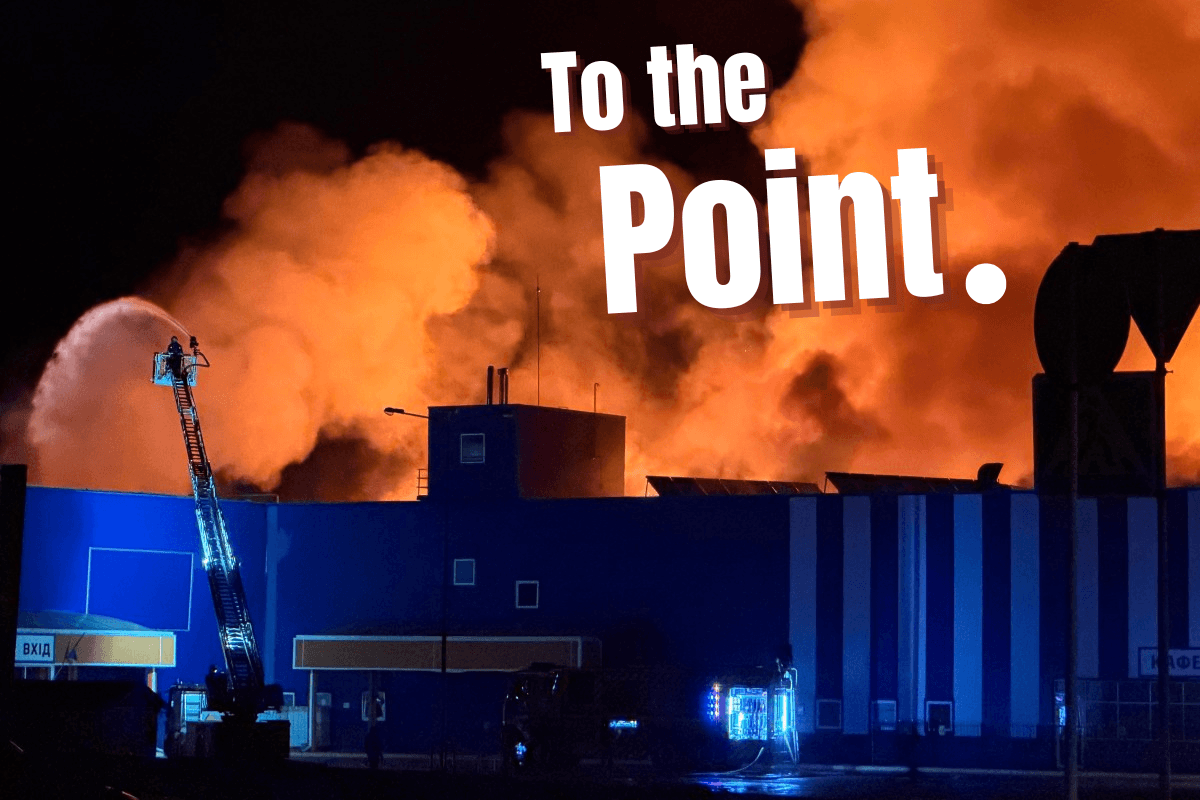
Russia's escalating attacks on Ukrainian cities and civilians are also revealing. Rather than reflecting battlefield success, they increasingly compensate for its inability to achieve decisive military objectives. Those who argue that Ukraine is inevitably losing a war of attrition misunderstand its dynamics. Russia may still be advancing, but it is paying an extraordinarily high and potentially unsustainable price for every metre gained.
Fabian Zuleeg is Chief Executive and Chief Economist at the European Policy Centre.
The support the European Policy Centre receives for its ongoing operations, or specifically for its publications, does not constitute an endorsement of their contents, which reflect the views of the author only. Supporters and partners cannot be held responsible for any use that may be made of the information contained therein.