

The Great Game of the Arctic, Denmark, Greenland and the US Empire
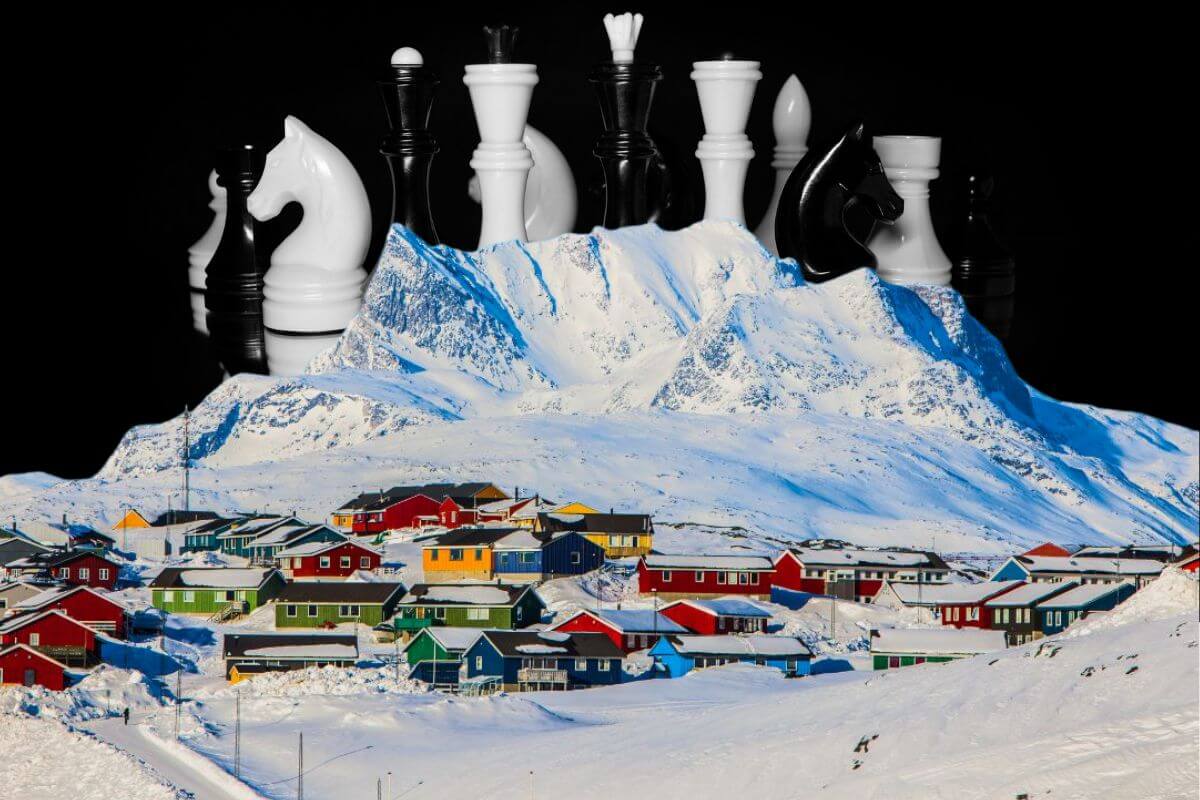


Why does the United States want to take over Greenland when it already enjoys military supremacy on the island?
Is the motivation economic, strategic or driven by fear of Greenlandic independence? Whatever the answer, we argue that the relationship between the US and its NATO partners is better understood as imperial rather than an alliance of equals.
Introduction
Shock, disbelief and confusion have dominated reactions in Europe to the Trump administration’s foreign-policy turn. Among the most baffling developments is the repeated assertion, now backed by the appointment of a special envoy, that Trump wants to take Greenland from the Kingdom of Denmark, one of Washington’s closest and most loyal allies.
For what is it that the US wants to take over? The funding of a large, Scandinavian-style welfare state, with free public health care and school tuition, all the way to university level? Surely not! It is clearly not the domestic side of Greenlandic life that has attracted the attention of the US government.
The language of international politics
The messaging from Washington, however, has been mixed. At times, economic motives dominate: access to raw materials, including strategically important rare earths and minerals. More often, though, security arguments prevail. “We need [Greenland] for national security”, Trump has declared repeatedly, while Vice-President JD Vance has pointed to Denmark’s alleged military weakness.
These statements reflect rising and genuine US concerns about the aspirations and increased activity of both China and Russia in the Arctic. In this emerging ‘great game’, tiny Denmark is clearly an inadequate guardian.
But that is nothing new: Denmark has never exercised full control over Greenland. For decades, the US has been the island’s effective military hegemon. Formal sovereignty may rest in the Danish constitutional monarchy, but Washington already has supreme imperial power over the Danish Inuit Arctic.
We lack the language to articulate this, ironically not least because of the language of statehood elevated to a global norm by US governments since President Woodrow Wilson. The language of international politics recognises only sovereign states and individual peoples; it knows of no nobler ambition than the desire for independence and self-determination. This is why Ukraine’s struggle to resist Russia’s invasion resonates in so many Western societies.
Still, independence is only half the story. Besides national resistance, Ukraine’s survival also depends on imperial intervention. Without US military support and pressure on its subordinate European allies, Ukraine would likely already be back in the Russian fold. For instance, many in Germany thought that Russian supplies of gas were far more important than Ukraine joining the western alliances. To his credit, President Trump understood the dangerous dependency to which this exposed Europe better than many EU leaders during his first term.
‘Independence’ for many states rests on imperial protection – a much-overlooked fact among politicians and foreign policy pundits. No European country
illustrates this more clearly than Denmark.
Read the full Discussion Paper here.
Peter Fibiger Bang and Rasmus Mariager are professors of history at the Saxo Institute, University of Copenhagen and share an interest in empire, security politics and global history.
The support the European Policy Centre receives for its ongoing operations, or specifically for its publications, does not constitute an endorsement of their contents, which reflect the views of the authors only. Supporters and partners cannot be held responsible for any use that may be made of the information contained therein.