


Europe is becoming a continent of net investment outflows. And whilst the next budget includes a significant Competitiveness Fund, we need these investments now, not in 2028
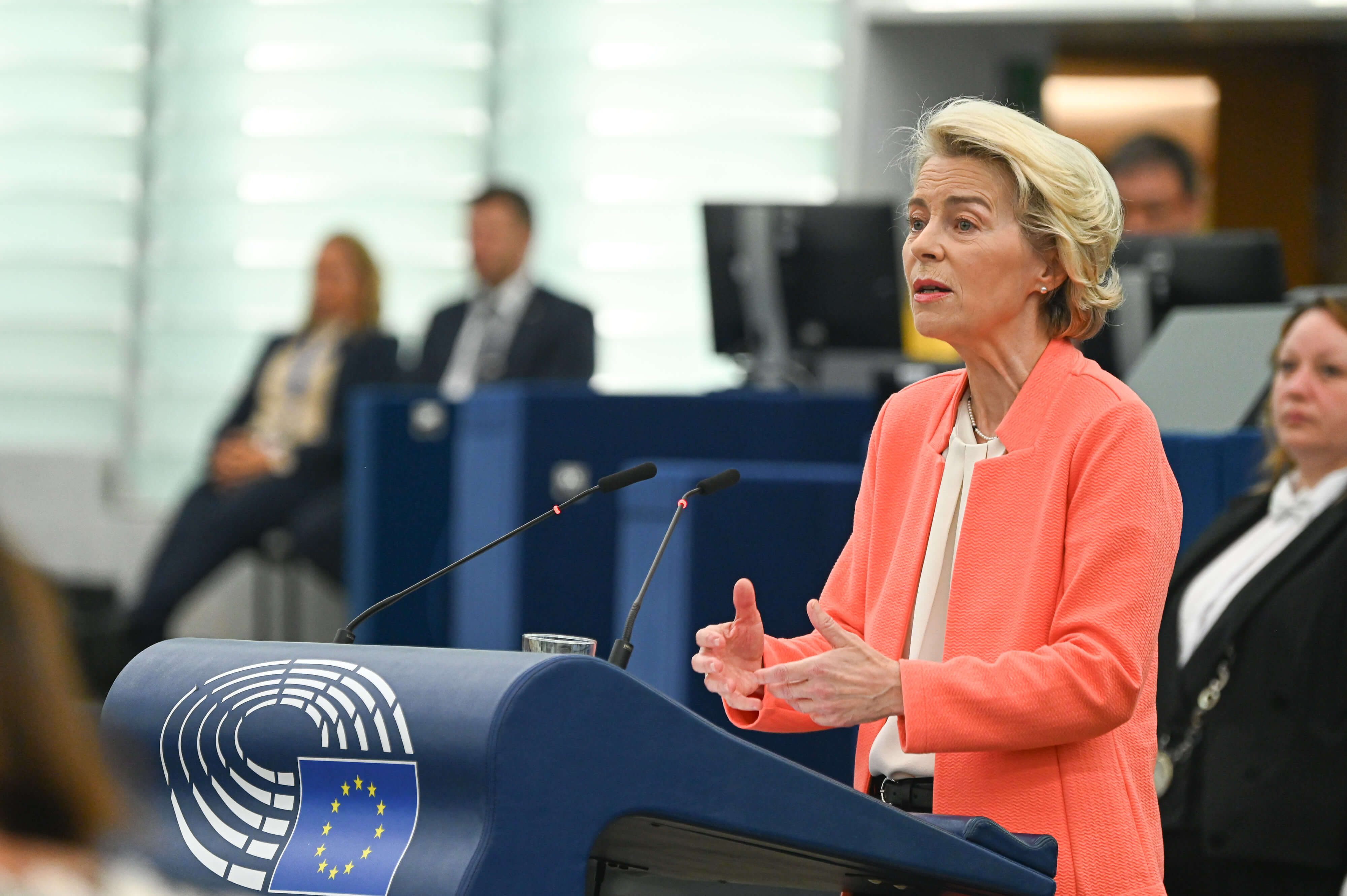
The European Commission’s proposals for the EU’s next long-term investment budget were quickly overshadowed this summer by Ursula von der Leyen’s dog days-deal with President Trump, pledging €600bn of European investment in the US.
The signalling could hardly be worse, at a time when Europe is failing to mobilise sufficient capital for its own transformations and vast amounts of EU savings are already invested in the US.
The EU State of the Union address offers President von der Leyen a chance to course-correct – and put Europe’s immediate investment gaps back at the centre of Europe’s political debate.
This is crucial as the EU faces a dearth of public and private investment to meet today’s intertwined economic, technological, climate and security shocks. Simply put: To remain prosperous, free and secure, Europe must close its massive funding gaps and become a strategic investment power comparable to the US and China.
Europe has become a continent of net investment outflows. In 2023, the EU recorded net foreign direct investment outflows of €50bn, while the US attracted net inflows of $148.8 billion and China $142.6 billion. In 2024, the US secured over 2,100 new greenfield projects. Germany, by contrast, attracted only 470 – its lowest in nearly two decades.
Now is the time for change. The volatility of US economic policy, the decline of rules-based institutions and rapid erosion of the “Washington consensus” herald profound shifts in global capital allocation. Trumponomics, combined with a weakening dollar, is a happenstance for Europe as international investors are now rethinking their portfolios.
If it adopts the right reforms, the EU is well-placed to reap the dividends of its distinctive strengths and model based on an open trading system, a stable “global euro”, and a strong supply of high-quality projects in infrastructure, technology and defence.
The Commission’s proposal for the EU’s Multiannual Financial Framework 2028-2034 is a step forward. The €2 trillion overall envelope includes €560 billion to create a Competitiveness Fund. This would pool and leverage EU funds to attract much-needed private investments into Europe’s economy.
But Europe needs these investments now, not in 2028. This should be the absolute priority for President von der Leyen in her speech in Strasbourg. To this end, an EU Sovereignty Instrument would serve as a special-purpose, off-budget vehicle to mobilise financing for critical assets and infrastructure in the next two years, and beyond.
This Instrument would blend financing contributions from the EU and willing member states with international investment from selected sovereign wealth funds, such as Norway’s €1.9 trillion Government Pension Fund Global, which is currently significantly underinvested in Europe.
It would be used to back a series of specialised, privately managed sub-funds, drawing in additional equity from institutional investors and private companies, focused on scaling critical European technological and industrial value chains in AI, semiconductors, quantum, robotics and clean technologies.
The signal that the EU is strongly committed to holding its own in today’s contested geopolitics and global investment race is badly needed. But that alone is not enough – to truly become an investment power the EU must reinvigorate its investment market by boosting the supply and demand of high-quality European tradable assets in strategic sectors.
This means reviewing the overly restrictive regulations that limit the market’s liquidity and scale, and requiring the European Investment Bank to develop a securitisation platform that can convert EU-backed infrastructure projects and loan portfolios into tradeable assets.
On the demand side, the real market-creating bazooka lies in Eurosystem asset purchases. If the ECB were to direct its portfolio towards such EU securities, as it has for green bonds, it would catalyse institutional investors, such as insurance and pension funds and global exchange-traded funds (ETFs), to do the same.
Taken together, these measures would allow Europe to channel vast pools of savings into productive assets, reversing years of capital flight and helping to make the continent a global investment magnet.
The EU has the potential to be one of the world’s three geoeconomic centres, but it is all too often consumed by the diffidence and self-doubt that von der Leyen displayed this summer.
Europe combines economic scale, vast amounts of public and private capital, a diverse innovation and industrial base, and a rich ecosystem of financial institutions. It cannot afford more years of underinvestment. Von der Leyen’s State of the Union must send a clear message: This is Europe’s investment moment.
This Op-Ed was originally published in Euractiv.
Georg Riekeles is Associate Director and Head of Europe's Political Economy programme at the European Policy Centre.
Philipp Lausberg is a Senior Policy Analyst in the Europe's Political Economy programme at the European Policy Centre.
The support the European Policy Center receives for its ongoing operations, or specifically for its publications, does not constitute an endorsement of their contents, which reflect the views of the authors only. Supporters and partners cannot be held responsible for any use that may be made of the information contained therein.