

State of the European Union 2026: EPC experts preview von der Leyen’s SOTEU
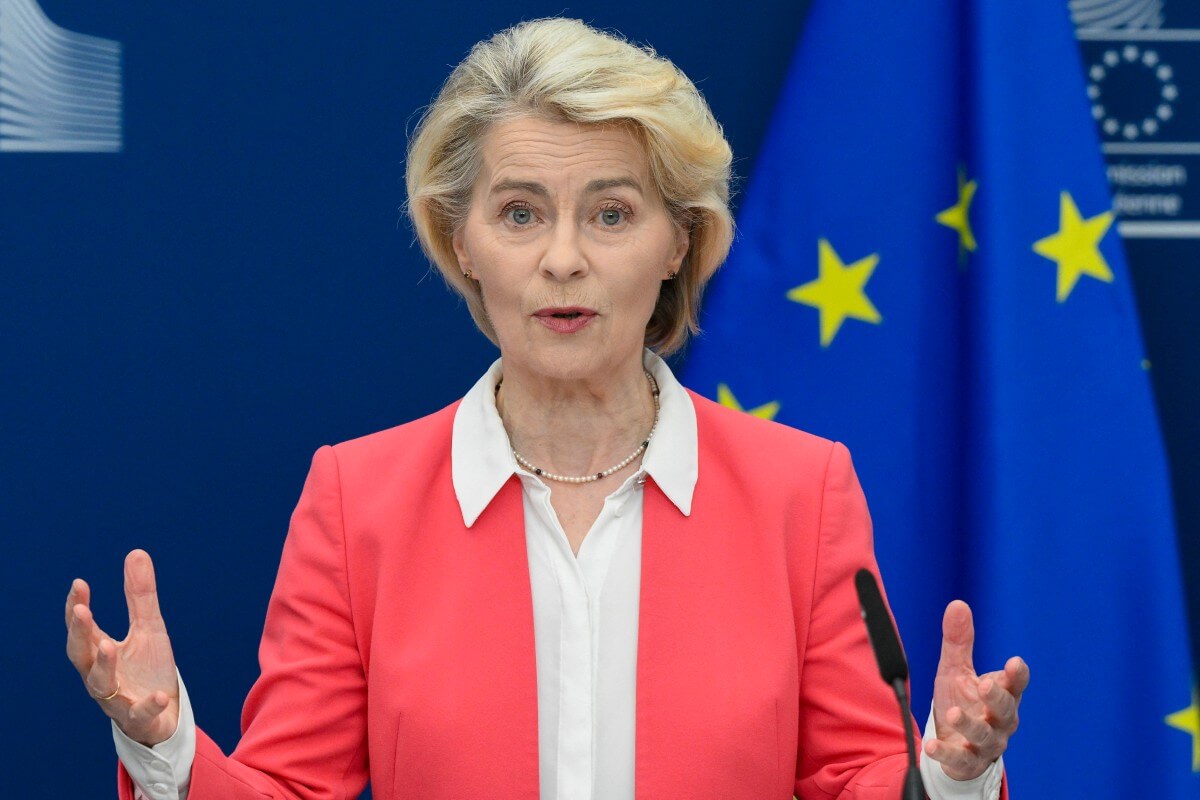





European Commission President Ursula von der Leyen’s State of the European Union address, 16 September, comes at a moment when the EU is once again navigating overlapping challenges — from security pressures and industrial competitiveness to the political turbulence shaping the transatlantic relationship.
This year’s speech carries added geo-strategic weight: Canada’s Prime Minister, Mark Carney, will attend, underscoring how closely partners are watching Europe’s next moves on defence, economic resilience and global leadership.
Ahead of the speech, EPC experts outline the priorities they believe the Commission President must confront, including rebuilding trust in the EU’s long‑term direction. Their insights offer a preview of the themes likely to define von der Leyen’s message — and the questions Europe’s policymakers, stakeholders and media will ask as the EU seeks to break its cycle of crisis management and shape a more strategic future.
The power of collaboration
Von der Leyen will tell us that the EU is forging new partnerships around the globe. To do so is the right call.
The EU is a collaborative power. It works together internally, building consensus among its 27 members, and externally. It still has tremendous resources to build and nurture strategic ties to pursue its interests and counter global fragmentation. This is a competitive advantage right now, as many countries around the world watch in real time how adversarial and belligerent policies hurt their people.
But the world is not waiting. The Commission should develop targeted foreign policies of opportunity, flanking the new generation of free trade agreements and strategic alliances.
The EU has more than enough resources in Brussels and in its European diplomatic networks around the globe. It also still has ample room to actively engage stakeholders across sectors in the EU. It must find those with a keen interest in seizing opportunity, who want to see their Union succeed."
Almut Möller, Director for European and Global Affairs and head of the Europe in the World Programme
Preparing for financial turmoil
Europe has spent much of the past decade thinking about dependencies in energy, technology, defence and critical supply chains. This is again likely to figure prominently in the State of the Union.
Yet one critical vulnerability remains largely missing from Europe’s debate: financial dependence. Europe faces a three-way mismatch: a less stable international financial order; strategic challenges and investment needs that are increasingly European; and fiscal capacities that remain overwhelmingly national and increasingly constrained.
US debt is rising, and the weaponisation of the dollar is growing. Europe cannot simply assume that, in the next major financial crisis, Washington and the Federal Reserve will again play the stabilising role they did in 2008.
Von der Leyen must therefore address financial sovereignty as a core element of European security.
The institutional building blocks largely exist, but the EU must turn its growing borrowing capacity into a genuine European Treasury. It should develop the European Stability Mechanism into a European Monetary Fund capable of supporting sovereign debt markets and, over time, creating a deep pool of euro-denominated safe assets. The digital euro is also a project of considerable urgency. Europe’s security will be built on financial strength.
Georg Riekeles Associate Director & Head of Europe's Political Economy Programme
AI’s social contract
In her State of the Union address, Commission President von der Leyen should reject the trade-off between competitiveness, technological progress, and the EU’s social model. Stronger productivity and growth are essential to finance that model and to strengthen people’s sense of agency over the impact of technologies such as AI.
Over the past years, Brussels has predominantly concentrated on balancing the regulation of AI’s risks with accelerating its adoption. But it has largely overlooked the deeper structural impacts this technology will have on jobs, income security and territorial cohesion across the EU.
Democratic and societal resilience also depends on how technology and AI are governed. Efforts to simplify regulation must not come at the expense of AI literacy.
The Commission President is likely to announce a new initiative on children and social media. The test of the Commission’s forthcoming proposal is whether it changes the values on which platforms are built and not just who may use them. Age limits alone are not sufficient.
For a more resilient society, we must design platforms that benefit all users, not only the youngest.
Elizabeth Kuiper Associate Director & Head of the Health and Societal Resilience Programme
Protect Europe’s democratic infrastructure
We expect von der Leyen to address the need for Europe to invest in resilience. But she is likely to overlook one part of Europe’s resilience architecture: democracy itself.
The EU treats defence, economic security and critical infrastructure as strategic investments in a more hostile environment. The same logic applies to democracy. Civil society, independent media, think tanks and democratic innovators are a crucial part of Europe’s resilience infrastructure.
That infrastructure is under growing pressure. Illiberal actors increasingly operate across borders. Attacks on NGOs and the legitimacy of civil society funding are moving into the mainstream.
The next EU budget is a democracy test. The MFF proposal’s new AgoraEU programme cannot be cut. And democracy funding cannot stop there. Horizon, Erasmus and other instruments should contribute to democratic resilience, backed by meaningful earmarking, long-term operational funding and regranting for smaller organisations.
Democracy and the civic actors sustaining it may be a side note in the State of the Union. That would be a mistake. Civic space is shrinking and becoming increasingly contested; democracy is increasingly under constraint. Investing in its democratic ecosystems must be how the EU understands resilience itself.
Johannes Greubel Head of the Transnationalisation Programme
Climate delivery gap
Ursula von der Leyen is right to emphasise the importance of reaching 2040 targets and strengthening climate resilience to heatwaves like those that took 35,000 lives in Europe last summer. She is also right that we need to secure European infrastructure and economic assets.
But the European Commission should double down on its EU climate resilience and risk management initiative, planned for adoption toward the end of 2026. However, climate resilience is not enough. Climate mitigation efforts and broader environmental protection, now held back by short-termism, remain key.
The Commission’s July proposal to revise the ETS could lower carbon prices and weaken the incentive for industrial decarbonisation, which we need to bring energy costs down and reduce fossil fuel dependencies. A clean energy transition and water resilience must address AI’s growing water demand and the impact of data centre growth.
We must also ask how the EU will effectively deliver both mitigation and adaptation measures when aspects like defence may take priority. To try to do it all, funding envisaged under the Industrial Decarbonisation Bank should go to best-in-class projects and de-risk private investments. Fiscal policies, public procurement and investment decisions should maximise synergies between different agendas Europe needs a robust delivery mindset, no more strategies, to advance climate resilience, decarbonisation and economic security.
Stefan Šipka, Head of Sustainable Prosperity for Europe Programme
Time to deliver
This year, Ursula von der Leyen must provide strategic focus and political clarity. These would be more useful than 2025’s grand statements on various issues, from security architecture to ending poverty
The State of the European Union should not only be a way to placate political groups to salvage a barely existing von der Leyen majority. Neither should it be a platform to raise the Commission President’s profile and extend the Commission’s political and institutional domain.
The EU is facing the crumbling of all the premises on which it was built. The rule-based order with benevolent free-trade and US friendship and support is disappearing. It is also struggling to meet its internal challenges: agreeing on a new budget, achieving enlargement and adapting its institutions to the new world.
The Commission president has been shifting her priorities while focusing too much on the short term, at the risk of increasing the EU’s delivery gap. As the midterm in her second term approaches, it is time for von der Leyen to present a vision and deliver.
Eric Maurice Policy Analyst
The EPC welcomes media requests to speak with any of our experts.
The support the European Policy Centre receives for its ongoing operations, or specifically for its publications, does not constitute an endorsement of their contents, which reflect the views of the authors only. Supporters and partners cannot be held responsible for any use that may be made of the information contained therein.