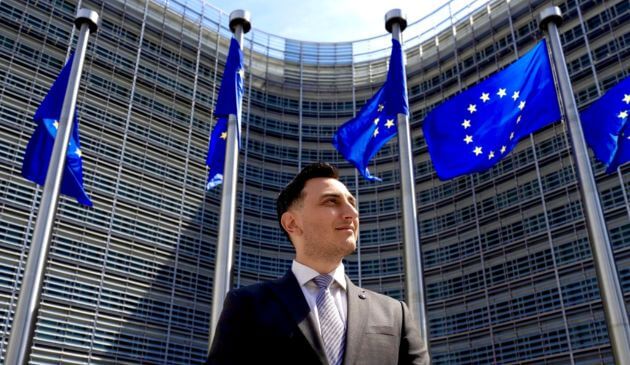
Health and Societal Resilience

Elizabeth Kuiper
Associate Director & Head of the Health and Societal Resilience Programme

The Health and Societal Resilience Programme (HSR) focus is on society’s ability to recover from crises and economic shocks. It focuses on the following policies:

  • strong and resilient healthcare systems;
  • economic security;
  • societal implications of AI;
  • future of work;
  • modern and inclusive labour markets;
  • housing
  • eradicating inequalities;
  • women’s health;
  • inclusive economic growth.
     

In recent years, the European Union has come under increasing pressure as a result of permanent and overlapping crises, and the societal and political repercussions these have generated. The economic and social disparities among EU member states, coupled with rising nationalism and populism, all point to a need to focus on areas where citizens experience a loss of trust in governments – such as in housing or healthcare.

Through policy dialogues, workshops, and publications, the HSR team focuses on the above-mentioned issues and finding ways to move forward. The Programme is currently working on projects that will contribute to our vision of whole-of-society resilience, which are desperately needed in the current geopolitical landscape.


TEAM
Senior Programme Manager
Programme Assistant
Policy Analyst
Junior Policy Analyst
Associate Director and Head of the Health and Societal Resilience Programme (HSR)
Policy Analyst
POLICY BRIEF
Mar 19, 2026
by Pietro Valetto, Elizabeth Kuiper, Samuel Goodger
Mar 04, 2026
10:30-12:00
In Person
Mar 06, 2026
10:00-11:30
Hybrid
An AI resilience agenda for the EU labour market

The article argues that generative AI will reshape Europe’s labour markets unevenly, with wealthier, services‑based economies facing higher exposure but also greater potential for job augmentation, while countries like Greece and Italy risk displacement without corresponding benefits. Adoption rates vary widely across the EU, and middle‑income workers appear most vulnerable to future disruption, threatening tax bases and widening inequality. Current EU legislation is not yet equipped to manage these risks. The piece outlines a resilience agenda centred on stronger workplace governance, continuous labour‑market monitoring, mid‑career skills investment, welfare system stress‑testing and reinforced social dialogue to ensure AI complements rather than replaces workers.

May 01, 2026 , https://medium.com/@reshaping_work/an-ai-resilience-agenda-for-the-eu-labour-market-c5d0879b8ca8
Reshaping Work blog
ARTICLE
SECURING EU HEALTHCARE IN TODAY'S HYBRID THREAT LANDSCAPE

Europe’s hospitals faced nearly 300 cybersecurity incidents in 2024, making healthcare the most targeted essential sector. Widely attributed to Russian-linked groups, major incidents cost around EUR 300 000 each — but the damage goes far beyond financial losses. The European Commission’s 2025 Action Plan on the Cybersecurity of Hospitals and Healthcare Providers is a critical step towards protecting EU healthcare from hybrid threats. Samuel Goodger and Elizabeth Kuiper of the European Policy Centre outline the priorities for ensuring the plan’s successful implementation.

Jan 13, 2026 , https://www.eesc.europa.eu/en/news-media/eesc-info/eesc-info-january-2026/articles/134225
The European Economic and Social Committee (EESC)
Housing moves up the European political agenda
Mar 23, 2025
INTERVIEW
This website uses cookies. By continuing to use this website you are giving consent to cookies being used. More information is available in our Privacy Policy