

Coalition of the willing is not the silver bullet — core EU alignment is
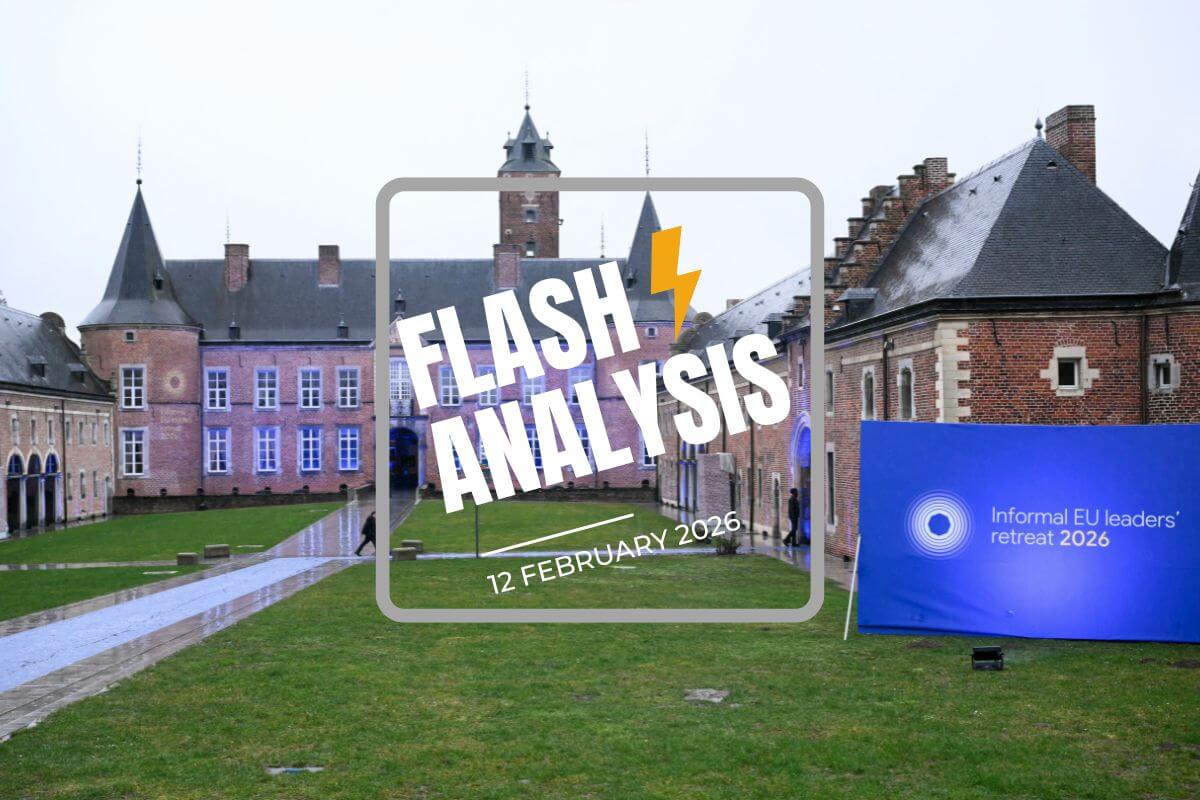
As EU leaders gather on 12 February for a brainstorming retreat on how to boost the European Union’s competitiveness, another, more institutional debate will echo through the old corridors of Belgium’s Alden Biesen castle: can coalitions of the willing save Europe?
The expression has been used to refer the group of countries that have committed to support Ukraine and provide security guarantees in the future. It is now touted as the solution to the EU’s inability to take the necessary measures to address the geopolitical and geo-economic challenges it faces. The EU’s current wise man Mario Draghi has advocated for a “pragmatic federalism” that would be “built by coalitions of the willing around shared strategic interests”.
Ahead of the Alden Biesen meeting, European Commission President Ursula von der Leyen argued that the EU should be ready to launch so-called enhanced cooperation, the EU-treaty based mechanism that allows a group of member states to move forward in a policy area without being hindered by others. She mentioned the Savings and Investment Union (SIU) as a potential ground for this coalition of the willing approach to competitiveness.
But the coalition of the willing is not a silver bullet. The SIU, formerly known as Capital Market Union, has been blocked for a decade because of disagreement among the EU’s members states, including the largest, Germany, France and Italy. The same applies to the Banking Union, which remains incomplete after many years of discussion.
The debate on formats overlooks a central fact: no coalition will work if one of the EU’s big players is not willing. Yet the run-up to the retreat has exposed divisions between EU countries, and particularly within the Union’s traditional Franco-German engine. Paris calls for both a “Buy European” rule and EU joint borrowing for strategic investment were rejected by Berlin. German Chancellor Friedrich Merz teamed up with Italy’s Prime Minister Giorgia Meloni, and not French President Emmanuel Macron, to present a roadmap focused on simplification and deregulation. No one can seriously believe that a coalition of the willing without France, Germany, Italy or any other large EU economy would succeed or even happen.
Whether to activate an enhanced cooperation is not an immediate issue. Reaching alignment on the EU’s strategic objectives among core EU countries is.
Eric Maurice is a Policy Analyst in the European Politics and Institutions Programme at the European Policy Centre.
The support the European Policy Centre receives for its ongoing operations, or specifically for its publications, does not constitute an endorsement of their contents, which reflect the views of the authors only. Supporters and partners cannot be held responsible for any use that may be made of the information contained therein.