

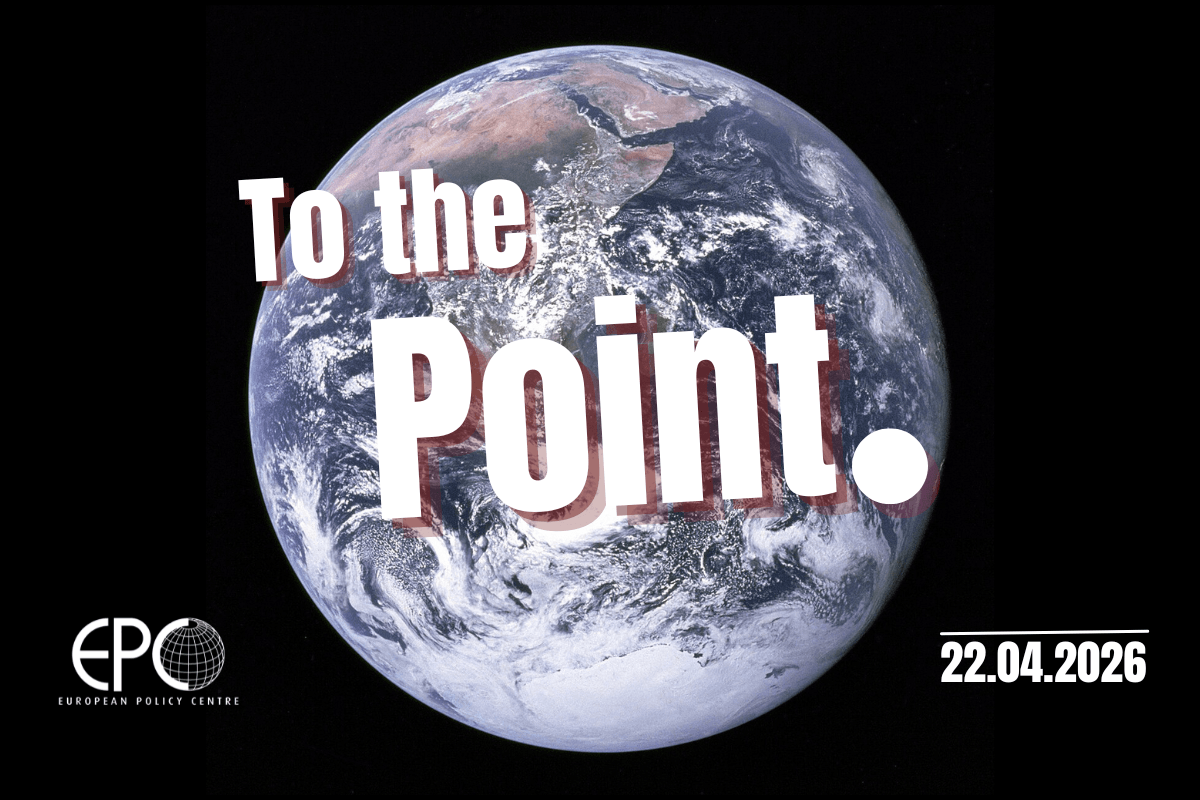

Today is Earth Day, a date both celebrated and ignored. It comes with a mix of hope and cynicism all wrapped into one – echoing in many ways the current state of the EU today.
Earth Day was introduced in 1970 – amid the Cold War and nuclear arms race – to honour our planet and promote peace. Shortly afterwards, the ‘Blue Marble’ photograph, taken during the Apollo mission, become a unifying symbol of our planet seen from space. At the same time, the European Economic Community was expanding and becoming more integrated, paving the way for the emergence of the EU. A decade ago, the Paris Agreement was signed on Earth Day, strengthening the global commitment to fight climate change, with the EU taking the lead.
Fast forward to 2026, and its difficult share the same vision of a clean and peaceful planet, as the world is witnessing a resurgence of geopolitical rivalries and competition over resources, markets and key technologies. Nor can we honestly speak of a united Europe, hollowed out by national feuds, populism and the enlargement fatigue. The EU’s sustainability commitments are watered down, due to fears of the cost of transition.
The EU must navigate between the Scylla of bottomless pessimism and Charybdis of naïve idealism. While treading carefully in its search for a new economic model, it should aim to reinvent itself amid global chaos, while staying true to its values. In doing so, Europeans should remain mindful of Earth Day and the ‘Blue Marble’ – the image may be vintage, but it still reminds us of the beautiful and unique planet we call home.
Stefan Šipka is Head of Sustainable Prosperity for Europe programme at the European Policy Centre.
The support the European Policy Centre receives for its ongoing operations, or specifically for its publications, does not constitute an endorsement of their contents, which reflect the views of the authors only. Supporters and partners cannot be held responsible for any use that may be made of the information contained therein.