

From firefighting to strategy: How the EU’s new economic security doctrine can deliver
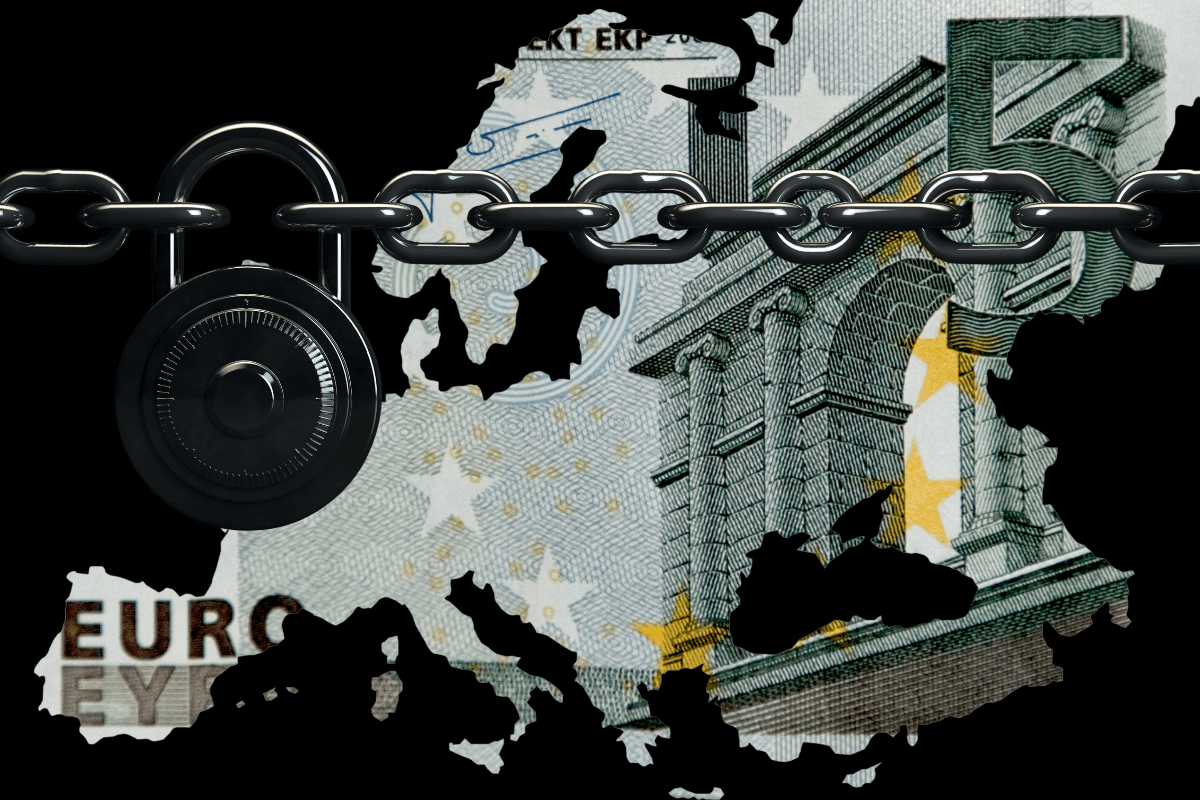




The European Union is adrift. Once the world’s bastion of a rules-based, export-driven economic model, it now finds itself on the defensive, reacting to shocks rather than shaping its own economic destiny.
From US tariffs to Chinese export controls on critical materials, 2025 has underscored what many in Brussels already suspected: Europe’s economic vulnerabilities are profound, and its capacity to act decisively is limited.
In this context, the European Commission will on Wednesday unveil its long-awaited doctrine on economic security. Building on the strategy launched in 2023, the doctrine must set out how the EU intends to reduce strategic dependencies and strengthen resilience in the face of growing economic coercion and value chain disruptions.
The pressures that forced Europe to this point are significant. To move beyond disjointed crisis management, we propose six recommendations to shift the EU to a proactive approach to economic security.
A Union exposed
As Commission President Ursula von der Leyen recently acknowledged, the EU faces “a world of imperial ambitions and hostile actors… a permanent state of flux and disorder”. Her warning is not rhetorical flourish; it is a necessary call to action.
Donald Trump’s return to the White House has unleashed tariffs and shut markets for European exports as part of a humiliating, lopsided trade deal. Chinese export restrictions on rare earths are threatening production stoppages. When Dutch authorities took control of the chipmaker Nexperia over fears of Chinese IP relocation, the move, though justified, sparked harsh retaliation.
None of these crises were black swans. They were predictable in a world increasingly defined by economic confrontation, coercion and the weaponisation of dependencies. Brussels has long known that the EU relies on China for critical raw materials and semiconductor inputs, yet decisive action has lagged. Risk assessments and strategies existed, but when push came to shove, the EU stumbled.
Fragmentation compounds the problem. While some member states like France and the Netherlands have been proactive – protecting strategic assets, investing in chips and quantum technologies and pursuing international partnerships to reduce exposure – the EU remains uncoordinated.
Divergent approaches to screening Chinese investment, insufficient responses to US coercion and a lack of consensus on strategic autonomy leave Brussels without credible deterrence. Trade defence measures and the Critical Raw Materials Act have also been half-hearted.
While the US deploys state-capitalist tools like offtake guarantees and price floors to secure its supply chains, the EU hesitates. As one analyst noted at this summer’s Brussels Economic Security Forum: “The EU does not lack tools – it lacks credibility”.
The cost of indecision is rising. Businesses are relocating operations to jurisdictions with clearer ambitions and deeper pockets. Without a decisive steer and the credible use of its tools, Europe will continue to cede critical-sector, technological and value-chain leverage to competitors.
The doctrine’s needed direction
The solution is clear: the EU must shift from a defensive posture to a proactive strategy of economic security. This will require hard trade-offs and consolidated institutional underpinnings.
A credible EU Economic Security Doctrine requires six concrete steps:
-
Establish an EU Economic Security Council to provide foresight and coordinate decisions. Only a high-level inter-institutional body with direct links to both member states and the Commission can weigh trade-offs and set direction. A small secretariat should provide scenario planning, foresight and early-warning to prevent crisis escalation.
-
Adopt a European Economic Security Act defining the most sensitive sectors and imposing ownership rules and value-chain safeguards to protect critical economic functions from high-risk suppliers and entities. This would give regulators and businesses clarity about which sectors require special protection from coercion or disruption.
-
Expand EU security-of-supply mechanisms, building on the Internal Market Emergency and Resilience Act and existing approaches for critical medicines and defence. The Commission should be empowered to request company information, map vulnerabilities and enable stockpiling of essential inputs. Shock-planning should become standard practice across mineral- and semiconductor-dependent industries (including defence, clean energy and automotive) and other strategic sectors.
-
Multiply Europe’s financial firepower to compete for emerging technologies and raw materials. The Scaleup Europe Fund is a start to directing market-based, privately managed and co-financed growth financing into European investment rounds. It should be complemented by an off-budget EU Sovereignty Instrument able to take stakes in critical assets and infrastructure.
-
Develop a coherent foreign economic policy fit for today’s geo-economic environment. European industries are struggling under high energy prices and pressures from China and the US. A new Geo-Industrial Deal is essential to win markets, modernise trade and development tools and give partners predictable terms of engagement. This should combine strategic project agreements with market-shaping tools – such as offtake guarantees, price floors and targeted buy-European preferences – to support critical industries.
-
Finally, ensure credible deterrence. During the spring, summer and autumn, Europe faced coercive actions and bargaining from both the US and China but failed to respond decisively, undermining its ability to deter similar acts in the future. Tools like the Anti-Coercion Instrument should be activated when required, whether in response to US tariffs or Chinese leverage. Only then will they carry weight.
Europe can no longer afford to simply react to external events. To preserve its economic sovereignty and relevance, the EU must treat economic security a strategic priority – not an afterthought.
Georg Emil Riekeles is Associate Director at the European Policy Centre.
Varg Folkman is a Policy Analyst at the European Policy Centre Europe’s Political Economy Programme.
Ian Hernandez is a Junior Policy Analyst at the European Policy Centre Europe’s Political Economy Programme.
Paweł Świeboda is a Senior Visiting Fellow and Co-Director of the Brussels Economic Security Forum, the EPC's flagship project on economic security.
The support the European Policy Center receives for its ongoing operations, or specifically for its publications, does not constitute an endorsement of their contents, which reflect the views of the authors only. Supporters and partners cannot be held responsible for any use that may be made of the information contained therein.