

“Made in Europe”: Is the EU leaving Turkey out of its ambitions for strategic autonomy?
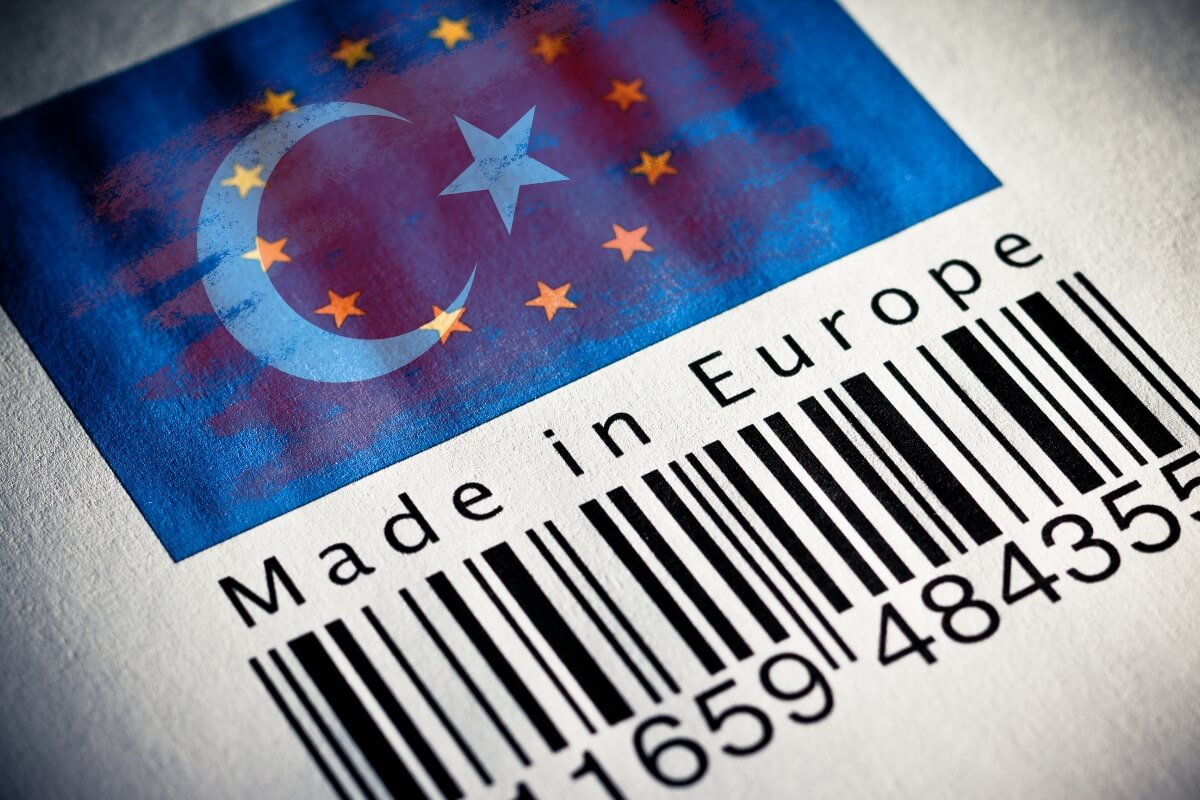

As the EU turns “Made in Europe” into a concrete industrial strategy with ongoing negotiations for an Industrial Accelerator Act, a fundamental question emerges: where does Turkey fit into the EU’s pursuit of strategic autonomy? Despite its status as an EU candidate country and its economic integration through the Customs Union, Turkey risks being left outside the EU’s evolving industrial framework. The recent Franco-German automotive agreement has intensified this debate, signalling a narrower definition of “Made in Europe” that could accommodate the UK, Norway, Iceland and Switzerland while excluding Turkey.
Turkey’s reaction and a reality check
The prospect of exclusion has raised serious concerns among the Turkish government, business community and analysts. The scale of economic integration explains why. The EU remains Turkey’s largest trading partner, accounting for 42.7% of its exports in 2025. The automotive industry is particularly exposed: in the first nine months of 2026, 73.7% of Turkey’s automotive exports went to the EU, with Germany and France among its largest markets. The sector accounts for almost 15% of Turkey’s exports.
While some in Turkey advocate alternative markets, none of these can replace the EU in terms of scale or depth of economic ties. China is frequently mentioned, but it offers no partnership on equal terms. Turkey’s trade deficit with China continues to grow, reaching $46.3 billion in 2025. Moreover, despite growing trade ties with the Middle East, Africa and Central Asia, none of these regions can match the EU’s importance.
Exclusion could therefore have far-reaching consequences for Turkey’s automotive industry and wider economy. The implications may extend well beyond cars, as similar EU requirements could emerge in other strategically important industries, including steel, cement, aluminium and chemicals.
The timing is particularly striking. Just days before the Franco-German agreement, the EU–Turkey Business Summit in Brussels on 13 October brought together ministers, senior EU officials and business leaders amid optimism about the future of relations. Yet “Made in Europe” illustrates the limits of such optimism. Positive messages and high-level meetings, however welcome, cannot substitute for addressing the political challenges and structural shortcomings of EU–Turkey relations. Unless these issues are tackled, major disagreements and potentially far-reaching economic consequences will remain difficult to prevent.
This also offers a lesson for Turkish businesses. High-profile lobbying initiatives generate visibility, but not necessarily meaningful policy outcomes. What is needed is a more strategic and sustained advocacy approach, built on genuine engagement with European stakeholders and a deeper understanding of the EU’s evolving priorities. Rather than prioritising large delegations or numerous high-level meetings, the focus should shift to the quality of dialogue and to building support among European businesses. Effective engagement also requires raising difficult questions in Ankara, not merely advocating Turkish interests in Brussels. Without addressing the political challenges shaping EU–Turkey relations, even the most ambitious outreach efforts will have limited impact.
Beyond “Made in Europe”: The underlying challenge in EU–Turkey relations
The “Made in Europe” debate is a symptom of a much deeper problem in EU–Turkey relations. Similar obstacles have prevented closer cooperation in other strategic areas beyond the scope of the Industrial Accelerator Act, particularly in defence. With Turkey’s accession process effectively stalled, political divergences persisting and no long-term vision in place, the EU and Turkey cannot realise the full potential of their relationship.
Over the past 10 to 15 years, EU–Turkey relations have increasingly shifted from a norms-based model towards transactional cooperation. What began as a pragmatic, short-term response to political difficulties has become the dominant framework for managing relations. Yet this approach is at odds with the EU’s strategic autonomy ambitions, which require long-term planning, predictability and cooperation with trusted, like-minded countries. This helps explain the contrasting treatment of the UK and Turkey. While the UK is broadly regarded as a like-minded country, Turkey is not viewed in the same way. This remains the elephant in the room whenever EU–Turkey relations are discussed in Brussels.
The Turkish government, however, has so far shown little discomfort with this transactional relationship. Geopolitical developments have strengthened Turkey’s strategic importance, giving Ankara considerable political capital. Rather than using it to build a more sustainable and ambitious relationship with the EU, the government has largely deployed it to limit EU criticism of democratic backsliding in Turkey. Yet, if used more strategically, this political capital could offer a historic opportunity to reshape EU–Turkey relations and position Turkey as a key European partner in defence, industrial production, trade and strategic investment. The “Made in Europe” debate exposes the limits of relying on geopolitical leverage without addressing the underlying political challenges.
The need for a strategic reset
The solution cannot lie in sector-by-sector negotiations on defence, automotive manufacturing or steel alone. What is needed is a shift away from predominantly transactional cooperation towards a norms-based relationship, underpinned by a credible long-term vision for a shared future. Such a vision need not depend on immediate progress towards EU membership, but it does require renewed commitment to democracy, the rule of law, fundamental rights and mutual trust. Rather than pursuing a positive agenda without tangible outcomes, the EU should address these challenges openly through genuine dialogue, guided by a clear vision and a roadmap with explicit conditionality tied to concrete steps. With geopolitical and economic developments encouraging closer cooperation, both sides would benefit from rebuilding relations on these foundations. This could contribute significantly to a more democratic, prosperous and secure Europe.
The EU must also ensure that “Made in Europe” does not become a vehicle for old-fashioned protectionism that undermines the principles on which the European project was built. Turkish businesses have demonstrated their reliability as economic partners over decades. Political disputes should not result in measures that disproportionately penalise these businesses and, indirectly, millions of Turkish citizens.
EU–Turkey relations extend far beyond governments. Turkish businesses, civil society organisations, the democratic opposition and millions of citizens who support closer ties and share European values are also essential stakeholders in this relationship. Their voices must not be overlooked as the EU redefines its strategic priorities.
Dr Demir Murat Seyrek is an Academic Fellow at the European Policy Centre and an Adjunct Professor at VUB and the Brussels School of Governance.
The support the European Policy Centre receives for its ongoing operations, or specifically for its publications, does not constitute an endorsement of their contents, which reflect the views of the authors only. Supporters and partners cannot be held responsible for any use that may be made of the information contained therein.