

Democracy, crowdfunded: The Turkish political experiment Europe should watch
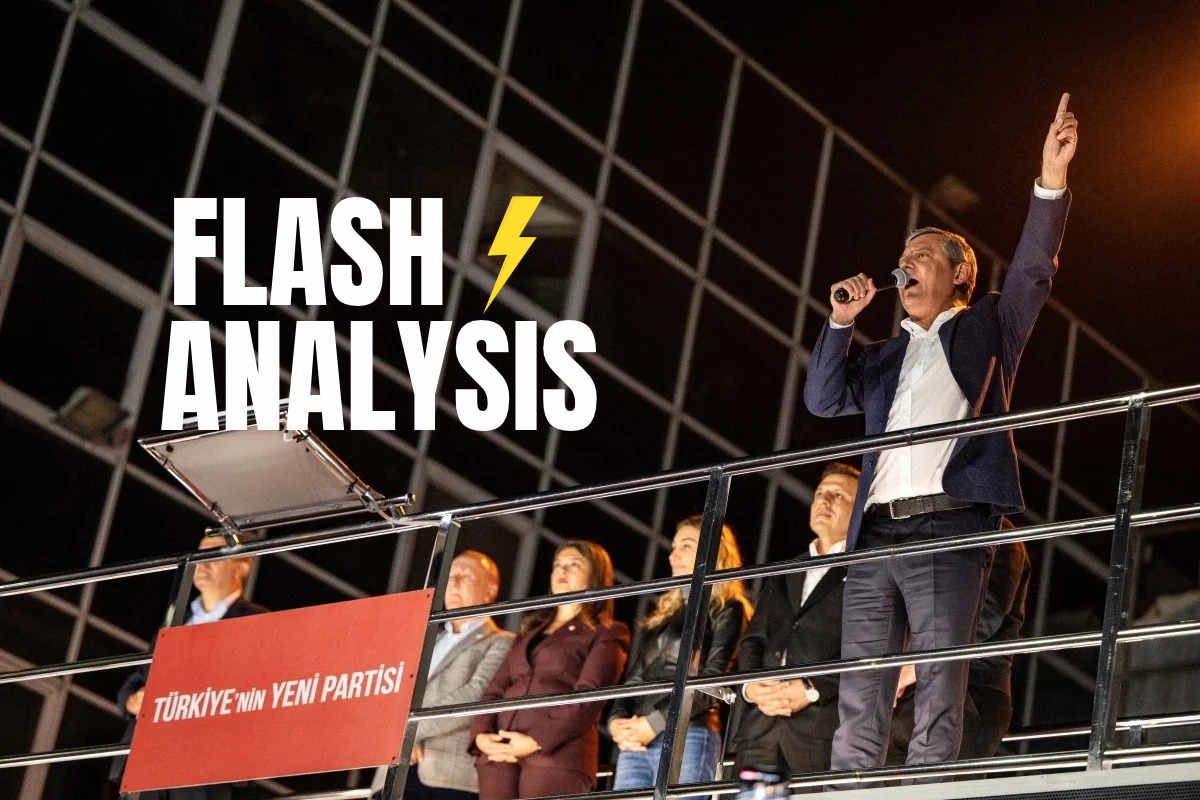

Four months ago, Turkey’s New (Yeni) Party did not exist. On 14–15 November, it held its first national congress as the country’s main opposition party. Founded on 24 July, the party has already established organisations in every province and district. Its congress completed a crucial stage in this rapid transformation.
The scale of the movement is remarkable: the New Party already has around 800,000 members, compared with 356,769 for Germany’s largest party by membership, the CDU, founded in 1945. While national contexts differ, the comparison highlights how rapidly the New Party has grown despite unfavourable circumstances. Yet more significant than its rapid growth is the political model behind it. The party’s current budget of around €11 million comes entirely from membership fees and donations from almost 160,000 people. It reflects a model of active citizenship in which people help finance and build a party.
The election process extended this model to decision-making. Every member was able to vote for the district and provincial chairs and, ultimately, party leader Özgür Özel. 639,454 members voted at 2,502 ballot boxes nationwide, an unprecedented exercise in internal party democracy in Turkey. This combination of participation and crowdfunding has implications beyond Turkey. As mainstream parties across Europe lose touch with citizens, it offers a possible model for rebuilding political participation.
The party congress, however, marks the beginning of a harder phase: turning this model into durable political success. After its initial surge in August, the party’s growth appears to have slowed. It still needs to develop a clear and distinctive political agenda and convince voters that it has a competent team and is capable of solving the country’s major problems. The post-congress period will show whether it can regain momentum, realise Özel’s ambition to make it a home for all democrats and win over undecided voters leaving the governing party.
The party also faces intense legal and political pressure, including 63 proceedings seeking to lift Özel’s parliamentary immunity. Furthermore, its presidential candidate, jailed Istanbul mayor Ekrem İmamoğlu, remains highly popular but faces sentences totalling up to 2,352 years.
For the EU, this development is significant for two reasons. First, Turkish democracy remains alive despite serious challenges and could follow a similar path to Hungary and Serbia. Democracy and the rule of law must therefore remain integral to EU–Turkey relations, while the opposition’s resilience remains a strong source of hope for Turkey’s European future.
Second, EU engagement with Turkey should not be reduced to intergovernmental relations. EU institutions and European political families should use the New Party’s emergence as an opportunity to renew structured dialogue with Turkey’s democratic opposition and civil society. The objective should be to invest in political pluralism and maintain links with those working for Turkey’s democratic future.
Europe should study this experiment. If crowdfunded participatory politics can take root despite Turkey’s democratic backsliding, mainstream European parties should be capable of similar innovation. The New Party is therefore testing more than the future of Turkey’s opposition. It is testing whether a party built, shaped and financed by its members can help renew participatory democracy.
Dr. Demir Murat Seyrek is an Academic Fellow at the European Policy Centre and an Adjunct Professor at VUB and the Brussels School of Governance.
The support the European Policy Centre receives for its ongoing operations, or specifically for its publications, does not constitute an endorsement of their contents, which reflect the views of the authors only. Supporters and partners cannot be held responsible for any use that may be made of the information contained therein.