

Managing migration through data: The expansion and integration of Eurodac
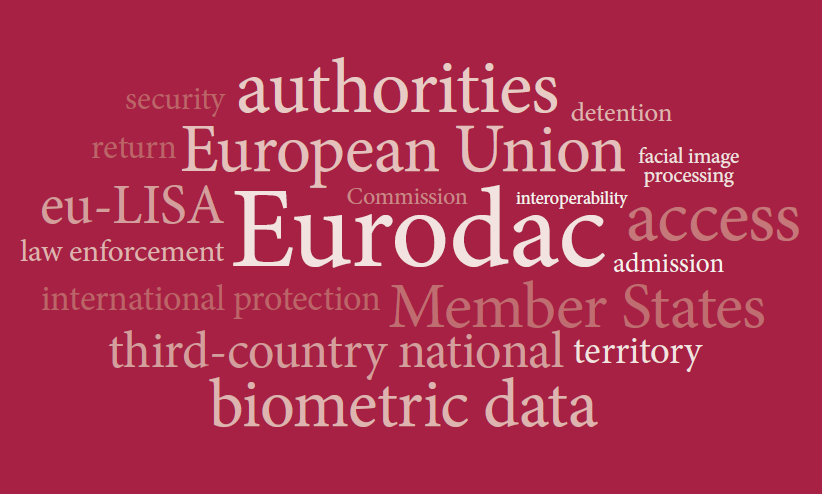

Eurodac, the IT biometric system originally established to support the asylum policy of the European Union (EU), is undergoing a fundamental transformation. Following the New Pact on Migration and Asylum and the adoption of reforms in 2024, Eurodac is set to become the operational backbone of the EU migration management framework, extending well beyond its initial purpose.
The new system will collect and retain several sets of biometric and biographic data on a wide range of individuals, including those irregularly present on the territory, to allow more accurate surveillance of irregular movements and faster identification of non-EU nationals. Eurodac’s further integration into the new interoperable environment will reinforce its central role in border control, irregular migration management and return. This shift aligns with overall priorities in migration policy as well as the EU’s growing focus on return as a political and
operational goal.
While the new Eurodac could potentially enhance migration policy and strengthen trust between member states, realising its added value will be contingent on its effective implementation. Without effective implementation, interdependence could quickly become a burden, generating unintended systemic failures across all relevant dimensions of EU migration policy. The updated system is expected to support faster identification and
more effective return cooperation. However, shortcomings in implementation capacity, uneven preparedness among member states and limited safeguards for data sharing with third countries could undermine these objectives.
Ultimately, the success of Eurodac will depend not only on technical readiness but also on strong political commitment to a coordinated, rights-based implementation that balances operational goals with data protection and fundamental rights obligations.
This Discussion Paper points to the opportunities as well as the challenges and risks associated with Eurodac’s expansion. The expanded functions and scope of Eurodac aim to enhance migration management and address irregular migration more effectively. However, as outlined in this paper, the implementation of these changes will require careful investments. Attention is also devoted to compliance with fundamental rights, including meeting data protection standards.
Altogether, these reflections underscore the importance of balancing migration management concerns with the protection of individual rights, maintaining high standards on data integrity and enabling cooperation with partner countries that respects privacy and human dignity.
Read the full Discussion Paper here.
Virginie Jacob is a Senior Adviser to the European Migration and Diversity programme at the European Policy Centre.
This publication was developed as part of the project “What next for the EU’s migration and asylum system after the New Pact?” which involves a collaboration between the European Policy Centre (EPC) and the Odysseus Academic Network for Legal Studies on Immigration and Asylum in Europe (Odysseus Network).
The support the European Policy Centre receives for its ongoing operations, or specifically for its publications, does not constitute an endorsement of their contents, which reflect the views of the authors only. Supporters and partners cannot be held responsible for any use that may be made of the information contained therein.