

EPC co-hosts London panel on the Europeanisation of NATO
The debate over Europe’s role in NATO is no longer only about burden-sharing. It is about contingency planning. As US commitment to the alliance becomes politically fragile – with President Donald Trump calling NATO a “paper tiger” and attacking European allies for failing, in his eyes, to provide sufficient support for the US-Israeli war on Iran – European governments are being forced to ask how much responsibility they can assume without duplicating NATO, weakening transatlantic deterrence or accelerating the very decoupling they want to avoid.
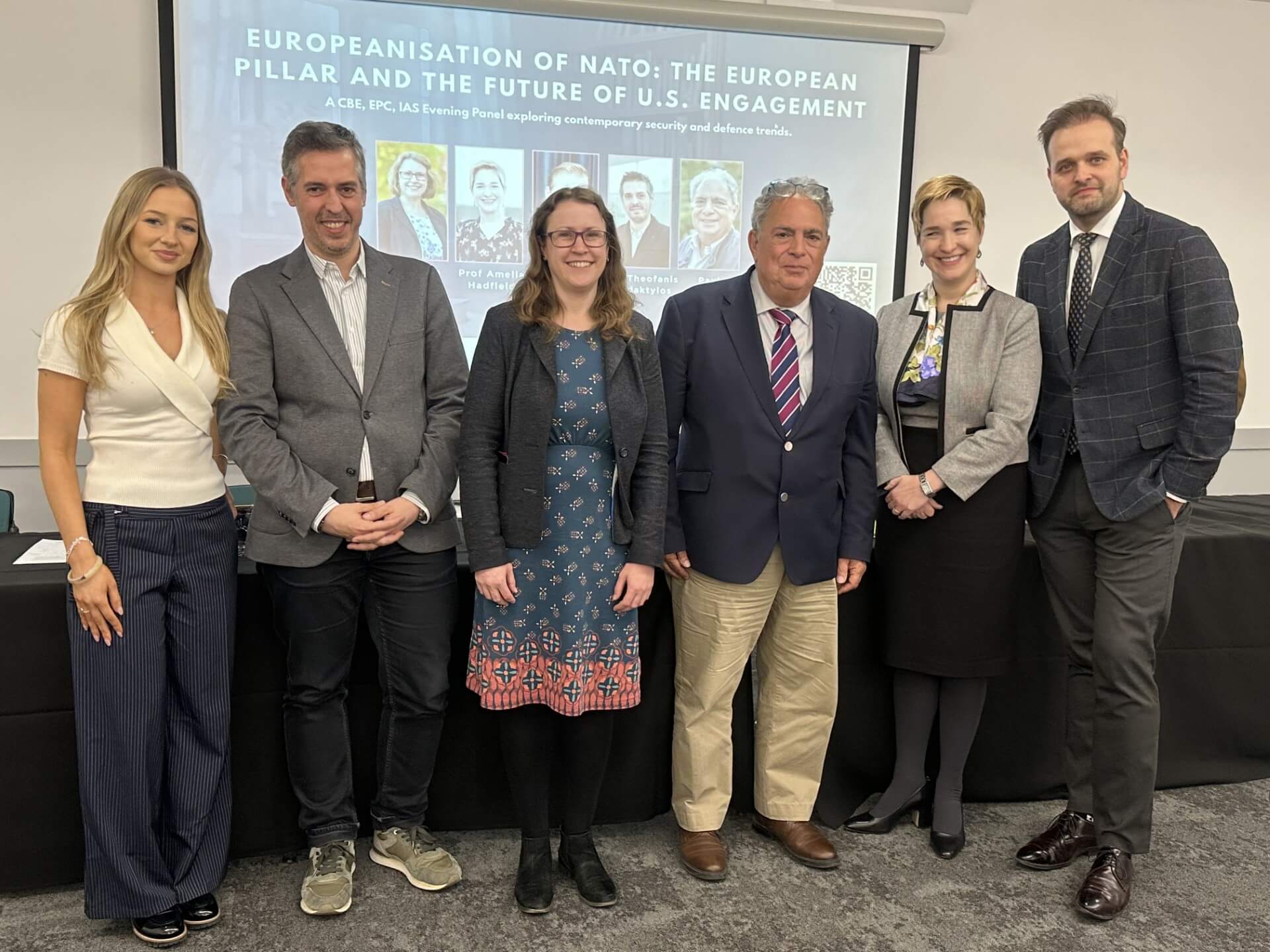
These questions shaped the European Policy Centre's (EPC) discussion in London in April, co-hosted with the University of Surrey’s Institute of International Studies and the Centre for Britain and Europe. The debate focused on how Europe can build defence capabilities within the Atlantic alliance at a moment of unprecedented uncertainty while preserving NATO as the core framework for collective defence.
Theofanis Exadaktylos and Laura Chappell of the University of Surrey cautioned against European moves that could duplicate NATO’s role, such as establishing a European operational headquarters or treating the European Union as a substitute for the alliance. Europe, they argued, should not decouple from the US. Instead, it should strengthen its complementarity by building its military capabilities. Chappell noted that Europeans were already hedging against US uncertainty by weaving a network of bilateral and minilateral defence accords. These, she said, form part of a broader European defence ecosystem compatible with NATO.
Speakers agreed that if the US had intervened militarily to carry out Trump’s threat to seize Greenland from Denmark, it would have spelled the end of NATO. Instead, the alliance provided the framework for a provisional solution that accommodated US demands for greater Arctic security while preserving Danish sovereignty.
Amelia Hadfield of the University of Surrey, founder of the Centre for Britain and Europe, said there was no guarantee that the United States would intervene in support of NATO if, for example, Russia launched a limited and ambiguous operation to capture a Russian-speaking town in Latvia. While the US commitment to NATO remains structurally strong, it has become politically fragile. US intervention would likely be “delayed, politically scaled and possibly financially contingent,” she said, reflecting Trump’s transactional foreign policy.
EPC Policy Analyst Juraj Majcin, who described himself as a “recovering transatlanticist”, noted that threat perceptions differ between eastern and southern Europeans as well as across the Atlantic. US conventional and nuclear capabilities have deterred Russia from attacking NATO countries for 77 years, and even an American “perhaps” might still have deterrent value. For that reason, he argued, it is essential to keep a US Supreme Allied Commander Europe to preserve the link to the US nuclear umbrella.
EPC Senior Visiting Fellow Paul Taylor, who chaired the session, concluded that Europeans should work on a Plan B in case they can no longer count on US support in a crisis. He argued that a core group based on the Coalition of the Willing for Ukraine should be able to prepare and, if necessary, implement decisions when NATO or the EU are unable to reach consensus.
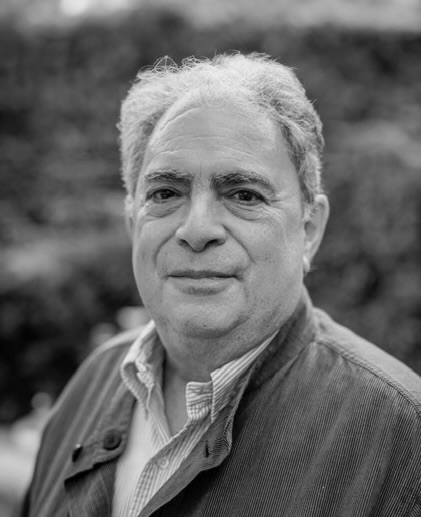
Paul Taylor is a Senior Visiting Fellow in the Europe in the World Programme and a member of the Defence/Security EUrope project.
The support the European Policy Centre receives for its ongoing operations, or specifically for its publications, does not constitute an endorsement of their contents, which reflect the views of the authors only. Supporters and partners cannot be held responsible for any use that may be made of the information contained therein.