

Brexit 10 years on: Why would the EU want the UK back?
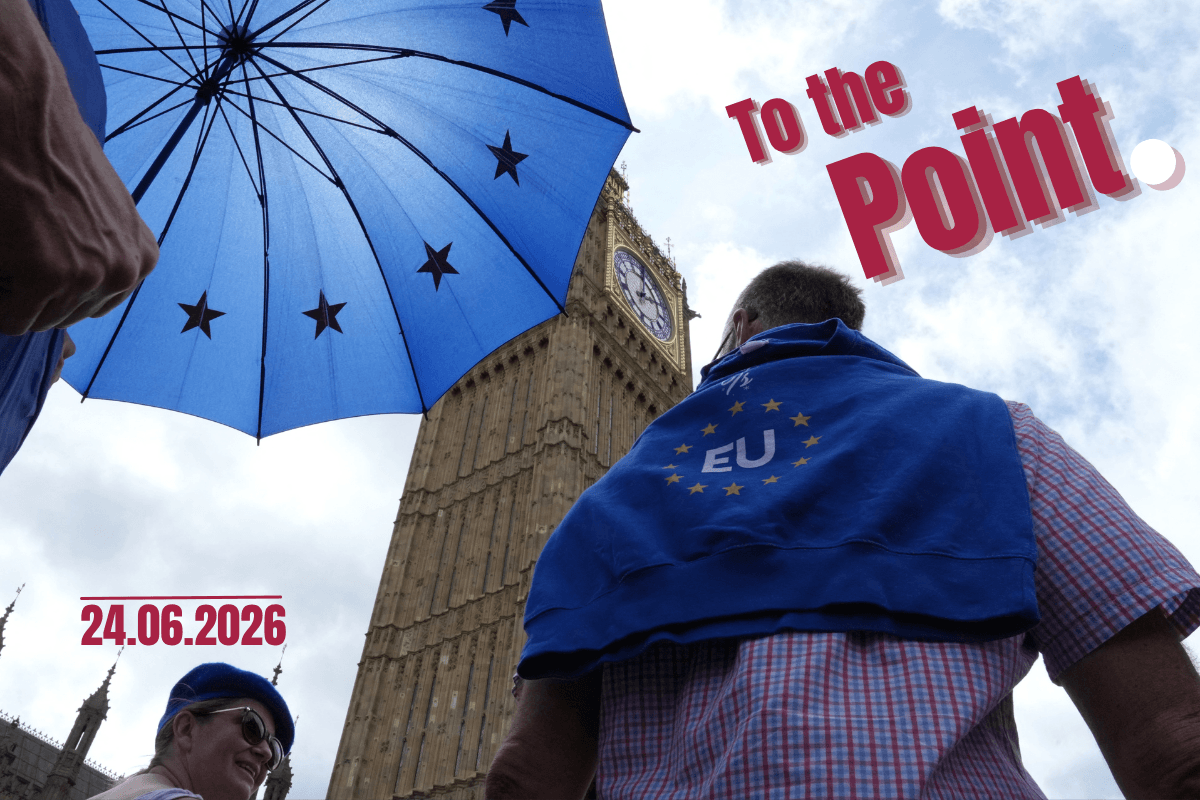

Ten years on from Britain’s fateful vote to leave the European Union, why on earth would the bloc want such an obstructive country to rejoin? The UK only ever wanted the common market, not political integration or strategic autonomy. And it never wanted to pay its full share.
From Wilson to Thatcher to Cameron, successive leaders demanded the renegotiation of membership terms. No deal with the UK was ever final. Even now, after Brexit consumed six prime ministers in a decade, the right-wing Conservative and Reform parties are vowing to scrap any agreement the Labour government reaches with Brussels on a modest reset agenda of food standards, energy markets and youth mobility.
The UK was always an awkward, semi-detached player, eager for free trade but battling against monetary and fiscal union, demanding opt-outs and rebates for itself, and often acting as a Trojan horse for US interests. What club in its right mind would take back such a member after it walked out saying it would be better off going alone?
The 10th anniversary discussion about “Rejoin” is typically Anglo-British and detached from EU reality. It is all about economic damage limitation with no political vision of European unity. It’s about the cost of living, not the geopolitics of a world in which Russia has brought war back to Europe, China poses a stark geo-economic challenge and the United States under Donald Trump has become increasingly hostile.
The EU has become more geopolitical and less unconditionally free marketeering in the decade since the Brexit vote. It has achieved breakthroughs that the UK would likely have blocked such as joint borrowing to fund economic recovery and jointly funded defence loans.
Brussels should advance closer ties with London on defence, security and foreign policy, financial stability and youth mobility. But it is not in the EU’s interest to discuss renewed UK membership.
Paul Taylor is a Senior Visiting Fellow in the Europe in the World Programme and a member of the Defence/Security EUrope project.
The support the European Policy Centre receives for its ongoing operations, or specifically for its publications, does not constitute an endorsement of their contents, which reflect the views of the authors only. Supporters and partners cannot be held responsible for any use that may be made of the information contained therein.