

EPC drives European maritime security and defence innovation

In the week when the European Commission unveiled ambitious proposals for faster military mobility and accelerated defence innovation in Europe, the EPC’s European Defence and Security Project staged a cluster of well-attended events with partners on enhancing maritime security, boosting cutting-edge defence research and integrating innovation into European armed forces and their doctrine.
Senior Visiting Fellow Chris Kremidas-Courtney spoke on Europe’s future maritime security needs on a panel with speakers from co-host SEA Naval, the association of Europe’s seven leading naval shipyards, expertly chaired by EPC Policy Analyst Mihai Chihaia, highlighting the need for modular ships that can integrate innovative technologies to adapt to a rapidly evolving security seascape.
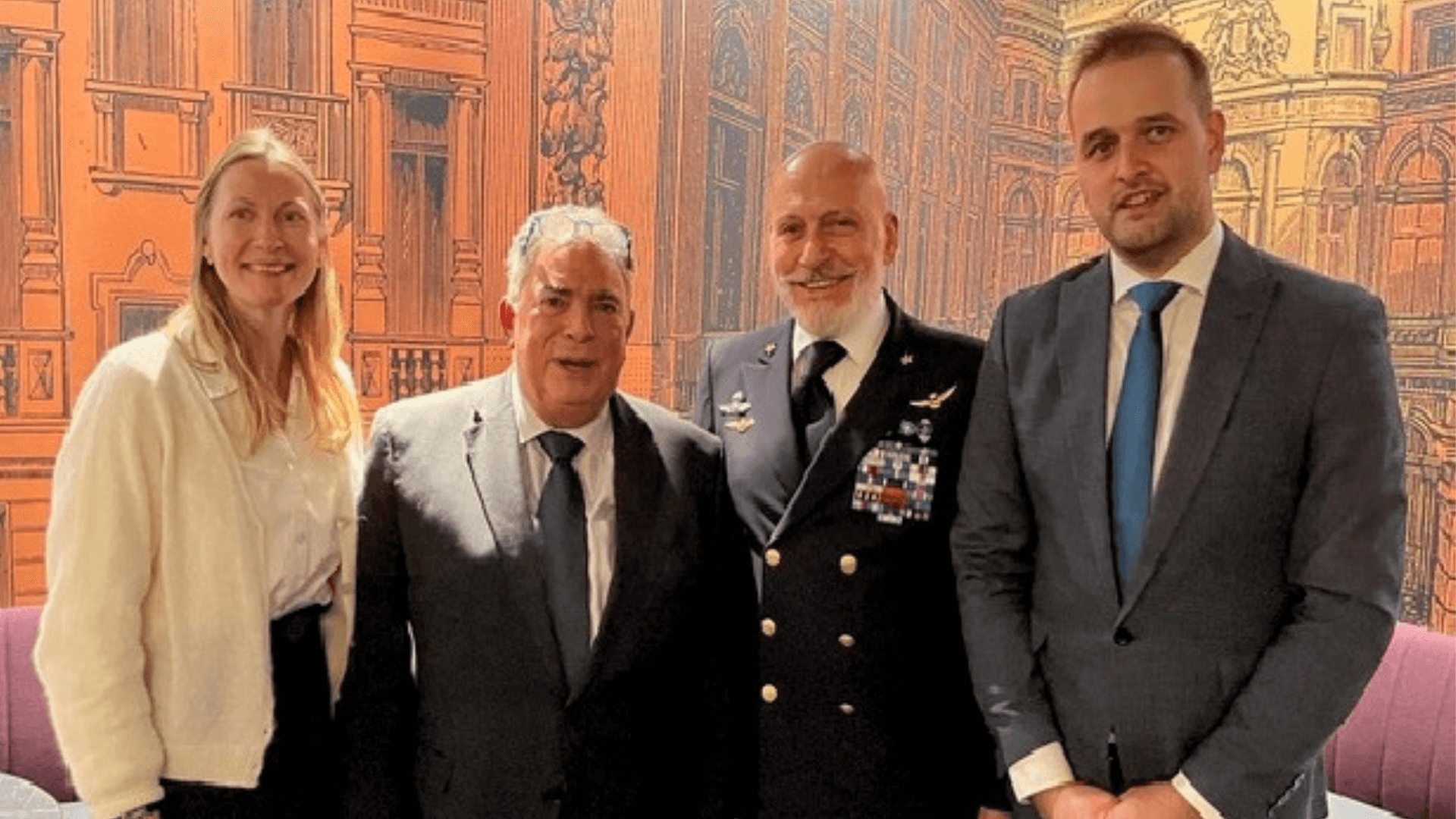
At an EPC dinner, the chairman of NATO’s Military Committee, Admiral Giuseppe Cavo Dragone, discussed whole-of-society defence of Europe with representatives of non-defence industries and speakers from Ukraine’s defence ecosystem, drawing lessons from Russia’s war of aggression.
The following day, we co-hosted with the Danish National Defence Technology Centre (NFC) a roundtable on lessons learned from the European Defence Fund and on how the EU can continue to stimulate cross-border cooperation in cutting-edge research and development to fill capability gaps and transform Europe’s defences through its future European Competitiveness Fund.
We also staged a European Defence Innovation Dialogue at which the Commission’s Michaelis Ketselidis outlined the European Defence Industrial Transformation Strategy in conversation with EPC CEO Fabian Zuleeg, followed by three panels on simplifying procurement, navigating future maritime threats and reinforcing Europe’s air defences. Each panel featured speakers from the EU, NATO, Urakine and industry.
Ukrainian participants illustrated how they were keeping ahead of Russian drone advances by embedding engineers with frontline forces to feed back vital data, enabling developers to innovate and adapt Ukraine’s drone and counter-drone systems. The contrast was striking between the speed and urgency of Ukrainian adaptation, measured in weeks, and the still-slow pace of the adoption of disruptive technologies into NATO and European forces.
Thanks to SEA Naval and NFC for partnering with us on these timely discussions.
Paul Taylor is a Senior Visiting Fellow with the Europe in the World Programme at the EPC.
The support the European Policy Centre receives for its ongoing operations, or specifically for its publications, does not constitute an endorsement of their contents, which reflect the views of the authors only. Supporters and partners cannot be held responsible for any use that may be made of the information contained therein.