

EPC experts react: EU Council Summit Conclusions, 18 December 2025
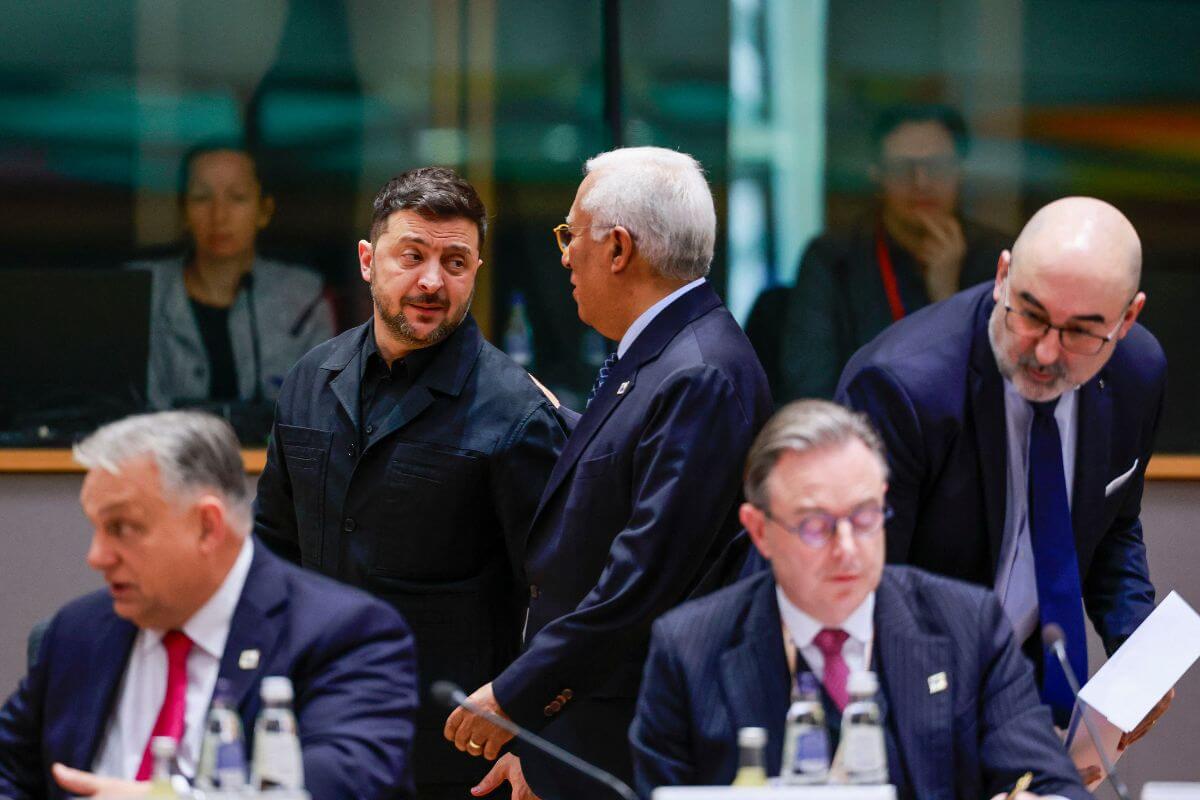




In an 18 December summit that ran late into the night, the European Council adopted conclusions on Ukraine, the Middle East, European defence and security, the next multiannual financial framework, enlargement, internal reforms, migration and competitiveness.
The key outcome was a decision to raise up to €90 billion in joint EU borrowing to provide loans to Ukraine over the next two years, sidestepping deep divisions over the immediate use of frozen Russian sovereign assets. While leaders agreed to keep €210 billion in Russian assets immobilised until Moscow pays war reparations, resistance – notably from Belgium, which hosts the Euroclear bank in which the assets are held – prevented their use as collateral at this stage. The compromise ensures continued funding for Ukraine’s defence, but, as EPC experts write, exposes persistent fractures over ambition, unity and Europe’s willingness to fully leverage its economic power at a decisive moment for European security.
Read EPC experts’ takes below:
"The summit demonstrates that the EU is still suffering from the progress illusion: we are moving forward but not at the speed, scale and scope necessary to address the exponential challenges we face. The signal to the rest of the world, including Putin and Trump, is that we are unable to achieve either the necessary ambition, nor to act in unity."
– Fabian Zuleeg, Chief Executive and Chief Economist at the European Policy Centre
"The European Council Conclusions repeat the mantra that the EU "needs to lay the necessary internal groundwork & reforms" in view of an enlarging Union.
But EU leaders again failed to agree on concrete steps to prepare the Union for reform. This undermines EUrope’s credibility and shows that the EU27 are not able to live up to the test of times."
– Janis A. Emmanouilidis, Director of Studies at the EPC.
"German Chancellor Merz had personally invested time and political clout in a solution on Russian assets in the run up to the summit. A common debt mechanism is not something Berlin favoured, in line with scepticism of previous years. But the support of the agreement last night clearly shows Berlin’s priority: To continue to support Ukraine and European security."
– Almut Möller, Director for European and Global Affairs and head of the Europe in the World programme at the EPC.
"EU leaders talked tough but failed to turn words into action, leaving billions in frozen Russian assets untouched, exposing the EU as geopolitically weak. While the fallback – a loan backed by the next EU budget – is crucial for Kyiv, efforts to unlock the frozen funds must continue. Russia must pay for its aggression."
– Amanda Paul, Senior Policy Analyst and Deputy Head of the Europe in the World Programme at the EPC.
"This shows the EU is still capable of advancing through compromise, sidelining pro-Russia populists. Ukraine is funded for two years. Germany accepted joint borrowing, which hopefully sets a precedent. Belgium’s concerns were respected and Russia’s frozen funds go to Ukraine one way or another. And the Mercosur deal is coming."
– Paul Taylor, Senior Visiting Fellow at the EPC.
"By failing to agree to use Russian frozen assets as collateral for the EU loan to Ukraine at this defining moment for European security, leaders have chosen comfort over courage, which will embolden Russia."
– Maria Martisiute, Policy Analyst at the EPC.
"European leaders have once again averted an immediate crisis and ensured that Ukraine will not be left without financial support. Yet they have failed a broader geopolitical test. Enhanced cooperation can forge compromise while sidelining obstructionists such as Hungary or Slovakia. However, by refusing to use frozen Russian assets, Europe sends the wrong signal on two fronts: to Moscow, that Brussels lacks the political will to take fast and bold decisions that impose real costs on the Kremlin; and to Washington, that it is free to come up with peace proposals involving assets held in Europe on Europe’s behalf – and without consulting Europe."
– Juraj Majcin, Policy Analyst at the EPC.
The support the European Policy Centre receives for its ongoing operations, or specifically for its publications, does not constitute an endorsement of their contents, which reflect the views of the authors only. Supporters and partners cannot be held responsible for any use that may be made of the information contained therein.