

EU should move Russian account out of Belgium to gain strategic options




- The EU’s new €90bn loan for Ukraine is fairly good
- Using the €210bn Russian assets would be a gamechanger
- It would send a powerful message to Putin and Trump
- It will be hard to use the assets if they stay in Belgium
- So the EU should first transfer the Russian account to a new custodian
- That will increase its strategic options
- The EU should act now rather than wait until Ukraine’s money runs out
The European Union’s new €90 billion loan to Ukraine is a good step. But it would be a grave error to think the EU has finished the job and can now relax. The new loan will fund Kyiv for a maximum of two years. It is not a gamechanger. Ukraine still has its back to the wall on the battlefield – and Donald Trump could at any time force it into a miserable peace deal. That would undermine the EU’s own security.
The EU therefore needs to act boldly to help Ukraine. The €210 billion Russian sovereign assets immobilised in the bloc are its main financial lever. Using these funds in a fair and proportionate way would send a powerful message to Vladimir Putin. The extra firepower could fund Ukraine for up to four years and so help it win a war of attrition against Russia. That could eventually convince Putin to agree a decent peace deal.
The EU has reserved the right to use the Russian assets to repay the new €90 billion loan if Moscow refuses to pay Ukraine war reparations. The European Council has asked the European Commission to do further work on deploying the funds to fund a reparations loan.
But it will be hard to use these funds so long as the bulk of them are stuck in Euroclear. The Belgian government was so terrified of Russian bullying that it sank a plan for a reparations loan using the assets in December. Among other things, it was worried that it could face an existential financial risk if Moscow successfully sued it. It was also concerned because Euroclear is a systemically important financial institution.
It is therefore vital to move the entire Russian account to a new custodian under EU control. Other frozen Russian sovereign accounts elsewhere in the bloc should also be transferred to the new custodian. This is necessary for public security and financial stability. Doing so would take Belgium and Euroclear out of the firing line. There would be no point in Moscow bullying them. The EU as a whole would have much more strength than a single country to stand up to pressure.
Trump’s own agenda provides a further reason to move the accounts. He wants to use the assets as part of a peace plan. While it would be good to deploy the assets to rebuild the country at the end of the war, Trump’s original proposal had a number of undesirable features including that the US should get half the profits. In any case, the priority now is to boost Kyiv’s defences. Trump’s recent threats over Greenland also ram why the EU must show it is a strategic actor, not a bystander.
Moving the Russian accounts to a new EU-controlled custodian would be like placing a gun on the table. The EU would then be free to use the assets at a time and in a manner of its choosing - provided that the use is fair and proportionate, as it has always been the case with the EU position on this. It could act extremely rapidly, which could be vital given how fast world events are moving.
Squaring Belgium
Bart De Wever, the Belgian Prime Minister, should welcome a plan to move the Russian assets along with their associated liabilities. After all, he has said he wants to get rid of the Russian assets - and that it would be a “happy day” if somebody else was willing to take the entire account.
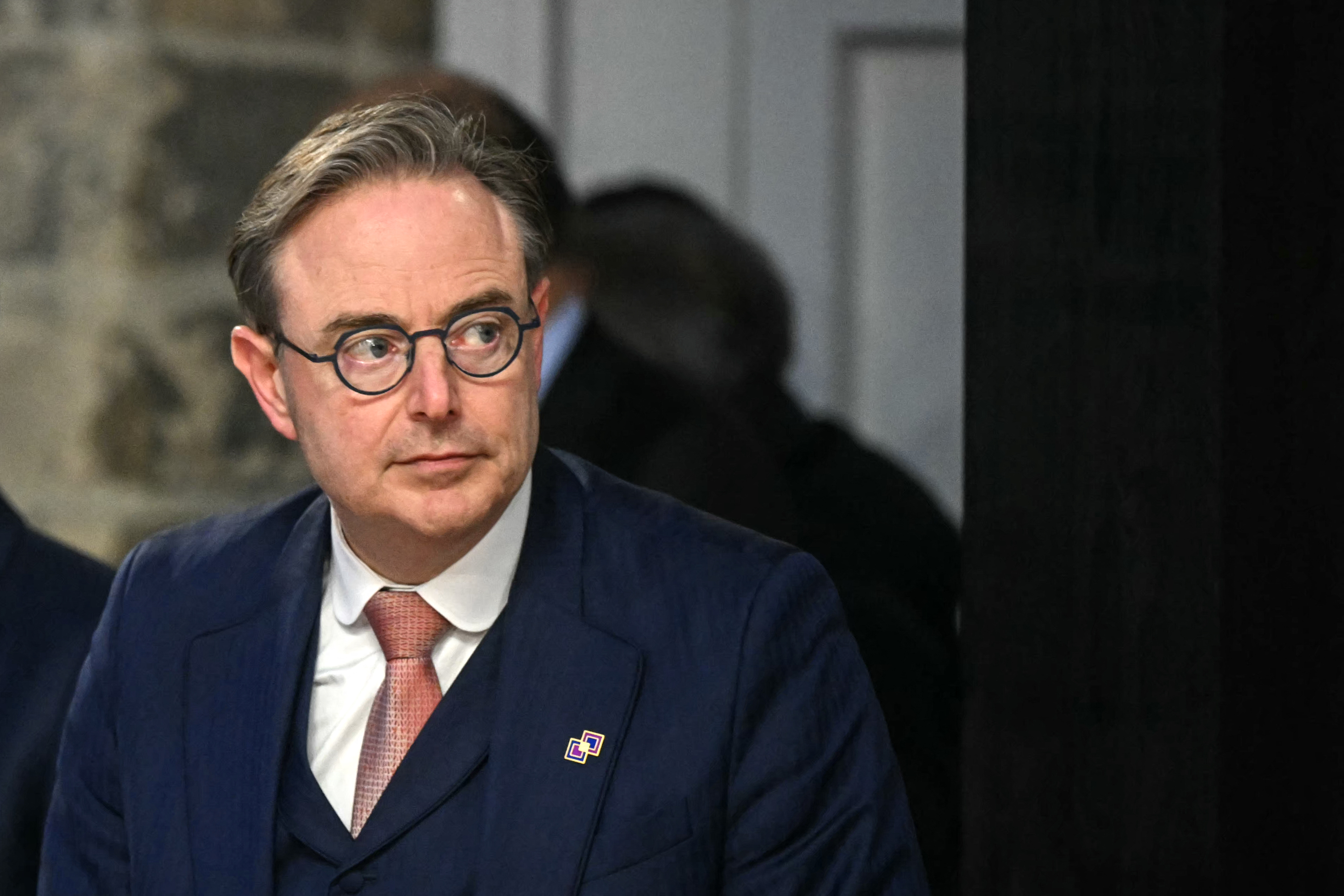 Photo credits: NICOLAS TUCAT / POOL / AFP
The residual legal risks to Belgium would be miniscule. Russia might, of course, argue that it should not have transferred the account to a different custodian. But Belgium would not do this of its own free will. The EU would pass a regulation requiring the country to do so. That would provide Belgium with an excellent defence against any complaint Russia might raise under its investment treaty with Belgium. There’s a good precedent. Some Mexican investors sued Spain under the countries' investment treaty when they lost money after it resolved the bankrupt Banco Popular. The case made clear that any liability for the EU measures imposed on Spain was with the EU and not Spain, as the latter had no choice but to follow EU law.
That said, the EU could offer Belgium an indemnity to cover any residual damages deriving from the mandatorily-instructed change of custodian. The EU would not be taking on any extra liability as the Banco Popular precedent makes clear that it would be liable anyway.
What is more, the risks to the EU would be slim. Transferring the account is neither confiscation nor expropriation as Russia would remain its sole beneficial owner. The move would merely be a change of custodian. Individuals and corporations are often told that their accounts are being moved to a third party, particularly when the original depositary becomes insolvent. There is also an important precedent for shifting sovereign assets. After the fall of Saddam Hussein, Iraqi assets outside the country were transferred to an account at the Federal Reserve Bank of New York.
To be clear, an EU indemnity to hold Belgium harmless for moving the account would be very different from the extensive list of guarantees that De Wever was demanding in return for greenlighting the reparations loan. Belgium then wanted a guarantee that other member states would reimburse any money borrowed from Euroclear within 24 hours. But there would be no need for such a liquidity guarantee, as Euroclear would no longer be custodian for the Russian account. There would also be no need member states to provide any indemnity as the EU itself could provide that.
How and where to move the accounts
The best way to move the Russian accounts to a new EU-controlled custodian would be to amend the December regulation which immobilised Moscow’s assets indefinitely. The argument would be that this was necessary for public security as well as financial stability given the need to insulate the EU’s systemically important financial plumbing from extraterritorial legal warfare.
The measure would be temporary until Russia stops its unjustified aggression against Ukraine and pays reparations for the damage it has caused. Article 122 of the TFEU would be used to enact this policy. The EU’s so-called emergency power allows the Council to act with speed. It would also avoid the possibility that Hungary or another Kremlin-friendly country might seek to veto the plan. As such, it would be a further demonstration of the EU’s ability to defend its interests without being hamstrung by the need for unanimity.
There are two relevant precedents for using Article 122 to create special EU facilities. One was the European Financial Stabilisation Mechanism during the euro crisis. The other was SURE during the Covid crisis.
 Photo credits: Canva
The EU would have great flexibility over the nature of the new custodian. It would not need to be a new corporate entity – and, as such, it would not need to be domiciled in any individual member state. The EU as a whole would be taking the responsibility for acting as custodian for the immobilised Russian accounts. The regulation mandating the transfer of the Russian accounts would spell out the exact legal regime for the new custodian, including its governance arrangements.
The new custodian would be governed by a bespoke set of rules under the December regulation as amended and thus would not need capital or guarantees as a result of prudential regulations or financial law. It would not be a bank. It would merely be a custodian of Russian assets. If Russia was able to bring some successful lawsuit against the custodian and it could not pay, Moscow might conceivably be able to argue that the EU should pay. But this remote scenario would be something that happened after many years and is not the same as upfront capitalisation.
The EU may be tempted to think that there is no need to take further action on the Russian assets now that they have been frozen indefinitely and Ukraine’s immediate financial needs have been met. This would be a mistake. We should have learnt by now that Europe needs to take bold actions to establish its strategic autonomy. It needs to get ahead of the game rather than always be playing catch-up. Moving the Russian assets to an EU custodian is a proportionate and fair measure that increases the chances of a decent peace deal. In this spirit, now is the time to put its gun on the table.
The authors wish to thank Marco Lamandini and Daniel Sarmiento for their help with this paper. Any errors are, of course, solely the responsibility of the authors.
Hugo Dixon is commentator-at-large at Reuters.
Lee Buchheit is honorary professor at the University of Edinburgh Law School.
Daleep Singh is vice chair and chief global economist for PGIM.
The support the European Policy Centre receives for its ongoing operations, or specifically for its publications, does not constitute an endorsement of their contents, which reflect the views of the authors only. Supporters and partners cannot be held responsible for any use that may be made of the information contained therein.