


Everything must change in EU migration policy, for everything to stay the same? Lessons from Lampedusa
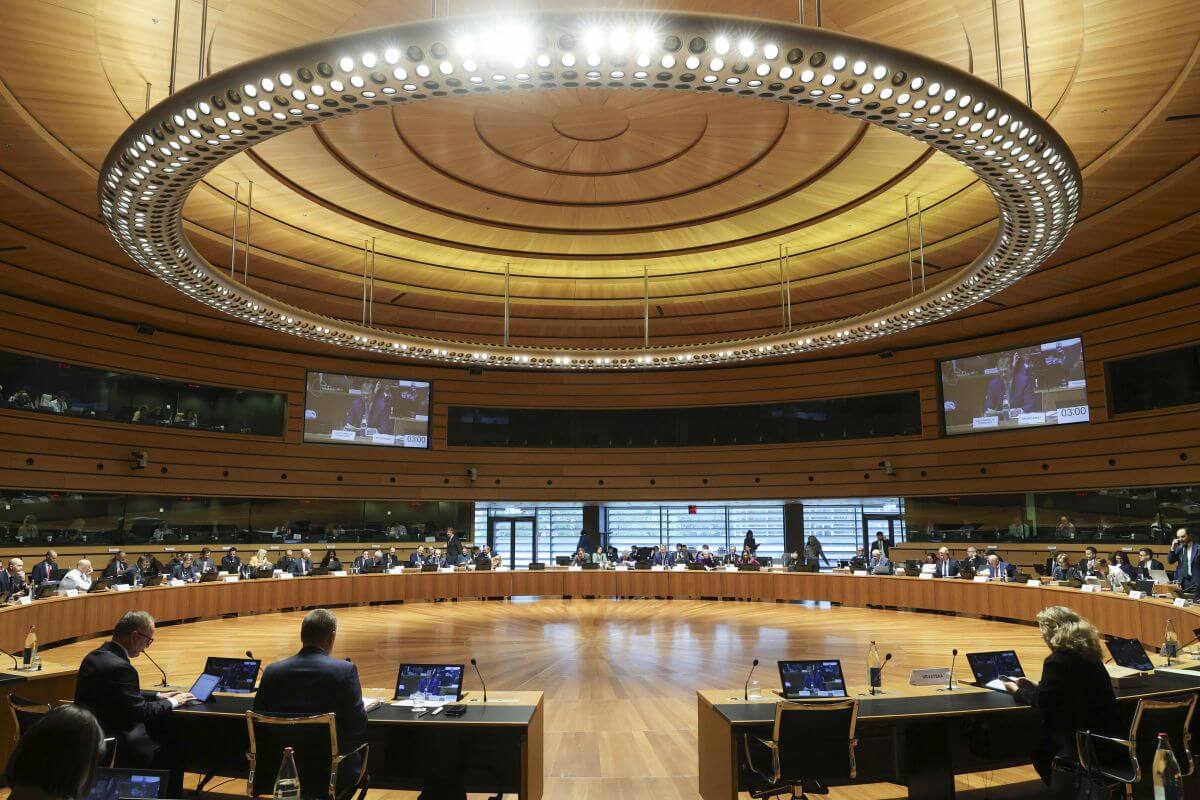

As EU leaders call for further migration reforms, implementation gaps risk remaining unresolved. The hotspot in Lampedusa illustrates why the priority should be resilient systems, rather than repeatedly rewriting rules.
The literary legacy of Tomasi di Lampedusa offers a fitting illustration of the current exasperated effort to reform EU migration policy, under pressure from populism and geopolitics. As if 10 years of hard-fought negotiations were not enough, EU leaders are demanding a new crisis framework and the simplification of rules applicable only since this summer. Simplification alone will not address bottlenecks. It may instead draw attention and resources away from implementation gaps. Meanwhile, the upcoming emergency framework may not only undermine the fundamentals of the EU asylum acquis. Rather than helping to address emergencies, it may normalise the status quo.
Changing emergency rules, normalising state practices
Between July and August, tens of thousands of people crossed from Morocco into Ceuta, exposing both legal and political fragilities in the Union and reigniting demands for stronger emergency powers. The EU needs an effective emergency framework. However, these demands raise two concerns. First, the EU introduced a framework – the so-called ‘Crisis Regulation’ – in 2024, and it only came into application this June. Demanding another without assessing and explaining why existing provisions are insufficient undermines confidence in EU law and policy.
The second relates to demands by some governments and Parliamentary groups to suspend access to asylum in emergencies. They consider the flexibility provided by the Crisis Regulation insufficient. A blanket asylum suspension would conflict with the protection against refoulement in EU law. Yet in her State of the Union address, Commission President von der Leyen promised an emergency framework allowing “time-limited and strictly defined flexibility in standard procedures”.
Allowing greater national discretion without violating the treaties will be hard. It should also not obscure a likely Gattopardian outcome: new EU legislation could entrench practices already adopted nationally. In July 2025, Greece suspended asylum applications for three months for people arriving by sea from North Africa. Poland and Finland also recently introduced comparable restrictions at their borders.
The Commission may again take the path of least resistance, accommodating state practices it should instead scrutinise.
Beyond emergencies and hotspots: the gaps that remain
While next week’s European Council is expected to take stock of the implementation of the Pact reforms, legislative fervour risks distracting from needs on the ground. My recent visit* to the hotspot in Lampedusa – criticised for overcrowding, de facto detention and inadequate safeguards before its fundamental transformation – highlights the danger of simplifying rules without examining remaining problems.
During my visit, screening operations appeared closely coordinated and sequenced. The Italian Red Cross runs the hotspot, providing assistance from disembarkation to departure. Frontex supports identification and fingerprinting. UNHCR and IOM help identify vulnerabilities, with the former also providing legal information on asylum and the risks of onward movements. EUAA personnel provide operational and technical assistance. Finally, Italian immigration officers handle referrals to subsequent procedures. Reportedly, those arriving are often transferred by sea to Porto Empedocle within 24 hours, with further processing continuing in Sicily.
This does not mean that everything works well. Italy has still not established an independent monitoring mechanism. People cannot leave the hotspot. Referral to border procedures appears the default option, raising procedural questions.
Yet, the biggest challenge is that Lampedusa cannot function without an adequately supported, geographically balanced, resilient system. While the hotspot benefits from national and EU attention and resources, other locations lack comparable staffing, funding and coordination. This is not an Italian problem alone. A screening workshop with national authorities hosted by Frontex this September highlighted that “vulnerability checks need more operational attention and staffing” and “screening infrastructure requires continuous adjustments as the rules bed in”. Simplification can help implementation. Removing duplications or clarifying responsibilities might free up staff. But changes should respond to demonstrated operational needs, rather than treat simplification as an end in itself.
The second problem is preparedness. 1,000 daily arrivals reportedly already overwhelm Lampedusa’s screening capacity. Under a procedure they call “split modality”, authorities can transfer adults to the mainland for screening while unaccompanied minors stay on the island. But these arrangements may not work in overwhelming circumstances like those in Ceuta this summer, and screening and reception capacity elsewhere is not guaranteed. Suspending asylum does not solve this question, nor can reinforced barriers in some borderlands prevent all arrivals. Inadequate preparedness remains a systematic problem, and risks shifting pressure to other Italian regions and elsewhere in the Schengen area.
Third, longer-term reception and integration also matter. Policymakers will always devote disproportionate attention to borders due to security risks, fundamental rights considerations and the media’s appetite for sensational images. But what does stronger border management achieve if those who stay face inadequate reception, delayed decisions and poor access to language learning, education or employment?
Changing the rules, preserving the failures?
Rather than drawing attention away from implementation by demanding further changes, the EU should ensure consistent standards across the system and provide support where needed. Otherwise, the capacity gaps that produce recurring emergencies will remain. Alongside its emphasis on migration and border management, the EU should give greater attention to legal pathways and integration. The alternative is a distinctly Gattopardian outcome: changing the rules while preserving the failures.
*The author wishes to thank the European Liberal Forum for organising the fact-finding mission to the hotspot in Lampedusa.
Alberto Horst Neidhardt is a Senior Policy Analyst and Head of the European Diversity and Migration Programme.
The support the European Policy Centre receives for its ongoing operations, or specifically for its publications, does not constitute an endorsement of their contents, which reflect the views of the authors only. Supporters and partners cannot be held responsible for any use that may be made of the information contained therein.