

From reset to integrated partnership: The EU perspective
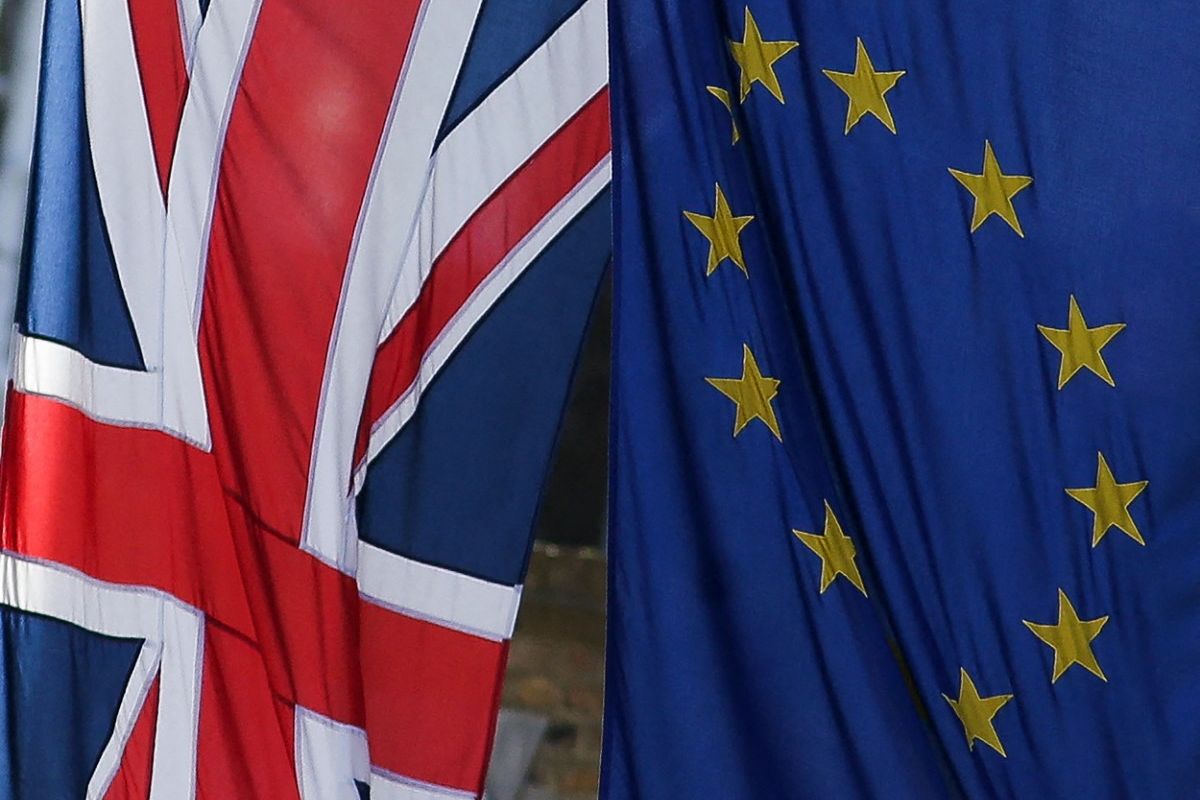

From the EU’s perspective, the UK’s renewed interest in closer cooperation is welcome. The geopolitical and economic environment has fundamentally changed since Brexit. Both sides face common challenges, from Russian aggression and economic coercion to declining competitiveness and threats to liberal democracy. Closer cooperation is increasingly a strategic necessity rather than simply a question of managing Brexit’s consequences.
However, significant political, institutional and practical constraints remain, alongside doubts about the durability of the UK’s commitment.
Trust remains central. The experience of Brexit, including the UK’s willingness to challenge previously agreed commitments, has left its mark. While the EU welcomes the more constructive approach, there is understandable caution about entering ambitious negotiations that might subsequently be undermined by domestic politics. The EU needs confidence that commitments made by the Burnham government will endure.
Fundamental changes to the relationship will take years rather than months, especially where they touch on the institutional foundations of European integration. Moving closer to the Single Market raises questions about regulatory alignment, enforcement, financial contributions, free movement and the EU’s decision-making autonomy. These reflect fundamental principles underpinning the Union, not simply negotiating obstacles.
The EU’s political bandwidth is also limited. Political turmoil in France and Germany, alongside uncertainty elsewhere, complicates ambitious negotiations. Leadership changes could alter national priorities, but not necessarily predictably. Political volatility also makes sustaining long-term commitments harder. However, the EU’s institutional principles are unlikely to change substantially with individual governments. More importantly, the Union faces an exceptionally demanding agenda, including Ukraine, defence, economic security, competitiveness and democracy. Whatever the importance of the UK relationship, it is not the EU’s overriding priority unless it can be demonstrated how it helps to address the Union’s fundamental challenges.
London therefore needs to make a credible offer, based on a clear understanding of the EU’s priorities and below-the-radar pre-negotiations. The EU is unlikely to invest substantial political capital without reasonable certainty that negotiations will deliver, rather than seeing commitments subsequently diluted or rejected because of domestic political constraints.
There is, however, an important irony. Just as the UK is contemplating eventual EU rejoining, Europe is developing new models of close integration without membership. The emerging EU–Canada relationship potentially offers a framework for ambitious cooperation with like-minded countries outside the Union.
Such arrangements could encompass defence, economic security, regulatory cooperation, finance and coordinated responses to economic coercion. An Economic Security Alliance of like-minded countries could provide a broader framework beyond the EU’s institutional boundaries.
The Canadian model cannot simply be transferred to the UK. Geography, economic interdependence, political expectations and Brexit’s legacy make the British case fundamentally different. What might work across the Atlantic is unlikely to work across the Channel. Nor should new partnership models substitute for the obligations accompanying Single Market participation.
Nevertheless, these developments demonstrate that the EU’s external relationships are evolving, creating opportunities for innovative arrangements reflecting shared strategic interests.
Crucially, strategic cooperation need not await agreement on the UK’s ultimate economic relationship with the EU. Customs Union membership, Single Market participation, free movement of people or eventual accession will remain politically contentious and institutionally complex. But this should not prevent ambitious cooperation on defence, economic security, industrial policy, research and technology, or democracy. Practical cooperation could also rebuild the trust necessary for deeper economic integration later.
The greatest opportunity is therefore to move the relationship to a genuinely strategic level. The current developments in the relationship, while positive, remain largely incremental, focused on specific agreements and removing obstacles. This is useful but insufficient given the scale, scope and speed of common challenges.
A more ambitious approach would begin with substantive political discussions about shared strategic objectives and the institutional arrangements necessary to deliver them. It would recognise the interconnections between economic integration, competitiveness, defence, industrial policy and economic security, rather than treating these as separate negotiating tracks. Such discussions should proceed in parallel with the longer-term debate about the UK’s place in European integration.
For the EU, the question is not whether closer cooperation with the UK is desirable. It is whether London is prepared to make a credible, durable and sufficiently ambitious offer that justifies the political investment required.
The summit should therefore be judged not simply by the agreements announced, but by whether it establishes a credible pathway towards an integrated and trusted partnership. Otherwise, both sides risk falling into the familiar progress illusion: celebrating incremental advances while failing to act at the scale, scope and speed their common challenges demand.
Fabian Zuleeg is Chief Executive and Chief Economist at the European Policy Centre.
This blog post was originally published on UK in a Changing Europe.
The support the European Policy Centre receives for its ongoing operations, or specifically for its publications, does not constitute an endorsement of their contents, which reflect the views of the authors only. Supporters and partners cannot be held responsible for any use that may be made of the information contained therein.