

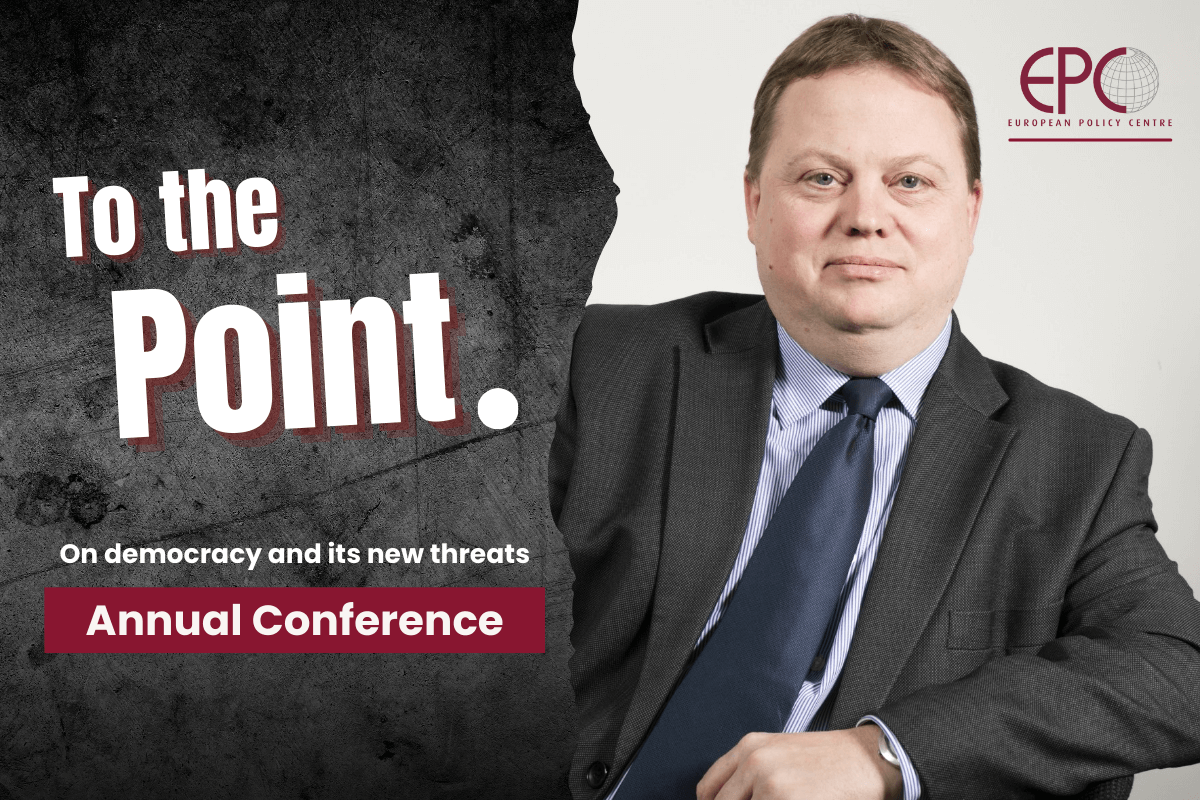
Fabian Zuleeg, Chief Executive: On the new threats facing liberal democracy
Summary

This To the Point series forms a strategic narrative authored by Fabian Zuleeg, the Chief Executive and Chief Economist of the European Policy Centre (EPC). Written in the month running up to the Annual Conference 2025, they articulate the core dilemmas at the heart of the conference theme: how Europe can defend liberal democracy in an era of authoritarian pressure, strategic insecurity and internal democratic erosion.
They diagnose the structural vulnerabilities of liberal systems, highlight the growing mismatch between values and imperatives and argue for political will, resilience and strategic clarity to secure democracy’s future. They also identify fear, self-censorship and political paralysis as internal obstacles that weaken democratic resilience, challenging Europe to act decisively not only in defence of its values but in recognition of the hard imperatives required for survival.
1. Do the ends justify the means? Liberal democracy’s dilemma
Liberal democracy must learn to defend itself more assertively against authoritarian tactics – without abandoning the peacemaking principles that define it. Read more here.
2. The democracy paradox
Europe recognises the existential threats facing democracy but lacks the political will to act decisively, creating a dangerous gap between necessary solutions and leaders’ perceived electoral constraints. Read more here.
3. Securing European peace through hard power
To preserve peace, Europe must accept that deterrence, defence investment and continued support for Ukraine are now essential elements of its long-term security. Read more here.
4. The battle for democracy
Defending democracy requires confronting authoritarian actors, rejecting self-censorship and reaffirming that true democracy protects principles – not just majorities. Read more here.
Fabian Zuleeg is Chief Executive and Chief Economist at the European Policy Centre.
The support the European Policy Centre receives for its ongoing operations, or specifically for its publications, does not constitute an endorsement of their contents, which reflect the views of the authors only. Supporters and partners cannot be held responsible for any use that may be made of the information contained therein.