


Lost in translation: Between associate membership and middle power cooperation
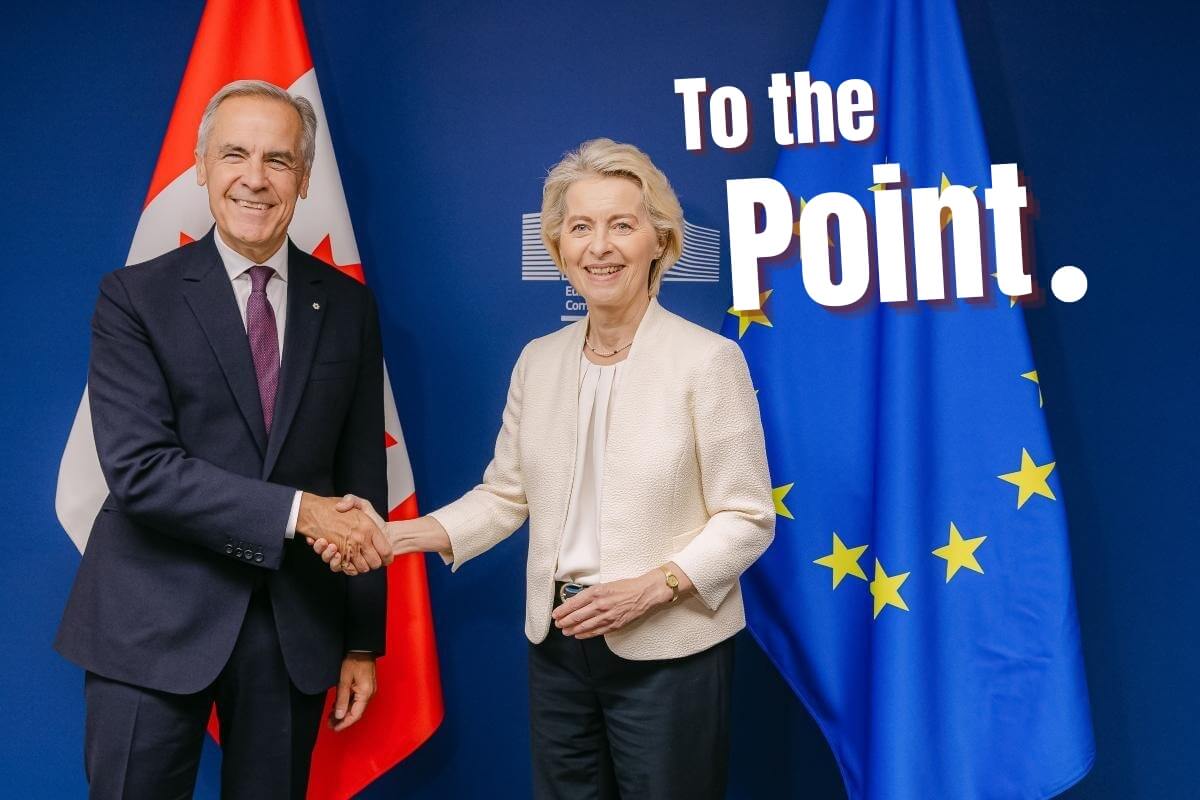

The EU–Canada Summit in Montreal must move beyond semantic debates to deliver an ambitious partnership. What matters is not what we call it, but what it achieves – and whether it becomes the foundation for a broader alliance of like-minded countries.
Ahead of the EU–Canada Summit in Montreal, terminology risks overshadowing substance.
Ursula von der Leyen’s proposal for Canadian Associate Membership has raised concerns. Canadians worry about sovereignty. EU member states question what this undefined status means for decision-making. Accession countries fear a new category that could delay their membership ambitions.
Equally, Mark Carney's concept of cooperation between Middle Powers sits uneasily with an EU that does not see itself as one.
But getting lost in translation would be a mistake. Call it an Integrated or Trusted Partnership or an Alliance for the Future. What matters is substance, ambition and delivery.
The EU and Canada need a partnership that goes substantially beyond CETA, addressing shared challenges through concrete cooperation on economic security, defence, technology, investment, critical raw materials, supply chains and regulatory cooperation, alongside joint action to defend democracy against illiberalism and external interference.
The Montreal Summit must deliver an ambitious, actionable roadmap, with clear objectives, commitments and effective governance. Otherwise, it risks reinforcing Europe's familiar progress illusion: mistaking announcements for achievements and not delivering what is needed at the scale, scope and speed the challenges demand.
But EU–Canada integration cannot be the endpoint. It must become the foundation for a wider Economic Security Alliance, bringing together other like-minded partners to strengthen collective resilience, counter economic coercion and safeguard shared interests. The UK, Norway, Australia, South Korea and Japan need to be in the fold.
The ambition must be bigger than bilateral cooperation: building a like-minded alliance for the future.
Fabian Zuleeg is Chief Executive and Chief Economist at the European Policy Centre.
The support the European Policy Centre receives for its ongoing operations, or specifically for its publications, does not constitute an endorsement of their contents, which reflect the views of the authors only. Supporters and partners cannot be held responsible for any use that may be made of the information contained therein.

