

Harbours of innovation: unlocking the circular opportunities of EU ports
Summary

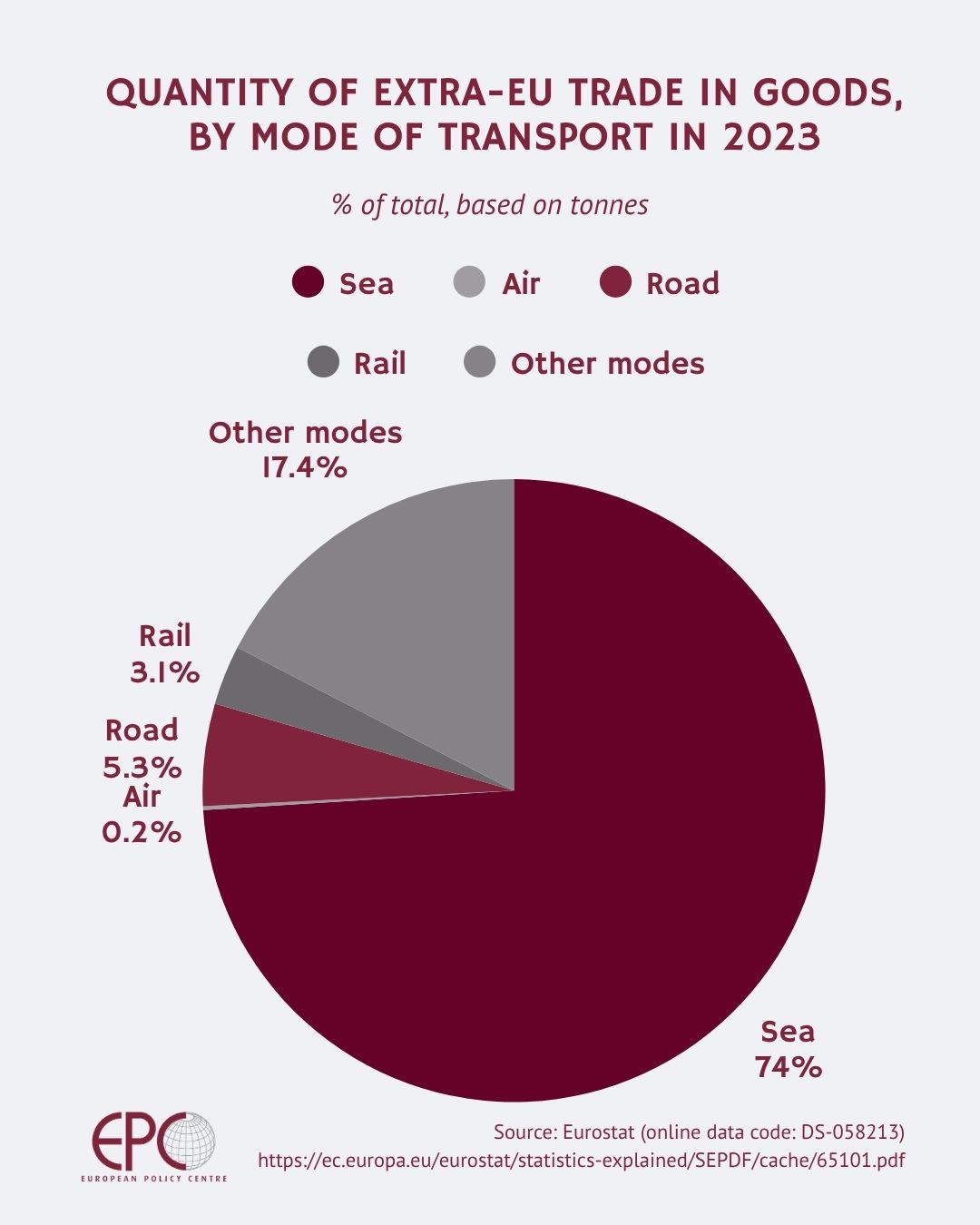
European ports are positioned to play a central role in the EU’s transition to a circular economy under the Green Deal, and its competitiveness and economic security agendas. Handling 74% of the EU’s imports and exports, ports are industrial hubs with unique potential to become enablers of the circular economy, enforcing eco-design standards, maximising the uptake of used materials and equipment and closing resource loops across value chains.
Yet circular port operations remain limited in scale. As the EU’s circular economy agenda, recognising the importance of trans-regional cooperation, gains prominence under the Clean Industrial Deal (CID), it is crucial to ensure that ports can realise their potential as major circularity hubs. A more coherent regulatory and investment framework is needed to empower ports as frontline actors in this transformation. This paper explores existing policy enablers and barriers and offers recommendations for how the EU can unlock the circular potential of its port ecosystems.
The evolving role of EU ports
Traditionally, European ports have been pillars of trade, logistics and defence. Their infrastructure is designed to support industrial development across the continent.
Recently, many ports have begun shifting towards more sustainable and circular operation models, highlighting their potential for transformation. Ports can foster reuse, refurbishing and recycling operations, reducing waste and extending the lifecycle of used equipment. Frontrunners like Antwerp-Bruges demonstrate this potential through innovative waste-to-resource operations, for example turning plastic waste into building blocks. Another example is the recycling of offshore wind turbines for shipbuilding, linking renewable energy infrastructure with circular economy.
At the heart of this circularity potential lies industrial symbiosis – collaboration among companies to share resources and waste for further use to achieve mutual benefit. Initiatives such as digital waste passports for ports, have already been piloted to improve the tracking and transfer of secondary material. Linking these tools with product information could further support ports’ role in monitoring compliance with product sustainability standards.
Regional initiatives must be scaled and integrated into EU frameworks to realise their full potential to reduce environmental footprints while generating economic value, job opportunities and resilient supply chains.
Policy framework on ports and circular economy
Besides the EU’s growing focus on the circular economy – reflected in the Ecodesign for Sustainable Products Regulation (ESPR), Packaging and Packaging Waste Regulation (PPWR) and the forthcoming Circular Economy Act – its maritime policies are also being aligned with the green agenda. Under the Ocean Pact, several new initiatives aim to position ports as key actors in the green transition. The EU Ports Strategy envisions ports not just as hubs for transport but for circularity and energy transition. In parallel, the Industrial Maritime Strategy seeks to strengthen Europe’s green logistics ecosystem, promote circular shipbuilding and advance retrofitting technologies.
These initiatives could enable ports to better verify product compliance, track material flows and collaborate across regions. Yet inadequate investment and partnerships, uneven know-how and fragmented governance slow progress. For example, divergent regional rules on wind-turbine recycling hinder both recycling efforts and the production of more recyclable turbines.
New policies must address such obstacles and incentivise trans-regional cooperation to unlock the full potential of ports as circular economy hubs.
Building Europe’s circular port future
Europe’s ports must seize the opportunity to become engines of circularity, driving the green transition, competitiveness and economic security. The EU should create an enabling regulatory environment to align circularity criteria across regions and value chains. Digitalisation under sustainable product legislation, including interoperable product and waste passports, must underpin this transformation, allowing ports to track material flows and safeguard product compliance with material-efficiency standards.
The EU should optimise the use of existing instruments such as the Multiannual Financial Framework, Recovery and Resilience Facility, InvestEU and state-aid schemes to scale circular initiatives across ports. Consolidating these tools into a single mechanism, potentially linked to the European Competitiveness Fund and National and Regional Partnership Plans, could facilitate financing for needed infrastructure and compliance enforcement capacity. Setting measurable targets and indicators would ensure coherent implementation across ports.
Finally, EU-supported multi-stakeholder platforms will be essential to foster stronger dialogue among ports, local authorities, national governments and industry stakeholders. Exchanging best practices and scaling frontrunner projects can help bridge regional and regulatory gaps. With the right set of policies, partnerships and investments, Europe’s ports can build on their role as gateways of trade to gateways of transformation – and become powerful accelerators of the circular economy.
Emma Seppänen is a Programme Assistant in the Sustainable Prosperity for Europe Programme at the European Policy Centre.
The support the European Policy Centre receives for its ongoing operations, or specifically for its publications, does not constitute an endorsement of their contents, which reflect the views of the authors only. Supporters and partners cannot be held responsible for any use that may be made of the information contained therein.