


Europe may be closer to deterrence than it realises
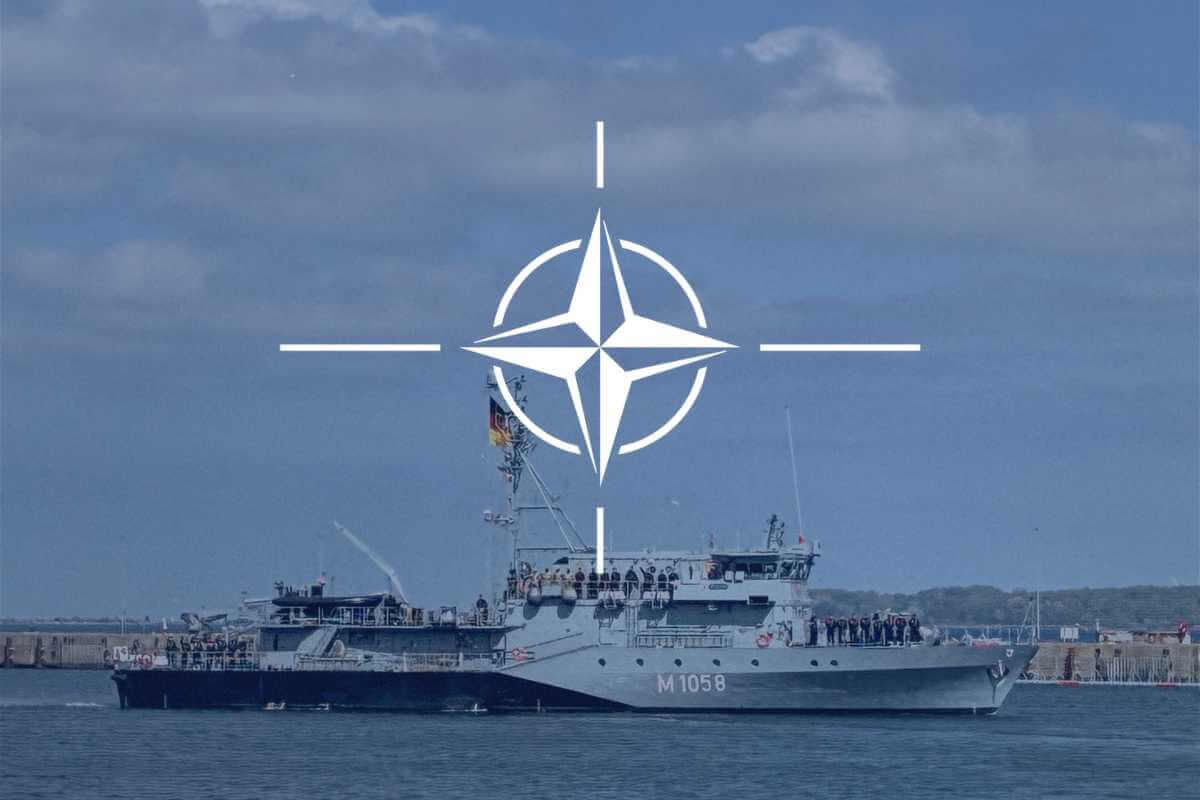

Wars in 2026 are priced in pain tolerance. Russia has discovered this in Ukraine, the US in the Persian Gulf, and Israel in its own neighbourhood. The same dynamic that is making military power less decisive also means European deterrence is closer to its grasp.
Are wars still winnable? Russia has been unable to prevail in a war it started against a mid-sized neighbour with no NATO support on the ground. The United States and Israel, two of the most technologically advanced militaries in history, have recently learned that precision dominance and battlefield success don’t reliably produce the political outcomes they seek.
For Europe, the implications are significant and underappreciated. Cheap, precise, long-range weapons and the pervasive battlefield transparency created by ubiquitous sensors have inverted the economics of war, making it far less costly to deny territory than to take and hold it. If military superiority no longer guarantees political victory, then the bar for deterrence is closer than the current debate assumes. Europe does not need to match Russia under old doctrinal force ratios to deter it. Rather, it must be able to credibly promise Russia a war it cannot win. This is a meaningfully different standard – and one Europe can achieve.
The body of evidence from Ukraine is foundational. Russia invaded with what most analysts assessed as an overwhelming conventional advantage. Four years later it has failed to achieve its core political objectives. A determined, well-supplied defender has shown that continuous cost-imposition can substitute for outright battlefield victory.. In an era when even the most capable militaries struggle to turn battlefield results into conquest, to survive is to succeed.
Germany has crossed the 2% NATO spending threshold and is rearming at a pace unthinkable five years ago. Poland is building one of the most capable ground forces on the continent while Nordic and Baltic states have converted decades of strategic anxiety into serious investment. None of this is complete or evenly integrated, but the trajectory is in the right direction. More importantly, the nature of where defence investment needs to go has changed. Ukraine demonstrated that drone warfare, precision munitions, electronic warfare and motivated infantry can impose devastating costs on a larger conventional force. This revolution in military effectiveness is driven by access to cutting edge technology; smaller, well-equipped forces can now do things that once required a superpower’s scale.
The mathematics of this inversion are stark. Iran’s closure of the Strait of Hormuz, and Washington’s failure to restore free passage through it, exposed the new asymmetry at the heart of the world’s most strategic waterway. A nimble defender with cheap weapons kept the world’s most powerful navy from affordably reopening a chokepoint barely forty kilometres wide. Even after thirteen thousand targets were struck, Iran retained roughly 70% of its missiles and three-quarters of its launchers. This showed how a prepared defender with strategic depth could absorb the most advanced air campaign in history and retain its ability to control the strait. The economics of denial are allowing Davids to fend off more powerful Goliaths. For Europe, this means that effective and affordable deterrence may be closer than most policymakers realise.
The risk to Europe’s build-up is not just insufficient spending but misdirected spending. The American experience tells a cautionary tale. The affordable modular warship was squeezed out of the procurement cycle for platforms too expensive to lose in numbers. Europe could repeat this error on land, building a small, sophisticated force optimised for a short, decisive war that Russia has no intention of fighting. Denial requires depth with magazines measured in years rather than weeks and an industrial base that can sustain cost-imposition for as long as Moscow can sustain aggression.
Nor is this defender’s new advantage self-sustaining. In Ukraine, counter-measures have repeatedly humbled wonder weapons within months. Guided shells that once hit their targets 70% of the time were jammed down to just 6%, and both sides now race to open temporary pockets of superiority to restore their initiative on the battlefield. This iterative technology cycle runs in weeks, not years. Deterrence by denial is therefore not a force Europe can build once but a capacity for continuous adaptation, which makes industrial agility and learning directly from Ukraine decisive.
NATO’s nuclear umbrella of the United States, Britain and France can still deter the Russian existential threat. The question for European conventional forces is whether they can make a Russian land war unwinnable.
Deterrence is ultimately a matter of perception. The recent record shows aggressors to be stubborn optimists. Both Moscow and Washington launched their current wars convinced of quick victory. But an unwinnable war deters no one if the adversary still believes it winnable. Thus, Europe’s denial capability must be visibly exercised to be demonstrably credible. In a recent NATO exercise that pitted alliance forces against veteran Ukrainian drone operators, the Allies were soundly beaten. This was a wake-up call on what must be urgently addressed.
Yet a purely conventional framing obscures the contest already under way. Russia’s hybrid campaign of sabotage against critical infrastructure, disinformation to fracture political cohesion, cyberattacks and covert financing of extremist parties is not just a prelude to conventional war. It is an alternative means of achieving Moscow’s goal of weakening Europe’s capacity and will to resist. The maritime domain is where this is most visible in sabotage of undersea cables, a shadow fleet moving sanctioned oil and navigational interference.
Today’s maritime domain has entered an era of gated seas, in which passage is negotiated and purchased rather than guaranteed by laws and norms. For a bloc like the EU whose security and prosperity both arrive by sea, this is the hybrid campaign’s next logical theatre.
Moscow is already signalling the pivot. Having conceded that a 1945-style victory is beyond its reach, the Kremlin is recasting its war aims around endurance, portraying itself as a besieged fortress seeking to survive. In this view, Western exhaustion will substitute for battlefield success. Europe therefore faces a two-track deterrence problem: both a military track and the resilience challenge of hardening democratic societies against coercion short of war. Neither substitutes for the other. A Europe able to make a land war unwinnable but unable to defend its own institutions from subversion will find its will and staying power eroded from within.
Too much of the European debate remains anchored in old metrics like order of battle, defence spending targets and heavy brigade numbers. These measure Europe against a standard rooted in Cold War assumptions about conventional force ratios. The strategically relevant standard today is denial. MIT professor Barry Posen drew this distinction two decades ago between command – the ability to dominate a domain – and the far more modest objective of denial. In this case, a state makes conquest prohibitively costly without needing to achieve dominance. Measuring progress against denial rather than dominance reframes what suffices for deterrence.
The danger is that Europe under-invests in what is needed for denial or lacks the political will to act. Strategic pessimism feeds the narrative that only American power can guarantee European security, an assumption that is now shallower than ever.
But this new dynamic cuts both ways. The denial revolution that makes a Russian invasion unwinnable also makes Europe’s own maritime approaches easier to contest, so a credible deterrent cannot stop at the water’s edge. The core point remains that Europe is operating in a world where no one commands the commons and where, for a defender, that is an advantage.
None of this will resolve cleanly. A ceasefire in Ukraine would not end the sabotage in Warsaw nor the disinformation aimed at Berlin, Athens and Stockholm. When a state redefines victory as endurance rather than conquest, it is signalling a long campaign ahead. Therefore, Europe must prepare to endure sustained aggression and contested sea lanes rather than a single crisis that peaks and passes.
In an era where conquest no longer pays, the prepared defender holds the stronger hand, but only if it has the depth and will to keep playing it. Europe has the wealth, industry and capability to make itself unconquerable – even if the cost will be higher for countries on the eastern flank, which could bear the brunt of any conventional Russian assault.
But unconquerable is not same as security for a Union whose prosperity relies on seaborne trade threatened by these same new dynamics. This means that Europe also needs a blue-water navy capable of protecting its commerce through waters no one commands. The leaders who grasp this new reality will stop measuring Europe against a standard it does not need to meet and start building toward the one it that it can and must.
Chris Kremidas-Courtney is a senior visiting fellow at the European Policy Centre.
The support the European Policy Centre receives for its ongoing operations, or specifically for its publications, does not constitute an endorsement of their contents, which reflect the views of the authors only. Supporters and partners cannot be held responsible for any use that may be made of the information contained therein.