


Orbán defeated: What Magyar’s win means for the EU

An alleged sex tape. Bomb threats against a pipeline. A gold heist. Wiretapped calls involving the foreign minister. A defector triumphing over his former idol. If this were a political thriller, viewers might say the writers had lost the plot. However, these were the realities of Hungarian politics in the past weeks.
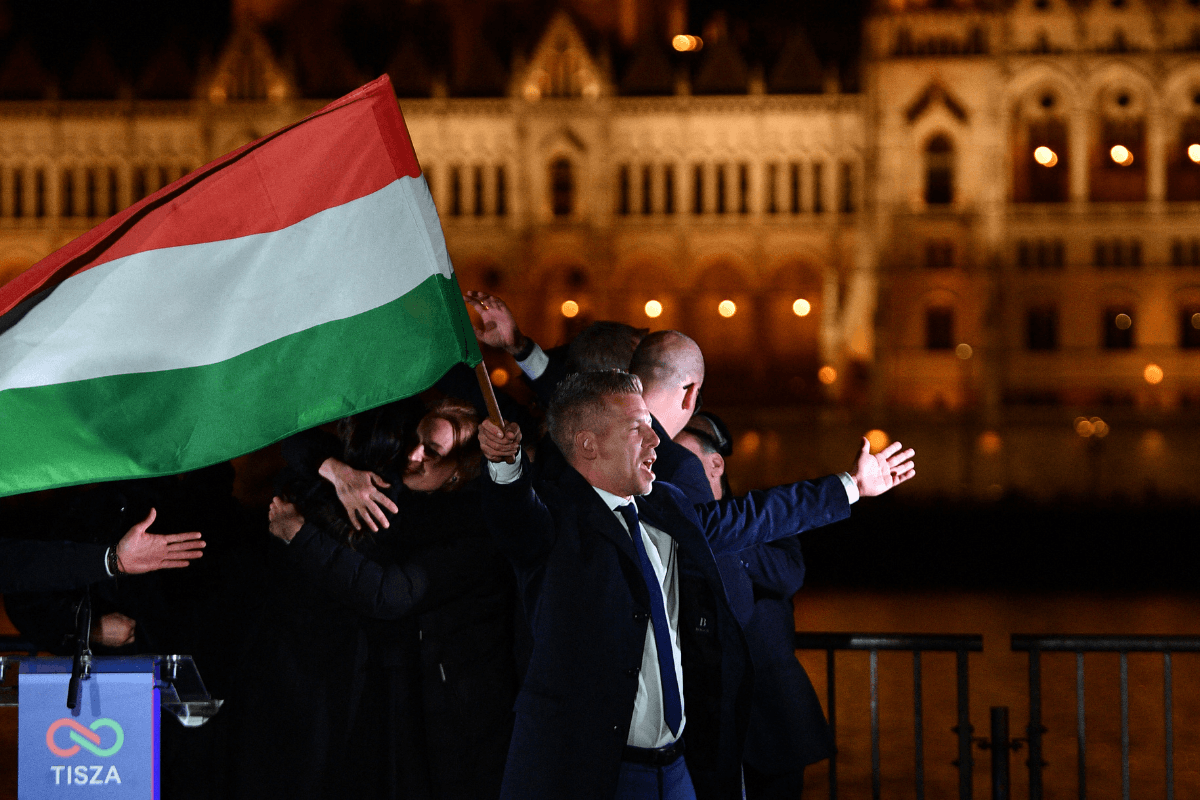
After a chaotic, hostile and polarised campaign, Hungary stands on the edge of a new era. Yesterday, Péter Magyar, once an ally of Viktor Orbán, dealt a historic blow Fidesz. His Tisza (Respect and Freedom) party won 138 of 199 seats in parliament, securing the two-thirds majority needed to amend the constitution and reshape Hungary’s institutions.
Since 2010, Orbán and Fidesz have hollowed out democratic checks and balances and used the state for personal and party interests. They installed loyalists across the public administration, judiciary, media and academia. Internationally, Orbán became the centre node in a wider far-right network stretching across Europe and beyond.
Magyar’s success lay in turning Orbán’s populist method against him. Breaking with Fidesz in 2024, he spent the past two years tirelessly campaigning across cities and rural areas alike. Magyar cleverly turned the populist recipe against its mastermind. He tied Hungary’s democratic decline to everyday economic hardship, contrasting citizens’ stagnating living standards with the corruption, nepotism and conspicuous wealth of the Fidesz elite who built extravagant mansions and vacationed on yachts. After years of economic stagnation, inflation and underinvestment in education, healthcare and infrastructure, that message resonated. Orbán’s familiar strategy of vilifying Ukraine, European partners and ‘Brussels bureaucrats’ could no longer contain the dissatisfaction. With turnout approaching 80% – the highest in the country’s democratic history – voters delivered a clear verdict.
For the EU, Orbán’s defeat is a political and moral victory. It is a reminder that a united, democratic, and pro-European opposition can win against entrenched illiberalism at the ballot box. Additionally, Magyar could open a window for progress on files long obstructed by Budapest, from support for Ukraine to enlargement, the next Multiannual Financial Framework for 2027–2034, and reform of EU decision-making.
Still, electoral victory is not the same as democratic transformation. While Orbán quickly conceded his defeat, there are still pathways for obstruction. Magyar himself may not be an easy ally for the EU, and much will depend on his conduct once in office. Moreover, just as Fidesz once used its supermajority to capture the state, Tisza now has the power to amend the constitution. Ideally, this opens pathways to restore judicial independence and strengthen anti-corruption safeguards. But rebuilding the rule of law requires more than reversing partisan control; it requires institutions robust enough to resist political capture in the future, and a thriving civic space.
Hungary’s election is historic for the EU. But it matters foremost for Hungarians, who have lived longest with the consequences of ‘illiberal democracy’. A new chapter has begun. Let’s hope for better writing this time.
York Albrecht is Re:constitution Fellow at the EPC.
The support the European Policy Centre receives for its ongoing operations, or specifically for its publications, does not constitute an endorsement of their contents, which reflect the views of the authors only. Supporters and partners cannot be held responsible for any use that may be made of the information contained therein.