

Integrating Ukraine's agrifood sector into the EU: Challenges, sensitivities and policy priorities
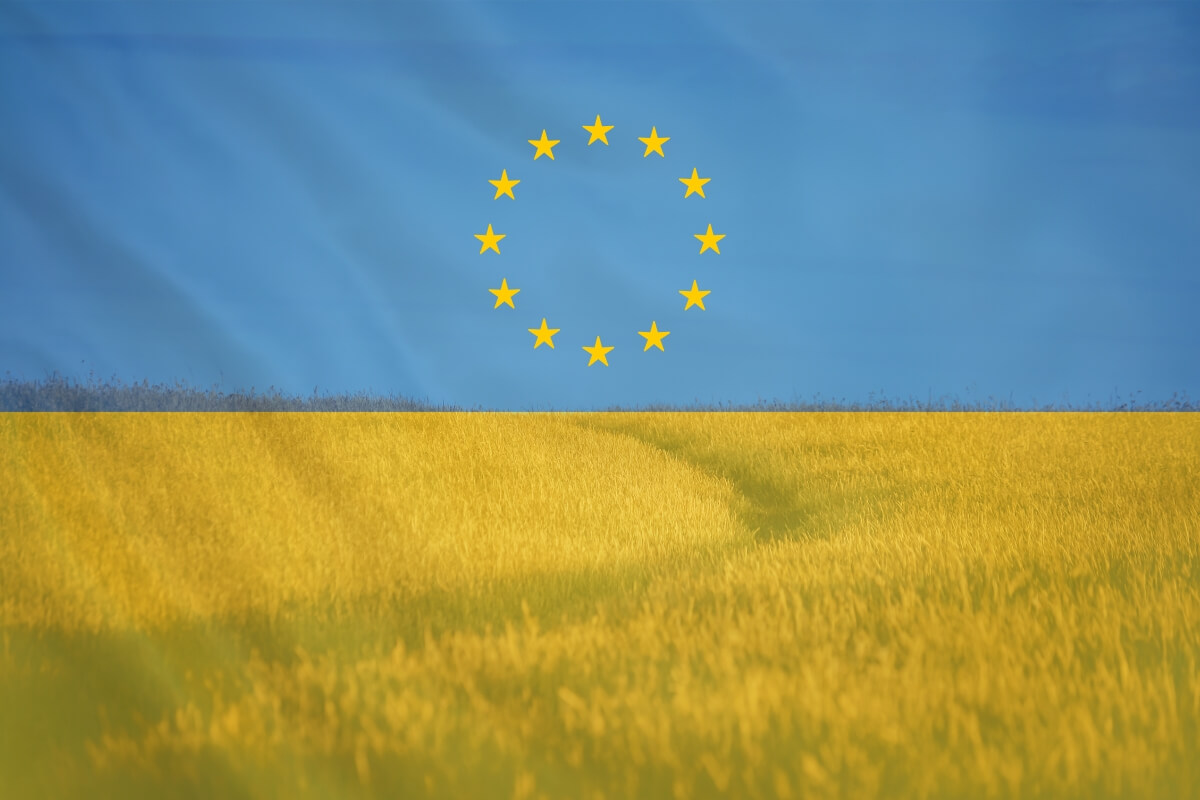


The opening of four negotiating clusters in 2026 has marked significant progress on Ukraine’s path towards EU membership. Following Cluster 1 “Fundamentals” and Cluster 6 “External Relations”, Ukraine and the EU opened two economic clusters on 13 October: Cluster 2 “Internal Market” and Cluster 3 “Competitiveness and Inclusive Growth”. Ukraine aims to open the remaining two clusters by the end of 2026. Among those, Cluster 5 “Resources, Agriculture and Cohesion” is considered one of the most challenging for Ukraine and the EU due to the size of the sector, the scale of reforms needed and the challenges posed by Russia’s ongoing war. Currently, agricultural reforms and legal approximation are taking place under wartime conditions, with severe risks and limited financing for local farmers and daily attacks by Russia that disrupt their activities across the country. To manage this politically sensitive sector and its potential impact on the EU’s Common Agricultural Policy (CAP), various accession models, such as gradual integration, are being discussed to ensure a mutually beneficial process.
Agriculture is a vital part of Ukraine’s economy, both domestically and internationally. In 2025, agriculture generated 7.6% of Ukraine's GDP and accounted for about 60% of the country’s exports, heavily dominated by crops such as grains and oilseeds. Socially, farming provides essential employment opportunities for about 14% of Ukraine’s total employment and stabilises rural livelihoods. Before Russia’s full-scale invasion, Ukraine was already working on its regulatory alignment with EU standards under the EU-Ukraine Deep and Comprehensive Free Trade Agreement (DCFTA). In the context of Ukraine’s EU candidacy, further approximation has been underway.
This policy brief examines the current state of Ukraine’s agricultural integration into the EU and proposes ways to address the concerns and challenges surrounding accession. It aims to move beyond a rigid, “all-or-nothing” approach and focuses instead on possible pathways towards a gradual integration model and its possible application to the agri-food sector.
The European Commission’s Preparing for a wider Union pre-enlargement policy review, adopted on 6 October 2026, also proposed structured gradual integration through earlier participation in selected EU policies, subject to merit-based, conditional and reversible arrangements. Building on this approach, the European Commission plans to present indicative accession roadmaps for Montenegro, Albania, Moldova and Ukraine as part of the 2026 Enlargement Package, provided they maintain reform momentum. The review also suggests that Ukraine’s agricultural sector would require special targeted arrangements, including transitional measures and periods governing financial support and market access for sensitive agricultural products. The final terms of Ukraine’s accession will be determined during negotiations.
The policy brief first provides background on the ongoing reform of Ukraine’s agricultural sector in the context of EU accession, the EU-Ukraine Association Agreement and its DCFTA provisions. It will then outline the key challenges related to the implementation of reforms, the specifics of Ukraine’s case and recommendations on how the EU and Ukraine could move forward.
Read the full policy brief here.
Svitlana Taran is a Fellow in the Europe in the World Programme at the European Policy Centre.
Dr Katsiaryna Lozka is a Joint Research Fellow at the Egmont Institute and the European Policy Centre.
The EPC would like to acknowledge the support of the Konrad Adenauer Stiftung Europe Office in the preparation of this Policy Brief, written jointly by the EPC and the Egmont Institute.
This Policy Brief draws on insights from an online roundtable held in June 2026, which brought together EU policymakers, industry practitioners and experts.
The support the European Policy Centre receives for its ongoing operations, or specifically for its publications, does not constitute an endorsement of their contents, which reflect the views of the authors only. Supporters and partners cannot be held responsible for any use that may be made of the information contained therein.