

Kadis Outlines Ambitious EU Ocean Pact for Sustainable Seas
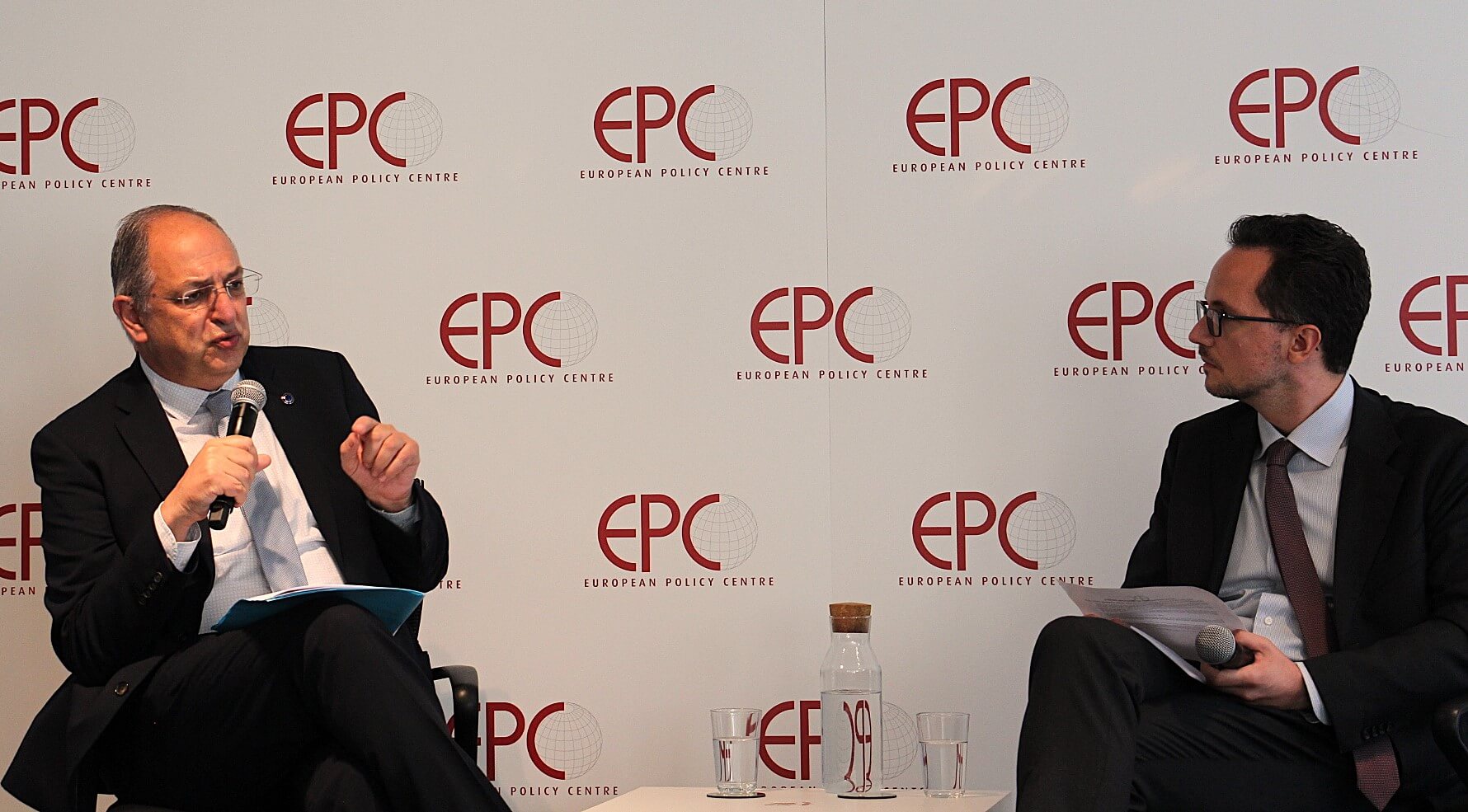
European Commissioner for Fisheries and Oceans Costas Kadis joined Head of the Sustainable Prosperity for Europe Programme at the European Policy Centre, Stefan Sipka, to discuss the new European Ocean Pact, 2 July 2025.
In the event titled “Navigating new waters: Commissioner Kadis on the European Ocean Pact”, Kadis laid out the European Commission’s priorities, goals, and views on ocean management and conservation. He began by noting that the oceans play a crucial environmental role, directly impacting not only the health and well-being of Europeans but also that of people worldwide. The sea is also a major economic driver, with the maritime transport industry alone supporting over 5 million jobs in the EU.
The European Ocean Pact was presented at the United Nations Oceans Conference in New York, 9-13 June 2025, following multiple consultation exercises. It contains nearly € 1 billion in funding resting on six pillars:
- Protecting and restoring ocean health;
- Boosting the competitiveness of the EU sustainable blue economy.
- Supporting coastal and island communities and outermost regions.
- Advancing ocean research, knowledge, skills and innovation.
- Enhancing maritime security and defence.
- Strengthening EU Ocean Diplomacy and International Ocean Governance.
The Commissioner explained that the core of the Ocean Pact is to align EU policies and foster collaboration within the EU and with external partners. He went on to discuss the robust data monitoring ambitions outlined in the Ocean Pact, which will track key indicators such as environmental conditions, illegal fishing, and climate data. This feeds into the Digital Twin initiative, which will map and model in detail the world’s oceans, with Kadis stating that “our purpose is that by 2030 this instrument will be fully utilised”.
He went on to discuss the security dimension of the Ocean Pact, which is a key priority for the Commission. The Ocean Pact will include provisions for maritime surveillance and infrastructure protection.
In conversation with Sipka, Kadis discussed the EU's support for the United Nations BBNJ Agreement, which governs the conservation and sustainable use of marine biological resources in international waters.
The Commissioner answered several questions on security, migration, marine protected areas, seabed mining, agricultural runoff, and cooperation with third countries. On the last point, he finished by stating that “This is the core of the Ocean Pact: to coordinate and to bring together, to promote collaboration, to promote synergies, to speak to each other and understand each other. And I feel that this is the only way forward.”
Sipka added that “We often hear the EU’s leadership is fading, but the Ocean Pact’s positive reception internationally offers hope that it still shapes global policy and sustainable governance.”
Click here to the see more of the event
Click here to read the EPC Outlook Paper, Navigating a perilous world with realism and ambition, which includes a chapter on ocean governance.
Griffith Couser is Senior Editor at the European Policy Centre.
The support the European Policy Centre receives for its ongoing operations, or specifically for its publications, does not constitute an endorsement of their contents, which reflect the views of the authors only. Supporters and partners cannot be held responsible for any use that may be made of the information contained therein.