


Migrant labour in Farm-to-Fork: Fixing governance gaps, putting dignity at work
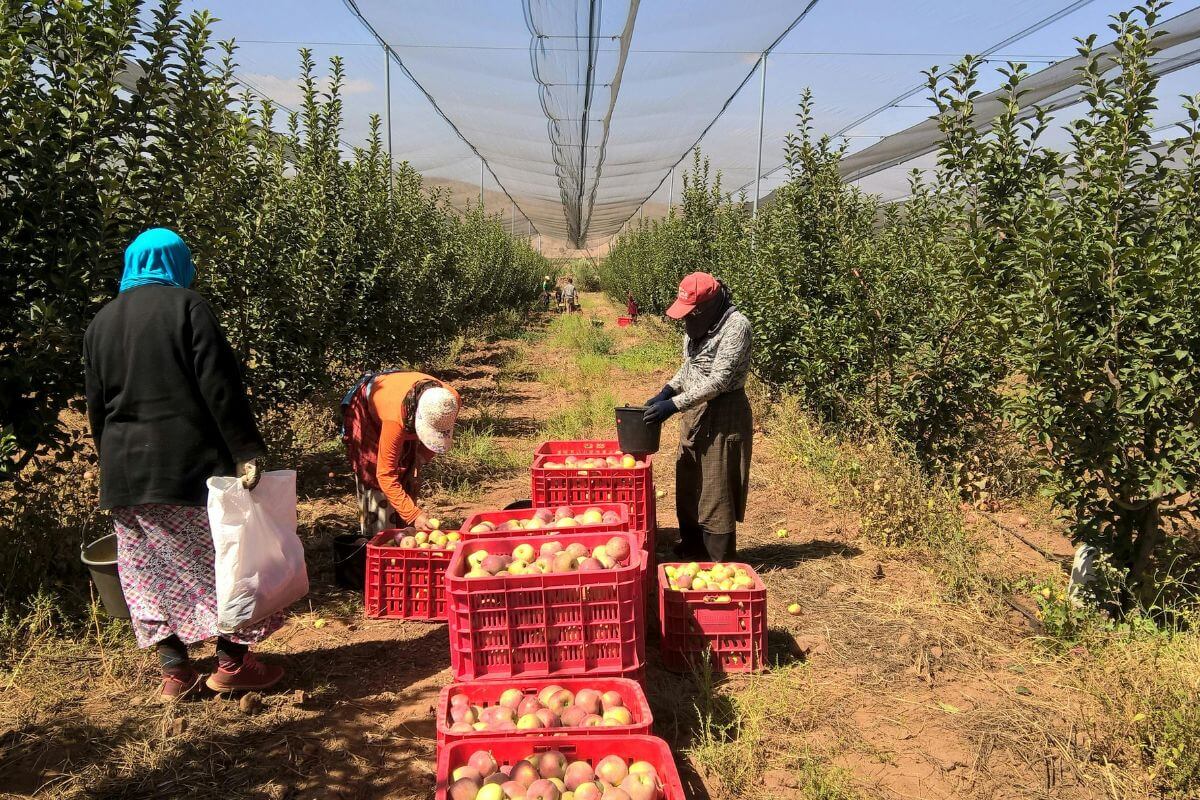

Migrant workers play an essential role in agrifood systems, from harvesting and food processing to logistics and delivery. Across countries and Farm-to- Fork (F2F) sectors, foreign nationals disproportionately fill physically demanding and low-paid roles, often under conditions marked by contractual insecurity, limited access to services, language barriers and employer-linked housing. While these situations typically affect those in an irregular situation, precarity extends beyond migration status and reflects deeper structural dependencies.
At the same time, many F2F sectors face chronic difficulties in recruiting domestic workers. Demographic trends, changing occupational preferences and tight profit margins intensify reliance on migrant labour, including seasonal and temporary workers. These dynamics are well documented. Yet undignified working and living conditions persist.
This Paper argues that this issue cannot be explained by a lack of EU rules or knowledge. Rather, it reflects three interrelated dynamics: (1) sustained supply-chain pressures with cascading effects on working conditions; (2) political prioritisation and will; and (3) weaknesses in the policymaking process itself. EU action affecting migrant workers in F2F sectors is shaped by siloed rationales (competitiveness, migration control, food security and social protection), stakeholder power asymmetries, uneven enforcement and limited monitoring and feedback loops. Under these conditions, exploitation is not an anomaly but a structural feature indicative of weak governance.
The Discussion Paper, which also constitutes the Final Report of the Horizon Europe project DignityFIRM, applies a policy-cycle lens to examine these dynamics across four phases: agenda setting, policy formulation, implementation, and monitoring and evaluation.
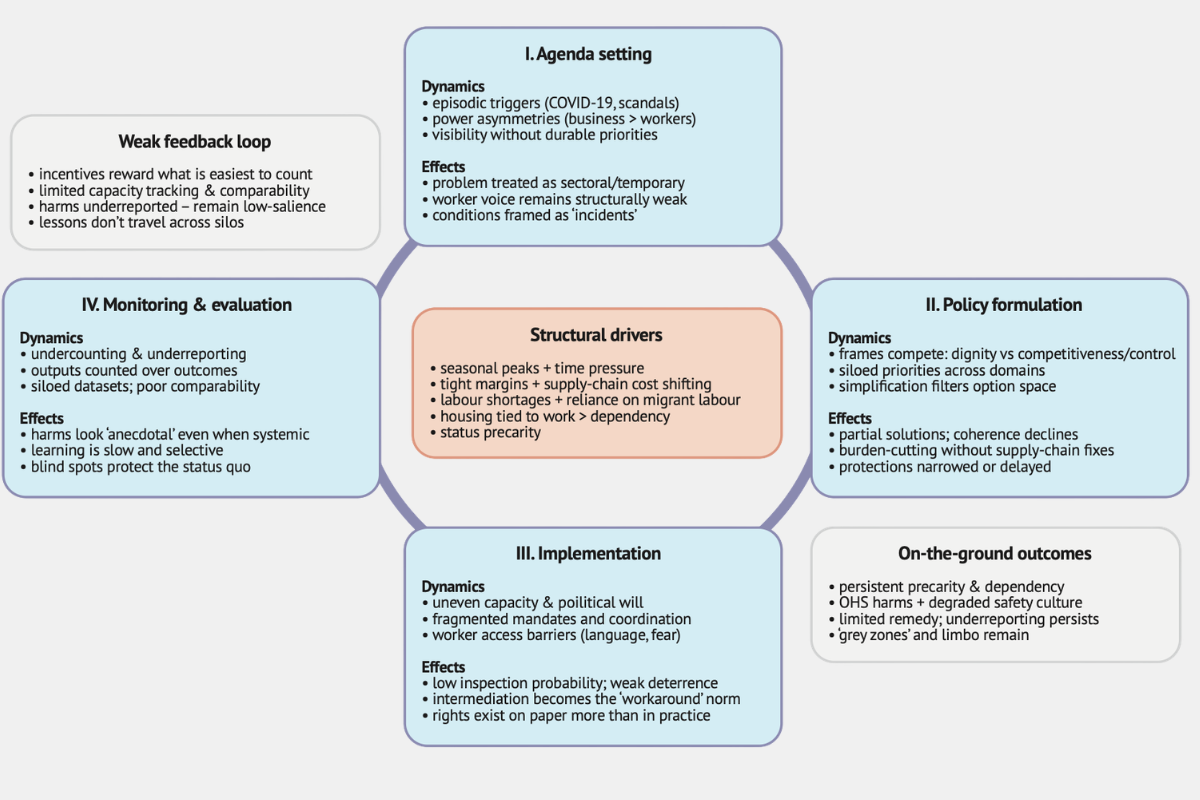
First, it shows that while the conditions of F2F workers have repeatedly entered the political debate – most visibly during COVID-19 and in response to high-profile exploitation cases – they have rarely become a sustained, cross-cutting priority. Attention has been episodic, and migrant workers, particularly those in irregular or dependent situations, remain structurally underrepresented in agenda setting.
Second, in policy formulation, tensions between sustainability and competitiveness frames, and between migration control and labour dynamics, shape reforms in areas such as due diligence, agricultural policy and migration governance. Despite the stated goal to reduce the administrative burden arising from social sustainability rules, small businesses in F2F remain subject to significant supply pressures. Meanwhile, return-centred approaches to irregularity risk deepening precarity in sectors structurally reliant on informal labour, while overlooking their impact on labour supply.
Third, in implementation, the Paper highlights persistent capacity gaps with significant effects on working conditions and the agri-food sector as a whole. The enforcement of health and labour standards, but also of the Employers’ Sanctions and Seasonal Workers directives, is constrained by limited resources, employer dependency and administrative systems that do not align with sectoral realities. Across the member states examined in the project, businesses struggle to recruit workers. Where labour pathways are slow or unpredictable, reliance on intermediaries and subcontracting chains increases, complicating accountability.
Finally, monitoring systems remain fragmented and output focused. Data gaps, underreporting and siloed indicators obscure systemic trends and weaken feedback loops into policymaking.
The Discussion Paper develops recommendations focusing on addressing the structural drivers of vulnerability and correcting governance shortcomings.
These include:
Reducing status-based dependency in labour migration frameworks;
Making intermediation chains governable;
Treating housing as a core labour issue;
Strengthening safe reporting and access to remedies;
Rebalancing value-chain incentives, and;
Investing in outcome-based monitoring and implementation capacity.
Taken together, these measures aim to move from episodic responses to a more coherent, systemic approach, putting dignity at work in F2F sectors.
Read the full Discussion Paper here.
Alberto-Horst Neidhardt is a Senior Policy Analyst and Head of the European Diversity and Migration programme.
The author would like to thank Annalisa Buscaini for her valuable contributions to earlier drafts of this Discussion Paper. Gratitude is also extended to the reviewers and colleagues who provided comments and inputs at different stages of the research and drafting process, including Tesseltje de Lange, Hanane Darhour, Pawel Kaczmarczyk, Blanca Garcés-Mascareñas, Irene Ponzo, Imanol Legarda Díaz-Aguado and Lilana Keith. Their reflections and expertise have helped strengthen the analysis.
The support the European Policy Centre receives for its ongoing operations, or specifically for its publications, does not constitute an endorsement of their contents, which reflect the views of the author only. The views expressed in this Paper do not necessarily represent the positions of the DignityFIRM consortium partners and their affiliated institutions. Supporters and partners cannot be held responsible for any use that may be made of the information contained therein.