

NATO delivers in Ankara, but the Alliance's European shift is just beginning
NATO Secretary General Mark Rutte dubbed the summit in Ankara a “delivery summit”. In many ways, it lived up to that description. It did not remove the political uncertainty surrounding US President Donald Trump’s approach to NATO. However, it acknowledged that Europeans and Canadians were shaping their renewed commitment to defence investment actively, demonstrating that the Alliance could still function as a potent deterrent force despite strong political headwinds.
Trump remains difficult but recognises Europe is doing more
The atmosphere in the run-up to the summit was uneasy. Trump had been sharply critical of European allies that, in his view, had failed to support, or had not sufficiently supported, his campaign against Iran. He even threatened to halt trade with Spain, revived calls for Greenland to be transferred from Danish to American sovereignty and resumed strikes on Iran.
In another political climate, such statements might have derailed the summit. This time, however, European allies largely chose not to escalate. Concerned capitals absorbed the remarks, avoided public confrontation and focused on the broader objective of keeping the summit on track while advancing the Alliance’s transformation to greater European responsibility.
With regards to the Alliance as a whole, Trump struck a more positive tone. He acknowledged that European allies and Canada, with some exceptions such as Spain, were moving in the right direction by increasing defence investment toward the 5% benchmark by 2035, agreed the previous year in The Hague.
A defence industry push
On the industrial front, Ankara produced visible results. The NATO Summit Defence Industry Forum, held before the meeting of heads of state and government, set the tone. Allies announced a series of contracts and multinational projects with European and American defence companies. Host nation Türkiye accentuated its role as a key defence industry player at the forum.
The package includes new aircraft to replace NATO’s ageing AWACS fleet, with Saab GlobalEye and Northrop Grumman MQ-4C Triton platforms set to strengthen the Alliance’s intelligence, surveillance and reconnaissance capabilities (ISR). Allies also advanced multinational air-mobility projects, including the expansion of the Airbus A330 MRTT tanker fleet for air-to-air refuelling and a new pooled Airbus A400M fleet to strengthen strategic airlift.
Nevertheless, there is a limit to what these initiatives can deliver in the short term. Big-ticket defence projects take years to produce results. New aircraft, drones and support systems will not appear overnight. Some systems announced or discussed around the summit may only become available towards the end of the decade. They should therefore not be seen as an immediate replacement for US capabilities, especially after Washington reduced its own contribution to NATO’s force model.
There is also a deeper industrial problem, since many allies still award defence contracts directly to their national champions, with limited regard for European or transatlantic cooperation. This keeps the defence industrial base fragmented, expensive and underperforming. Against this backdrop, the high-visibility projects announced in Ankara are partly symbolic.
New financing tools The summit also produced important initiatives to attract private investment and improve procurement. The Defence, Security and Resilience Bank, spearheaded by Canada and Luxembourg, aims to provide allies with cheaper credit for defence needs, particularly as not all countries can borrow on Germany’s favourable terms. The Multilateral Defence Mechanism, launched by the United Kingdom, the Netherlands, Finland and Poland, could complement this by pooling demand and giving industry clearer signals.
The challenge now is to harmonise these tools. Joint borrowing should go hand in hand with joint procurement. Otherwise, allies risk spending more money without resolving fragmentation. If coordinated properly, these mechanisms could help drive down costs, increase production and create economies of scale across the defence industrial base.
Ukraine set the tone
The summit also took place against the backdrop of Ukraine’s successful strikes against critical Russian infrastructure, including oil refineries, tankers and military production sites. These attacks have damaged Russia’s economy, disrupted supplies and helped build positive momentum around Ukraine before the summit. They also illustrate why the summit declaration treats Kyiv not only as a partner in need of support, but as a contributor to Euro-Atlantic security.
Despite Ukraine’s successes, air defence remains an urgent issue. Ukrainian systems are effective against many Russian drones and cruise missiles, but ballistic missiles are far harder to intercept. Russia has used them as part of a punishment strategy, striking civilian areas after Ukraine’s attacks on Russian critical infrastructure. Patriot PAC-3 missiles have performed well against these threats, but they remain scarce, with limited production and high demand.
That is why Trump’s announcement at the summit that he would allow PAC-3 production in Ukraine could be significant. If implemented, it would strengthen Ukraine’s ability to protect its cities, reduce the impact of Russia’s missile campaign and put more pressure on Moscow. This would not be easy, since PAC-3 missiles are technically complex. However, Ukraine has already shown remarkable industrial resilience and engineering capacity. If the project moves forward, it could become one of the summit’s most consequential outcomes.
An uncertain sequel
Ankara delivered. Allies avoided a political crisis, confirmed that European allies and Canada are moving in the right direction on defence spending, launched important industrial and financial initiatives, and reaffirmed support for Ukraine, including as a serious security provider.
Yet the absence of reference to the next summit, expected to take place in Albania, raises quetions about whether allies may now see a less frequent summit rhythm as sufficient.
Still: from a European perspective,this may not be entirely negative. Smaller, more focused formats could help allies coordinate Europe’s evolving contribution to NATO without the political burden of a full summit.
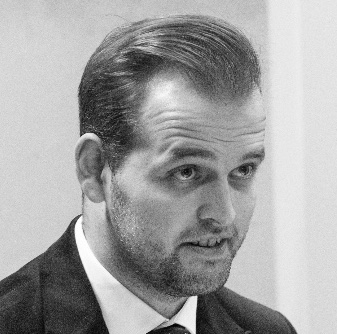
Juraj Majcin is a Policy Analyst with the European Policy Centre.
The support the European Policy Centre receives for its ongoing operations, or specifically for its publications, does not constitute an endorsement of their contents, which reflect the views of the authors only. Supporters and partners cannot be held responsible for any use that may be made of the information contained therein.