

Europe must not help Trump unravel NATO deterrence
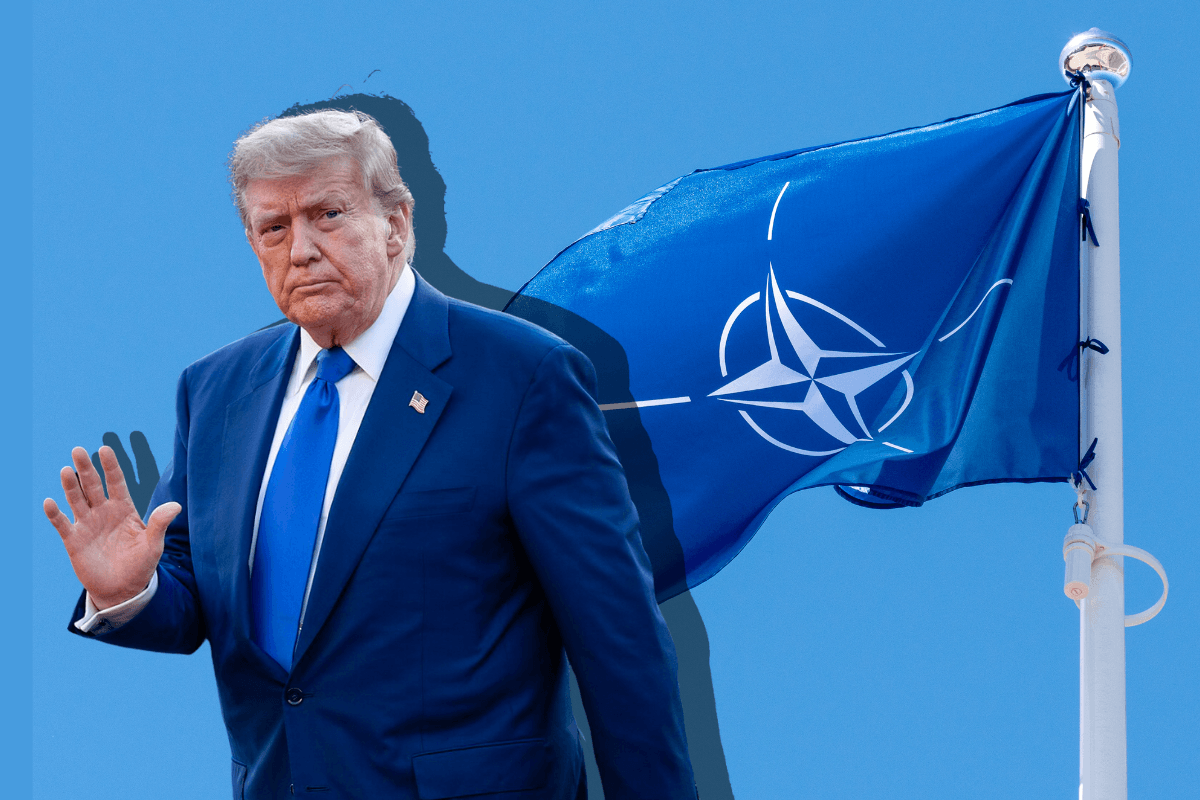
Transatlantic relations have again reached a low under US President Donald Trump after European allies refused to support his military campaign against Iran. By casting doubt on whether the United States would defend Europe and by deriding NATO as a “paper tiger” without the United States, he has further weakened the alliance. European allies should not make the damage worse.
Although this crisis is often described as the most serious yet, it is not the first time European governments have openly opposed US military action. France and Germany strongly criticised the 2003 invasion of Iraq, while France and Spain denied overflight access during the 1986 US strike on Libya. But those disputes unfolded in a very different strategic context. Neither Russia in the early 2000s nor the Soviet Union in the late 1980s posed as immediate a threat to NATO as Putin’s Russia does today, and Washington was not openly undermining the alliance’s credibility. European governments could therefore afford to challenge the United States more openly because their security depended less on preserving NATO’s deterrence posture vis-à-vis Moscow.
Today’s crisis is therefore not just another transatlantic political dispute. It is potentially a serious blow to NATO’s deterrence in the eyes of Moscow.
NATO’s deterrence does not rest only on the promise that the United States would come to Europe’s defence. It also rests on the fact that Russia cannot be sure it would not. That ambiguity has long worked in NATO’s favour. Trump’s rhetoric puts it at risk, and European politicians who match his tone only deepen the damage.
This is why European allies should take care not to make the problem worse. At a time when Russia is waging war against Ukraine and preparing for a possible confrontation with NATO, strident public criticism of Washington may play well at home, but carries strategic costs.
With the exception of Spain, all major European NATO allies, including Germany, Greece, Italy, Portugal, Romania and the United Kingdom, have responded favourably to most US requests and granted access, sometimes with conditions, to their bases and airspace. Yet even as they facilitated the US military campaign, some European leaders sought to distance themselves from it, insisting that it was “not our war”, as British Prime Minister Keir Starmer and German Defence Minister Boris Pistorius put it. Others, including Spanish Prime Minister Pedro Sánchez and German President Frank-Walter Steinmeier, denounced it in much sharper terms.
They have every right to do so. The domestic political pressures behind such rhetoric are easy to understand given the operation’s lack of legality and unpopularity with European voters. However, tit-for-tat confrontation with a partner as volatile as Donald Trump would hurt Europe, and NATO’s deterrence, far more than it would Washington. It would further widen the transatlantic divide that Trump has already opened, handing Russia and China a strategic gift.
European allies should also avoid institutional changes inside NATO that may risk formalising US disengagement. Expanding the number of senior European officers in NATO’s command structures is a positive step towards the autonomy the US demands of Europe; the recent decision to place Joint Force Commands Norfolk, Naples and Brunssum under European flag officers is also welcome.
Nonetheless, some proposals go too far. Appointing a European Supreme Allied Commander Europe would likely be read in Moscow not as a sign of European strength but as evidence that the United States no longer intends to fight for Europe. SACEUR is the operational link to the US armed forces and, by extension, to the American nuclear arsenal. Removing that link would strip NATO of one of its most important sources of deterrence.
Rather than redesigning NATO, European allies must show that strains in the transatlantic relationship do not create an opening Russia. This will matter even more if the Trump administration takes symbolic steps to punish Europe, such as withdrawing troops or shifting deployments within Europe on the basis of political loyalty.
Mitigating the damage to NATO’s deterrence will not only require a stronger European posture but also a greater willingness to take risks. France’s decision to modernise and expand its nuclear arsenal, and to deepen nuclear consultations and exercises with European partners, points in the right direction. Moscow has long attached less weight to British and French nuclear forces than to the US arsenal. Any increase in the credibility, visibility or operational relevance of Europe’s nuclear deterrent would therefore create new strategic dilemmas for Russia.
The same logic applies in the maritime domain and beyond. The recent seizures by France, Sweden and Belgium of several Russian shadow fleet tankers over false flagging and related violations sent a strong signal to Moscow that Europe is prepared to act more forcefully. So too did the recent British-Norwegian naval operation against Russian submarines operating near sensitive undersea communications infrastructure in and around British and allied waters. Moreover, while attention has shifted to the Middle East, the clearest signal Europe can send to Russia remains sustained military, financial and political backing for Kyiv.
Criticism among allies is normal. The problem begins when it becomes so sharp that it damages the relationship itself. Trump is clearly frustrated with NATO as his Iran gambit falters, but Congress and the American public remain broadly supportive of the alliance.
European leaders should therefore avoid needlessly antagonising Trump, as doing so could give him additional incentives to weaken the relationship. Instead, they should keep NATO’s deterrence firmly in mind. In this regard, the upcoming NATO Summit in Ankara will present an opportunity to diffuse tensions. It may be tempting in the short term to condemn a US military action they oppose. But after decades of neglecting Europe’s own security, that is a risky game to play – especially with Russia watching for opportunities to exploit the cracks.
Juraj Majcin is a Policy Analyst at the European Policy Centre.
The support the European Policy Centre receives for its ongoing operations, or specifically for its publications, does not constitute an endorsement of their contents, which reflect the views of the authors only. Supporters and partners cannot be held responsible for any use that may be made of the information contained therein.