

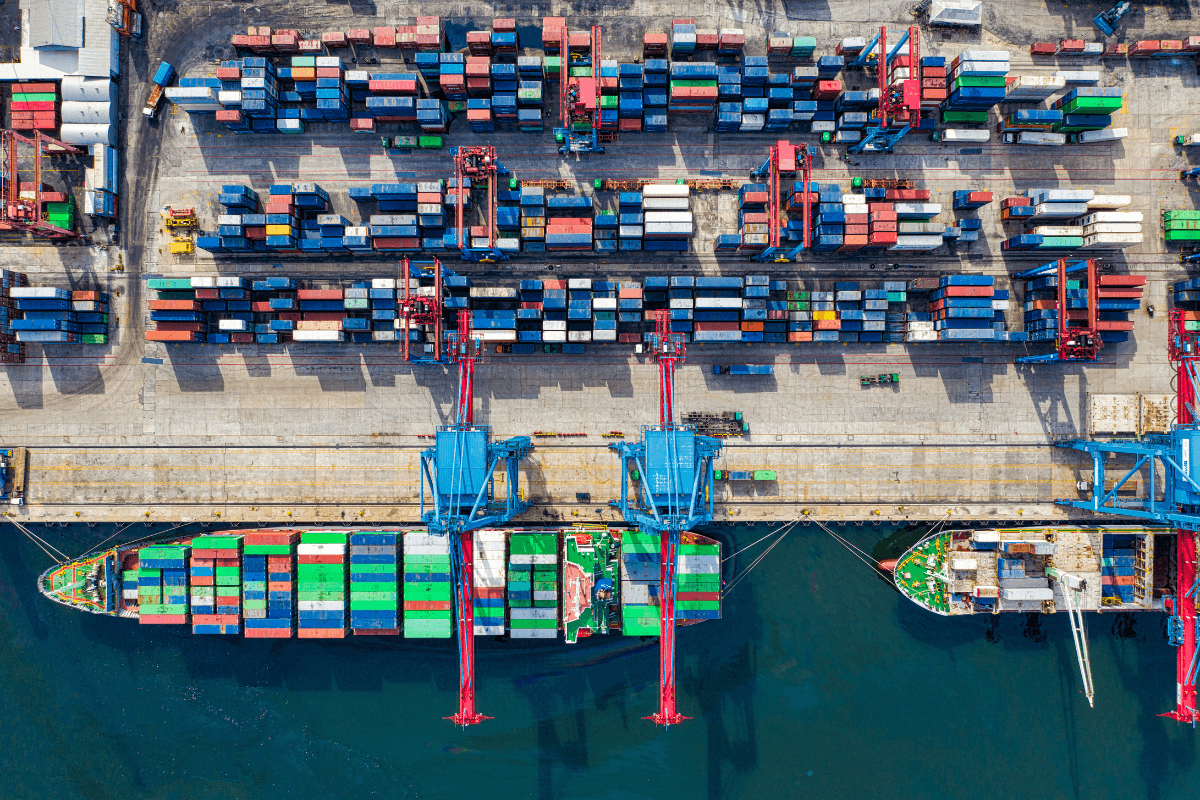


Over the last years, a growing chorus of experts, business leaders and politicians have been warning of Europe being hit by a second 'China Shock'. The first one wiped out millions of manufacturing jobs in the US in the early 2000s but left Europe largely unscathed. Not so this time.
Two decades ago, the shock stemmed from vast pools of cheap labour in China taking over most labour-intensive industries, of which there weren’t many in Europe. Now, Chinese businesses have moved up the technological ladder, outcompeting high-tech European industries like autos, chemicals and wind power in their own backyard.
The China Shock is no longer a spectre; it’s here. Germany’s export market share has been on a continuous decline for months and fears are being raised about an unstoppable deterioration of the German industry, in particular.
Manufacturing is culturally important in Europe and makes up a large portion of the EU’s value added. However, most Europeans do not man the production lines of the industrial giants in Germany, France and elsewhere – they work in the plethora of service jobs increasingly dominating modern economies.
Indeed, services make up as much as 74% of the EU gross domestic product, which begs the question: is services our port in the Chinese trade storm?
It can be, but to harness the potential of services, the sector must be able to move across borders in the EU. Today, the EU27 imposes a range of barriers making cross-border trade in services prohibitively costly and time consuming.
These barriers to intra-EU trade are more costly than many realise. According to the International Monetary Fund, they amount to a 45% tariff on goods and a 110% tariff on services traded within the Union. European Central Bank President Christine Lagarde recently set the percentages at 65% and 100%, but the point is clear: the Single Market is not as Single as it’s made out to be.
Opening cross-border trade in services has long proved elusive. The father of the Single Market, former Commission President Jacques Delors, tried to do it in the 1990s and failed. The Services Directive of the 2000s, colloquially known as the Bolkestein Directive, sparked mass protests over fears of social dumping, becoming, in Dermot Hobson’s words, “one of the European Commission’s great own goals of the post-Maastricht period”.
The scars remain, and few in Brussels now advocate sweeping liberalisation. Still, deeper market integration is vital if the EU is to stay economically competitive. The numbers bear this out. A new study commissioned by the European Parliament Research Service estimates that if all members matched the best performers in services trade, it could raise annual national income by 1-2% – a meaningful boost for sluggish economies. It would also strengthen the bloc’s resilience to global trade fragmentation, as noted by the Danish national bank.
Through its new Single Market Strategy, the Commission is again trying to tear down internal barriers. Progress so far has been slow. As the Commission itself admits, 60% of the barriers identified in 2002 still existed in 2022, suggesting little appetite among governments to open their services markets. “Name and shame the offending member states”, says the industry, but is that enough?
Success, however, depends on two things: getting the member states to play ball and balancing labour and industry concerns.
Labour concerns should not be taken lightly. Warning signs are already being heard concerning the Commission’s current push on services liberalisation. The proposed 28th regime, a separate set of EU rules for start-ups and SMEs, is nothing less than a gun on the negotiating table, said a labour representative at a recent EPC event.
However, with competition squeezing manufacturers all over Europe, such concerns can’t stop us from unleashing the potential of the Single Market. The Commission must move ahead on harmonising cross-border rules and must become much tougher on the member states who resists and persists in protecting domestic industries. ‘Beggar thy neighbour’ tactics do not belong within the Union. Resources should be shifted to increase infringement proceedings against recalcitrant member states, and the Commission should become more vocal in singling out the worst offenders.
The Single Market remains the EU’s greatest asset – both for citizens’ prosperity and the Union’s geopolitical heft. If we leave its potential untapped, we all lose out.
Larissa Brunner is Head of Economic Research at Pivot Economics.
Varg Folkman is a Policy Analyst in the Europe’s Political Economy Programme at the European Policy Centre.
The support the European Policy Centre receives for its ongoing operations, or specifically for its publications, does not constitute an endorsement of their contents, which reflect the views of the authors only. Supporters and partners cannot be held responsible for any use that may be made of the information contained therein.