

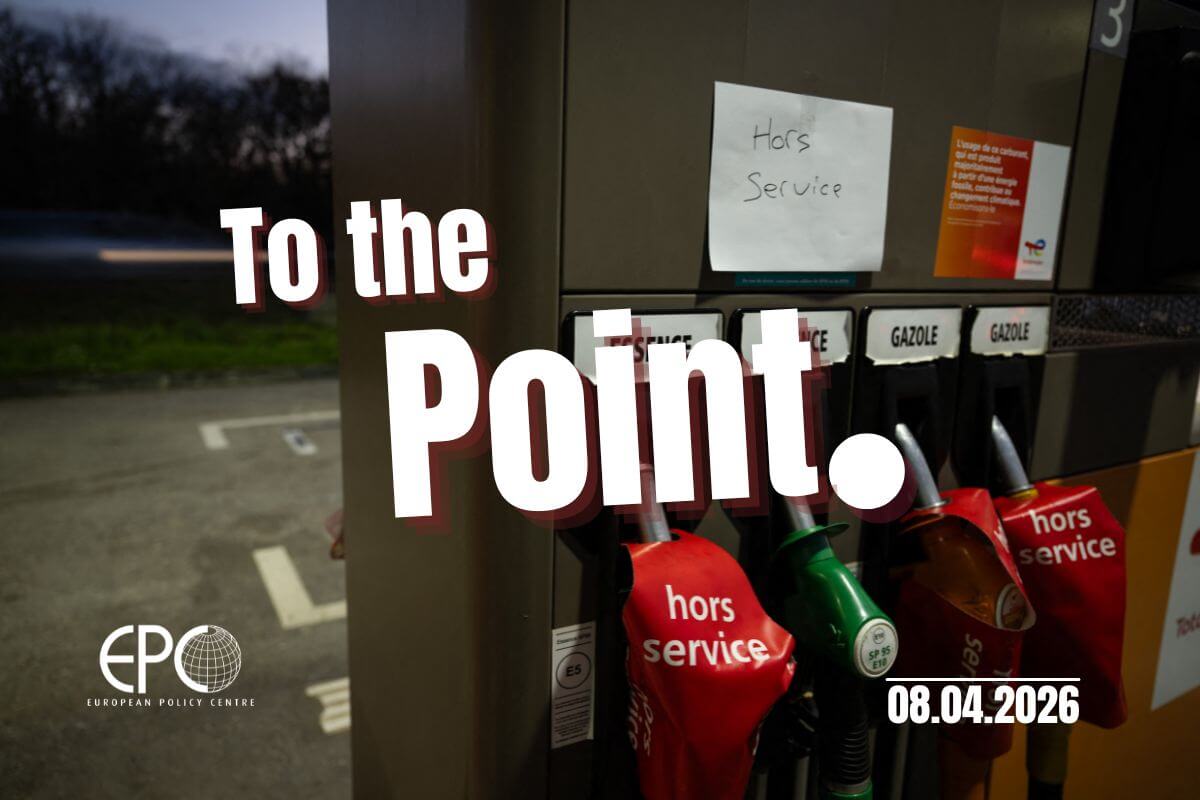

As a temporary ceasefire takes hold between the United States and Iran, the recent war is a reminder of Europe’s enduring vulnerability to geopolitical shocks — and of the urgent need to build resilience in an increasingly unstable world.
Debates on climate policy have long warned of “carbon leakage”, where costs imposed in one jurisdiction shift economic activity elsewhere. A similar — and arguably more acute — dynamic is now emerging in security policy. Europe is investing in resilience: diversifying supply chains, hardening infrastructure, screening investments and building strategic reserves. These are essential responses to a more coercive and fragmented global landscape. Yet their costs are rarely reflected in market prices.
“Security leakage” occurs when those who invest in resilience bear higher costs, while competitors that underinvest — including actors that may themselves be the source of risk — gain market share. The resulting distortion may exceed that seen in carbon policy. Security risks are harder to quantify, more pervasive, and less amenable to clear pricing mechanisms or border adjustments.
Crucially, these costs are often borne by businesses. With fiscal space constrained and public finances stretched by defence commitments, the energy transition and social spending, governments are unable to fully offset the cost of resilience. Firms are therefore expected to absorb higher compliance, diversification and risk management costs, potentially weakening their short-term competitiveness.
Ignoring this dynamic is not sustainable. If resilience remains an unpriced public good, Europe risks effectively subsidising less secure — and less responsible — competitors. The challenge is not to retreat into protectionism, but to ensure that security is properly valued within economic systems.
This requires a shift in mindset. Trusted supply chains, secure infrastructure and predictable regulatory environments are not simply safeguards; they are economic assets. In a world shaped by geopolitical risk, reliability and resilience can command a premium.
The lesson from recent crises is clear: security is no longer just a cost to be managed, but a strategic advantage to be leveraged. Europe’s task is to ensure that those who invest in resilience are not penalised for it — but rewarded.
Fabian Zuleeg is Chief Executive and Chief Economist at the European Policy Centre.
The support the European Policy Centre receives for its ongoing operations, or specifically for its publications, does not constitute an endorsement of their contents, which reflect the views of the authors only. Supporters and partners cannot be held responsible for any use that may be made of the information contained therein.