

The Ocean Act must deliver at home to lead abroad
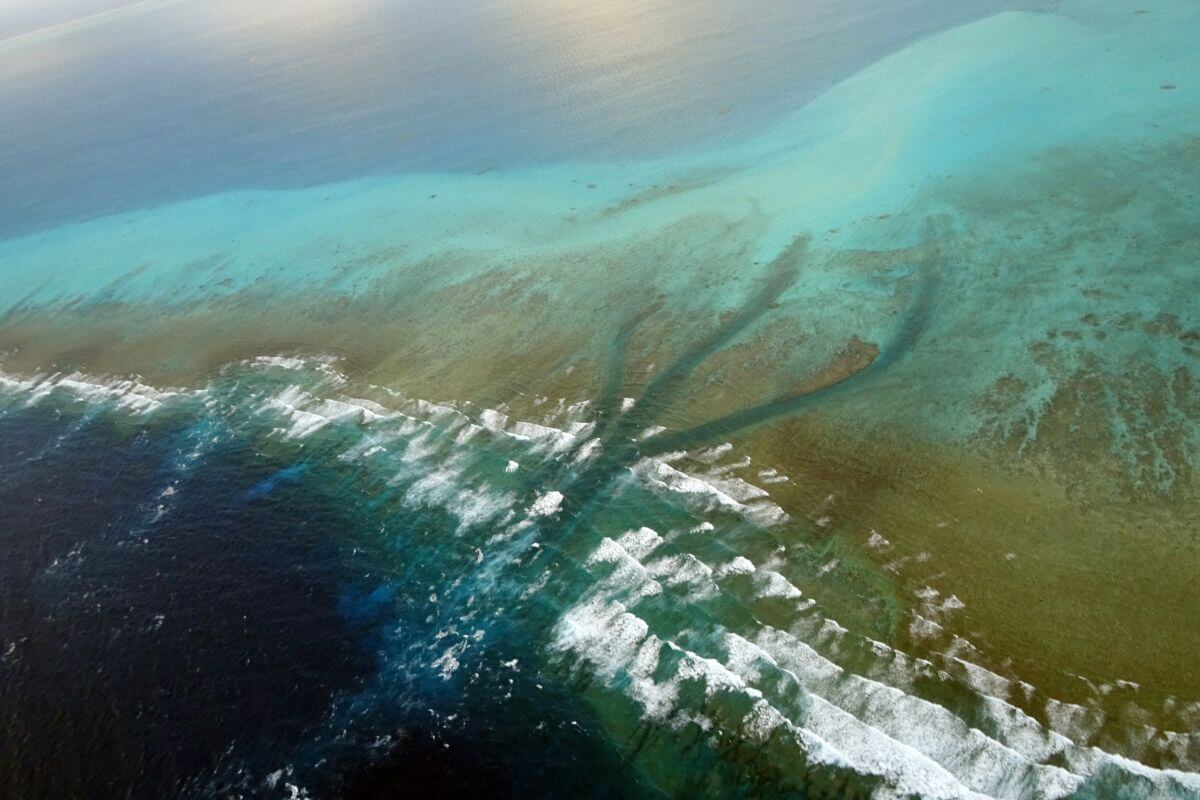

Ocean governance is entering a decisive international moment. At COP31, the Antalya Ocean Declaration will elevate the ocean-climate agenda, while upcoming UN talks on biodiversity and the High Seas Treaty will test whether governments can turn commitments on paper into action on water. With the ocean’s increasing importance, from energy and food security to defence and climate resilience, Europe has a clear stake in shaping what comes next. The EU Ocean Act, expected in the coming months, can deliver what the EU lacks so far: a coherent strategy that reflects the ocean’s interconnected importance at home and abroad. By aligning ambitions, planning, funding and cooperation, the Ocean Act can strengthen delivery on international commitments, build credibility and guide partnerships with third countries through clearer principles and priorities.
Geopolitical rivalry, global competition and accelerating climate impacts are transforming the conditions under which Europe secures resources, moves goods and protects critical infrastructure. In this shifting landscape, the maritime domain has become central to Europe’s security, resilience and competitiveness, linking trade routes, energy systems, digital connectivity and emerging blue economy sectors. Still, EU policy treats the ocean as a collection of separate policy objectives, authorities and reporting cycles. This fragmentation weakens the implementation of international goals. The EU missed its 2020 deadline for achieving good environmental status of marine waters, biodiversity loss continues and only 13.7% of EU waters are protected – often without management plans – against a 30% target for 2030. The risk is not only a delivery problem at home, but also a credibility problem abroad, when leadership on the global agenda is more important than ever.
As a first step, the Ocean Act must turn the EU’s fragmented landscape into a coherent whole-of-ocean framework. The EU can no longer afford an approach that is anachronic. By providing coherence around an organised vision, the Act would be an important step forward: giving the EU clearer direction on governance, funding and implementation, and thereby positioning it as a more credible and capable partner at the global table.
Second, the Ocean Act should help the EU build credibility by delivering on international commitments. This means writing key objectives, including the Kunming-Montreal 30x30 target and goals around harmful subsidies and overfishing directly into the framework so that they shape planning and funding decisions, rather than remaining external benchmarks. The improved coherence in planning and spending that the Ocean Act facilitates would then be central to turning such goals into delivery. This is particularly important given that the EU still lacks a comprehensive picture of its ocean funding and financing needs, including how emerging financial instruments such as the European Competitiveness Fund should tangibly contribute therewithin. National Ocean Plans could help close that gap by bringing planning and reporting into one exercise, linking objectives to targeted spending roadmaps, and giving the European Commission oversight on where funding is flowing, where it is missing and where it can have the greatest impact.
Third, the Ocean Act should make cross-border cooperation a structural feature of ocean governance. Improved maritime spatial planning will be central as one of the main tools through which member states manage marine spaces and activities. Since ecosystems, pressures and economic uses do not stop at borders, planning must broaden its scope. At present, cooperation with non-EU countries on maritime spatial planning remains largely informal and project-based, constrained by the absence of permanent institutional frameworks, data-sharing barriers and limited alignment between planning regimes. By embedding systematic cross-border cooperation, including institutional arrangements and data-sharing mechanisms, into procedures, the Ocean Act would improve the quality of implementation while setting a precedent for how ocean governance should be facilitated more broadly.
Finally, the Ocean Act should guide how the EU approaches partnerships with third countries. Drawing on the European Ocean Pact’s priorities, from ocean diplomacy and governance to quality data and maritime security, the Act should set clearer expectations for partnerships that reflect the EU’s new wider ocean strategy. Sustainable fisheries partnership agreements offer one model for a new generation of partnerships. Moving beyond access arrangements, they could respond to calls for greater local ownership, stronger arrangements on data and knowledge exchange, and closer cooperation on blue economy planning and marine protection. Beyond bilateral partnerships, the Act should also inform EU leadership in coalitions such as the OceanEye Alliance and the Biodiversity Beyond National Jurisdiction High Ambition Coalition, helping shape global standards while strengthening the data and governance systems on which EU maritime policy, climate resilience and blue economy depend. In this way, partnerships would become part of a more coherent EU approach to global governance.
The Ocean Act will not, on its own, make the EU a leader in global ocean governance. What it can do is remove some of the obstacles that currently hold the Union back from delivering on its strategic interests: policy made in silos, funding without a clear picture of needs, planning that stops at the border and partnerships that do not reflect a unified vision. The impact of the upcoming Ocean Act will depend on whether it gives the EU a real, ambitious and long-term strategy, helps it deliver on its commitments and turns cooperation with partners into a practical expression of that strategy. If it does, the Ocean Act can strengthen Europe’s ability to govern the ocean at home and shape ocean governance abroad.
Brooke Moore is a Policy Analyst in the Sustainable Prosperity for Europe Programme at the European Policy Centre.
This EPC Commentary is part of the project, "A watershed moment: the role of ocean health in advancing the EU’s competitiveness and security" undertaken by the European Policy Centre (EPC) with the support of the Oceano Azul Foundation.
The support the European Policy Centre receives for its ongoing operations, or specifically for its publications, does not constitute an endorsement of their contents, which reflect the views of the authors only. Supporters and partners cannot be held responsible for any use that may be made of the information contained therein.