

After Gaza, can Trump deliver peace in Ukraine?
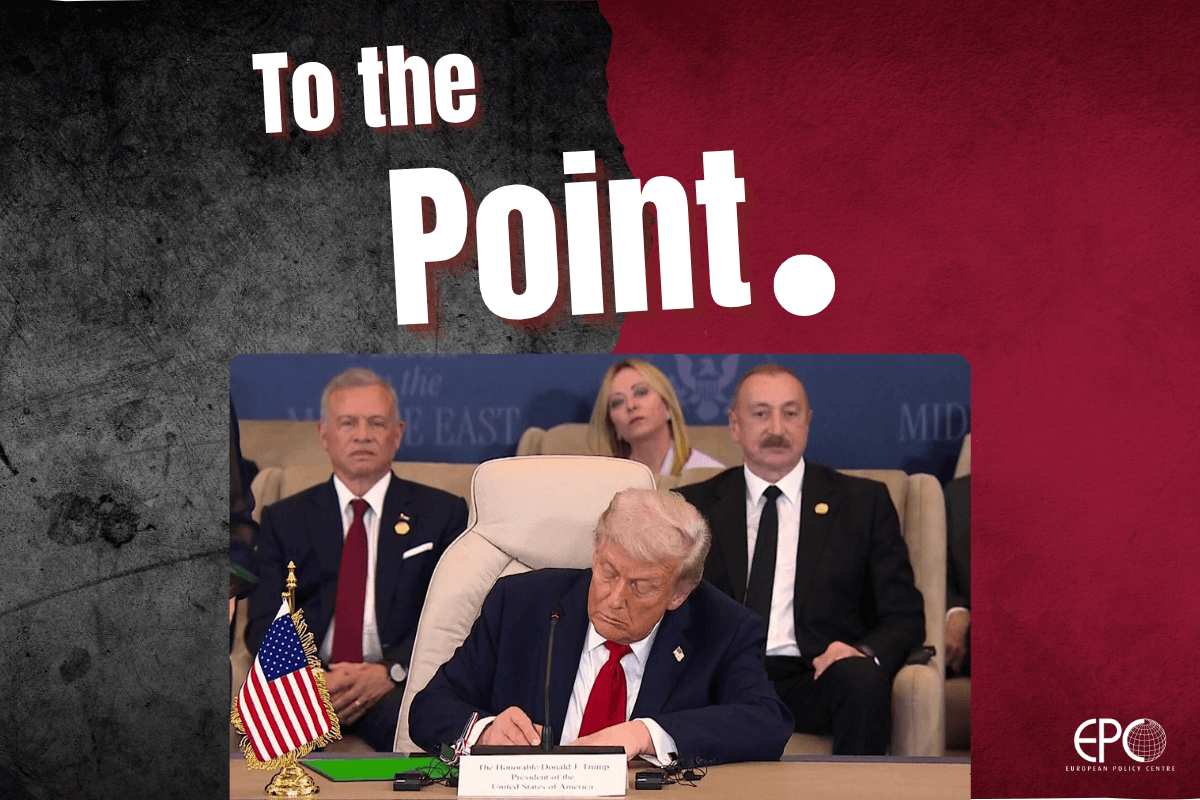
13 October was a rare moment of hope for the Middle East: above all for the Israeli hostages, their families and loved ones, and for Palestinians in Gaza.
Yet, President Trump’s staged announcement of peace in the Middle East in Sharm El Sheikh, in the presence of regional and world leaders, left many questions unanswered. Creating this moment of hope was not easy, and it was important. Now there is a window to end the war. Will Trump continue to invest in the long and difficult process that lies ahead to secure real peace, which requires a political settlement? Europeans, some of whom were present at the ceremony, have a particular interest in seeing this happen – and a role to play.
For Europe, this gathering held important lessons well beyond the Middle East. Europe needs the United States to make peace in Europe. Without the US – and President Trump himself – there will be no prospect of Russia ending its war of aggression against Ukraine. Trump cares deeply about moments such as the one in Egypt. They motivate him to deploy US power and personal engagement. This is no small thing. Europe needs to keep Trump interested in such a moment in Europe.
The international crowd on stage in Sharm El Sheikh demonstrated that the US needs other world leaders help secure what the president has already declared his legacy of peace. They jointly own the next steps. Europeans should work decisively to that end. This includes working with Arab countries that share Europe's conviction that the key to lasting peace is the two-state solution.
Almut Möller is Director for European and Global Affairs and head of the Europe in the World programme at the European Policy Centre.
The support the European Policy Centre receives for its ongoing operations, or specifically for its publications, does not constitute an endorsement of their contents, which reflect the views of the authors only. Supporters and partners cannot be held responsible for any use that may be made of the information contained therein.