

After the breakthrough: Charting the future of EU–India relations


Conventional wisdom holds that timing is everything. Arguably, the Free Trade Agreement (FTA) and Security and Defence Partnership (SDP), signed by the European Union and India in early 2026, arrived at exactly the right time. In a turbulent international environment, both sides needed good news – and proof that meaningful cooperation remains possible.
That should not be underestimated. At a time when military force is once again being treated as an acceptable way to pursue political interests, when economic coercion is becoming more entrenched in global trade, and when diplomacy, negotiation and compromise are increasingly dismissed, the fact that the EU and India have chosen to strengthen ties through a negotiated set of agreements designed to benefit both Indians and Europeans is a success in itself.
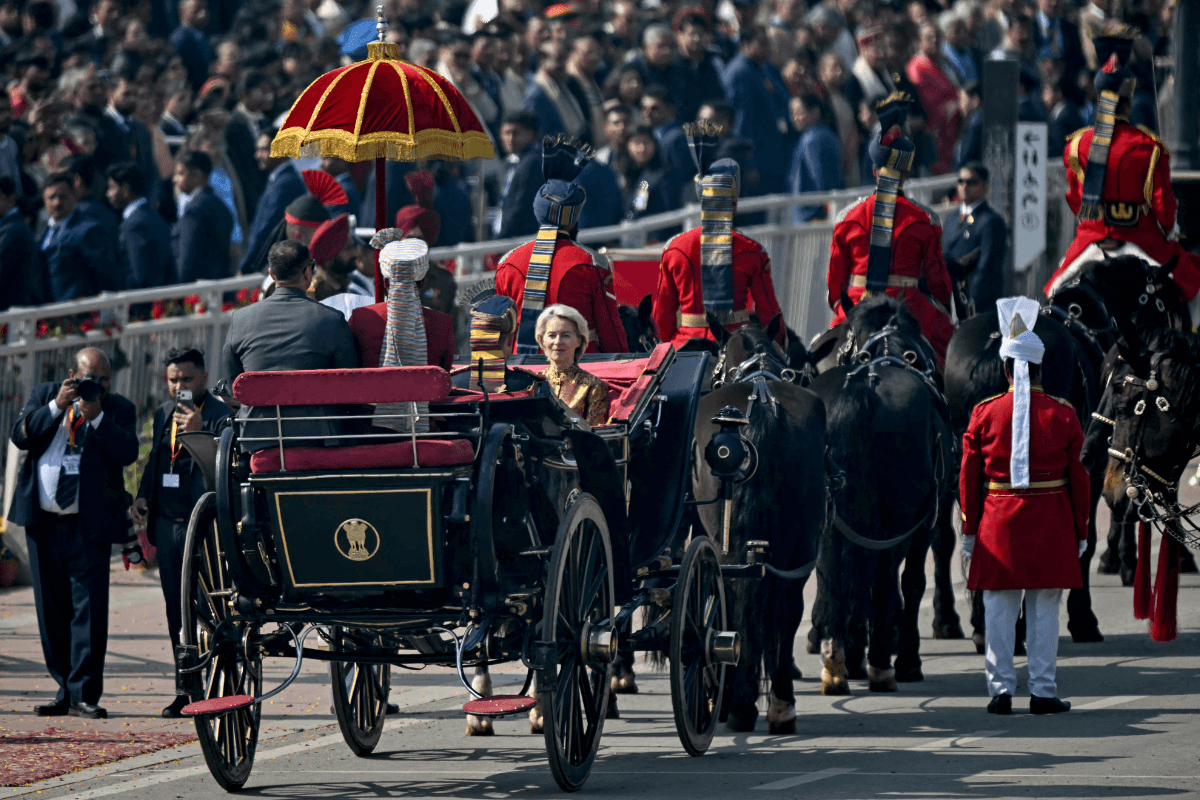
The images from the FTA signing ceremony in New Delhi in January 2026, and the honour accorded by the Government of India to EU Commission President Ursula von der Leyen and EU Council President António Costa by welcoming them as guests at the Indian national holiday parade, reinforced the sense of global relevance. The world’s largest democracies, together representing around one quarter of the global population, stood side by side behind a constructive agenda.
Yet symbolism is only the beginning. What matters now is what comes next. Can the EU and India build a more ambitious relationship that delivers on this newly declared agenda – and perhaps even influences global affairs?
This publication seeks to take stock of expert views a few months after the signing of the agreements. The European Policy Centre (EPC) invited experts from Europe, India and South Asia to assess the prospects for the bilateral relationship in light of developments in their respective fields. The resulting collection explores the evolving EU–India partnership across its economic, geopolitical, technological and security dimensions. These texts are, of course, snapshots at a particular moment. But they do more than illuminate the context and significance of the new EU–India agenda. They also bring together expert communities willing to engage with this relationship both openly and critically.
One way of looking at the framework of agreements is as the creation of opportunity – but one that cannot be realised by governments and officials alone. If the FTA is to succeed once it is formally signed later this year in Brussels, business will need to step into the space it opens and turn political intent into practical reality.
Research organisations and think tanks also have a role to play. Stronger exchanges between experts from the EU and India, across sectors and perspectives, can help make this ambitious agenda more likely to succeed. Not only can they support with expertise and engagement, but they can also identify and address the divergent interests and goals that will inevitably shape this important bilateral relationship as it evolves.
Read the full Compendium here.
The support the European Policy Centre receives for its ongoing operations, or specifically for its publications, does not constitute an endorsement of their contents, which reflect the views of the authors only. Supporters and partners cannot be held responsible for any use that may be made of the information contained therein.