

EU-Ukraine trade: From emergency measures to a renewed trade agreement

On 30 June 2025, the European Commission and Ukraine concluded negotiations on the review of the EU-Ukraine Deep and Comprehensive Free Trade Area (DCFTA). DCFTA 2.0 is more restrictive than the Autonomous Trade Measures (ATMS) that were in place over the past three years, particularly for Ukraine’s key agrifood exports. At the same time, it offers more permanent trade regime as compared to the ATMs, and reciprocally broader market access as compared to the original DCFTA, better aligns with Ukraine’s status as an EU candidate country, and potentially allows for Ukraine’s gradual and smooth integration into the EU Single Market.
The end of the Autonomous Trade Measures (ATMs) for Ukraine
To support Ukraine’s economic resilience and trade amid devastating war-related disruptions, the EU has established alternative trade corridors via EU-Ukraine Solidarity Lanes and granted Ukraine a duty-free trade regime for all exports in the form of ATMs. ATMs were introduced as temporary emergency measures in June 2022 and were extended annually for two more years. Specifically, ATMs suspended all 40 tariff rate quotas (TRQs) and entry prices for Ukrainian agri-food products, trade defence measures on steel products, and other remaining restrictions under the DCFTA.
However, after three years, the issue of further extension of the ATMs for Ukraine has become politically sensitive for certain member states—especially Ukraine’s EU neighbours Poland, Hungary, Slovakia. The unprecedented increase of Ukrainian agrifood imports to the EU triggered protests by local farmers and the introduction of unilateral restrictions by these countries on Ukrainian imports. Although the European Commission later adjusted the initial ATMs by introducing safeguard measures (emergency breaks) for seven sensitive products, this was deemed insufficient by neighbouring member states who strongly opposed the continuation of the ATMs.
As of 6 June 2025, the EU has reintroduced the pre-invasion trade regime (except trade defence measures on steel) as a temporary solution pending an update of the DCFTA agreement. Consultations to review the DCFTA, initiated at Ukraine’s request in 2021, were paused due to Russia’s full-scale invasion and resumed in June 2025.
ATM’s impact on EU-Ukraine agrifood trade
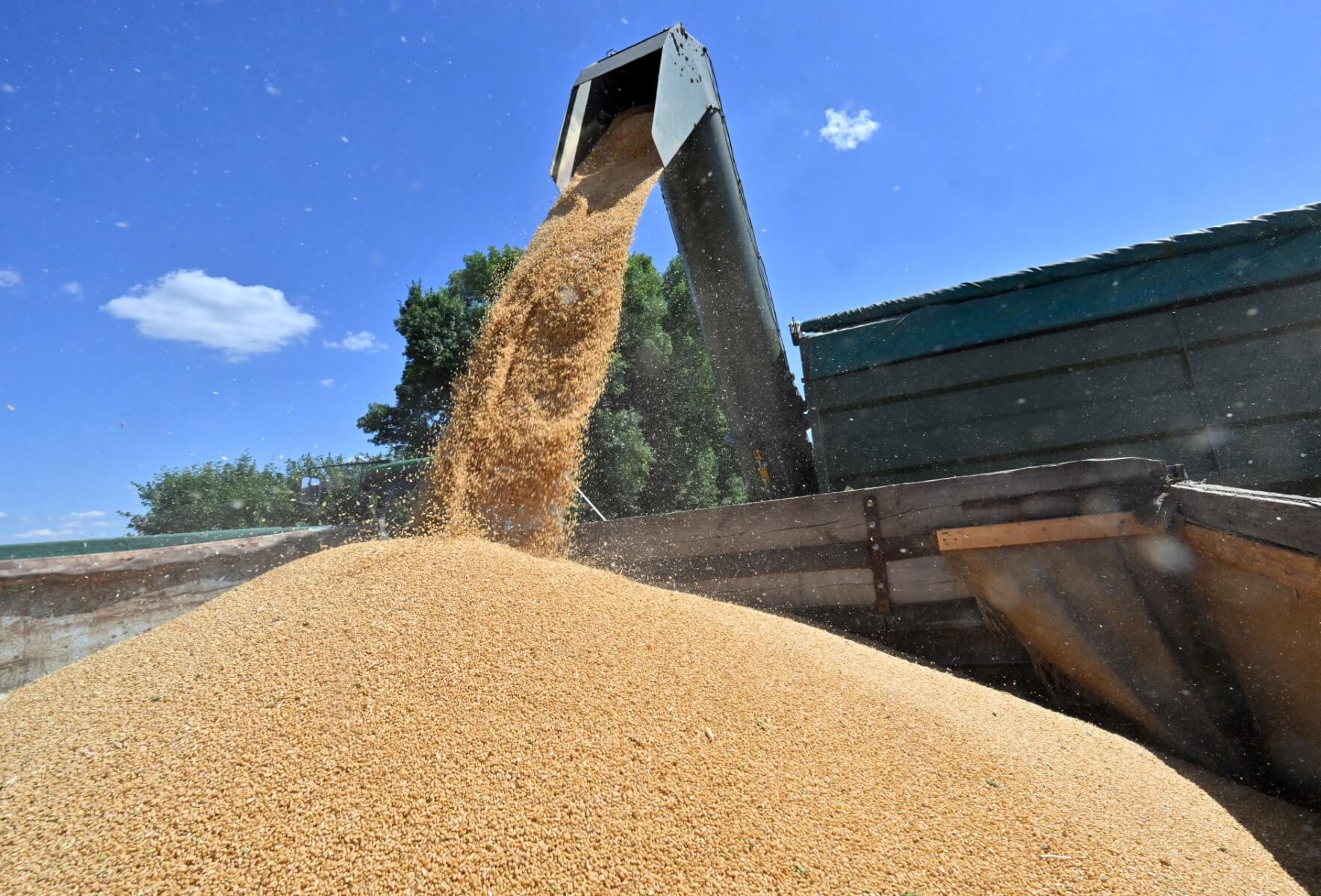
Disrupted export routes, access to global markets, high logistic costs, and EU trade support have led to an expansion of Ukraine’s agricultural presence in the EU market. The EU’s share in Ukraine’s agrifood exports increased to 52% in 2024 vs 28% in 2021. Ukraine’s role in EU agrifood trade and food security has also increased considerably. Ukraine became the third largest source of EU agrifood imports in 2024, with its share reaching 8% of EU import value in 2024 (€13 billion) vs 5% in 2021 (€6.9 billion). For certain products, Ukraine’s share was much higher. For example, its share of the EU’s imports of sugar reached 37% in 2024: wheat - 68%, eggs - 47%, and honey - 31%.
Among the ATM’s measures, the suspension of tariff rate quotas was the most impactful for Ukraine’s trade. Altogether, agrifood products subject to TRQs reached €5,4 billion in 2024, which accounted for about 22% of Ukraine’s total exports to the EU and 42% of Ukraine’s total agrifood exports to the EU; market access for the rest of Ukrainian products had already been fully liberalised under the DCFTA.
The largest increases in volume, well above the original TRQs, were in cereals (wheat, maize, barley, oak), sugar, eggs, poultry, apple juice, and milk powder. There was also a noticeable increase in exports of processed goods with higher added value, including processed sugar, milk, and cereal products (flours, groats, butter, condensed milk). Emerging opportunities in the EU market have accelerated investment and the rapid development of food processing production in Ukraine, in line with EU standards.
A broader perspective of EU-Ukraine trade: Fitting the pieces together
Trade in agrifood products is only part of the bigger picture. Overall, the ATMs had a positive effect on Ukraine's total trade to the EU—particularly agrifood—and helped to partially compensate for a sharp reduction of its industrial imports to the EU of metals and ores. This helped to keep Ukraine’s total exports to the EU almost stable during the war, and in line with the pre-invasion level of €24.5 billion in 2024, vs. €24.1 billion in 2021.
After Russia’s invasion, the EU's goods exports to Ukraine quickly expanded to €42.8 billion in 2024 vs. €28.3 billion in 2021. The overall EU trade surplus with Ukraine has increased to €18.3 billion in 2024 vs €4.3 billion in 2021 due to a significant expansion of the EU’s industrial exports, dominated by fuels, electrical machinery, vehicles, machinery, arms and ammunition. EU member states also export a variety of food and processed agricultural products to Ukraine, including dairy products, fresh fruit and vegetables, meat, and meat products.
Much of this growth has been concentrated in neighbouring member states. Since Russia’s invasion, Ukraine has become an increasingly important export market and investment destination for its neighbours. Poland’s trade surplus with Ukraine grew from €2.1 billion in 2021 to over €8 billion in 2024, while Hungary’s rose from €991 million to €2.2 billion, respectively.
These neighbouring states have also become critical logistics and transit centres for Ukraine’s trade with the EU and global markets, creating significant new business opportunities. Moreover, Ukrainian agrifood exports have enabled European agri-processing industries to expand higher value-added production, particularly in livestock and processed foods, strengthening the EU–Ukraine agri-food supply chain linkages.
What’s changing in the new EU-Ukraine trade deal?
The new agreement proposes updating the EU-Ukraine trade regime by reciprocally liberalising the remaining trade restrictions in line with Article 29 of the EU-Ukraine Association Agreement. Although Ukraine was striving for a greater scale of liberalisation—abolishing many TRQs and entry prices and keeping them only for the most sensitive products—the proposed agreement represents a compromise for Ukrainian and EU producers about liberalisation and other issues.
Liberalisation. All TRQs will be liberalised according to product sensitivity. The most sensitive products, such as eggs, sugar, wheat, maize, poultry, honey, and apple juice, will receive more limited market openings, with quotas set below recent trade volumes under the ATMs, which is expected to lead to reductions in their supplies to the EU. For example, the TRQ for wheat will be increased from 1 million to 1.3 million tonnes, while under the ATMs Ukraine exported 6.2 million tonnes in 2023. The TRQ for sugar will be increased from 20,000 to 100,000 tonnes, compared to 496,000 tonnes under the ATMs in 2023.
Less sensitive TRQs, where EU and Ukrainian trade is complementary—such as starches, malt, gluten, groats, skimmed milk powder, etc.—will be expanded closer to historical levels under the ATMs. For example, the TRQ for starches will be increased from 10,000 to 24,400 tonnes, compared to 20,000 tonnes supplied under the ATMs in 2023.
Non-sensitive and typically underutilised TRQs, like mushrooms, processed milk cream, yoghurts, and kefirs, will be fully liberalised. Some TRQs will also be restructured based on the level of sensitivity of included products; grape juice, for example, will be separated from apple juice and liberalised. Flours, as more processed products, will be split from cereals into a separate quota to secure duty-free volumes. Reciprocally, Ukraine will increase volumes of its three TRQs for pork, poultry, and sugar, and will eliminate or reduce the remaining tariffs on imports from the EU.
Overall, the new regime will include 31 main TRQs and 3 additional TRQs; entry prices for fruits and vegetables from Ukraine will also be reimposed. The agreed DCFTA 2.0 offers broader market access for Ukraine compared to the original DCFTA, but is more restrictive than the ATMs, particularly for Ukraine’s key agrifood exports. This will result in potential export losses for Ukraine due to reduced EU market access and the need for redirection to third markets, with a possible loss of export value there.
Safeguard mechanism. All products under the original TRQs will be covered by a new safeguard mechanism, enabling the EU and Ukraine to address negative impacts of liberalisation at regional or sectoral levels. In response to concerns from neighbouring EU member states about the risk of ending up with a disproportionate share of Ukrainian imports, the proposed safeguard mechanism allows an evaluation on the basis of one or more EU member states, but any decision would need to be taken at EU level. National bans (like those still in place in Poland, Hungary, and Slovakia) will be no longer possible. The agreement outlines procedural requirements only in general terms, including notification, consultations, waiting periods, and the provision of relevant data. However, it lacks reference to clear and verifiable triggers, injury assessment, and review procedures. Given the broadly defined trigger of “serious economic, societal or environmental difficulties of a sectoral or regional nature liable to persist” and the possibility of immediate application without prior examination, the mechanism offers vast opportunities for abuse of protective measures, potentially causing unpredictable disruptions to Ukraine’s exports. It must be applied cautiously, transparently, and on the basis of clear evidence to prevent political misuse, which could also affect the integrity of the EU Single Market.
Conditionality. Greater market access for Ukraine will be conditional on a gradual alignment of its legislation with EU agrifood production standards, including rules on animal welfare, pesticides, environment protection, veterinary medicines, and GMOs. Ukraine will report annually on its progress in adopting a specified list of EU legislation, with full legal alignment expected by the end of 2028. Failure to meet these commitments may lead to the withdrawal of the provided new additional market access.
Ukraine not meeting EU production standards has been one of the main concerns raised by EU farmers. While Ukrainian imports—like all imports from third countries—meet EU food safety requirements, alignment with EU production standards should progress with Ukraine’s EU accession process and gradual integration into the Single Market. The proposed conditionality will help advancing Ukraine on its accession path, while allowing a grace period to delay an immediate impact on producers. Implementing these standards will require significant investment from Ukrainian farmers and targeted EU support, particularly for smaller producers, as part of the EU accession assistance. Given wartime and post-war challenges for Ukraine’s farming community, the full compliance with EU production standards needs to be gradual, allowing extended transition periods for smaller farmers.
Review clause. The agreement includes a provision for review of the current agreement with the aim of further trade liberalisation. The review is scheduled for 2028 and is linked to Ukraine’s progress in economic integration and its EU accession process.
Flanking measures. The extent of Ukraine’s losses from reduced access to the EU market will also depend on how quickly Ukrainian exporters can redirect their products to third-country markets—e.g., countries in the Middle East and North Africa’s share of Ukraine’s exports of wheat dropped from 50% in 2021 to 29% in 2023. While Ukraine is gradually restoring global market access, particularly through reopened seaport routes, war-related logistical challenges (insufficient number of containers, etc), high transportation and energy costs, and other disruptions remain significant. To support this transition and diversify its export markets, the EU and Ukraine have agreed to explore additional measures to help Ukrainian exporters regain access to global markets.
DCFTA 2.0: strategic upgrade amid war and accession
The revision process offers an opportunity to align trade terms with Ukraine’s EU candidate status and acknowledge the deepening strategic and economic partnership between the two sides amidst Russia’s ongoing war and wider geopolitical challenges. It replaces the temporary ATM framework with a more permanent, predictable regime for Ukrainian and EU producers, as well as Europe’s agri-processing industries. The agreement represents a compromise on the scale of liberalisation, and addresses concerns of neighbouring EU member states about the application of safeguard measures at the regional level and conditionality of trade liberalisation for Ukraine.
Trade negotiations between the European Commission and Ukraine were concluded relatively swiftly in June, highlighting the urgency and sensitivity of the matter. The agreement requires endorsement of a qualified majority in the Council in order for the EU-Ukraine Association Committee to adopt it. It may face significant pressure from EU’s agricultural sector, with its strong political clout, to return to the original outdated TRQs or cut the proposed quotas. Such cuts would severely harm Ukraine’s key exports to the EU, worsen Ukraine’s trade deficit, further unbalance EU-Ukraine trade relations, and increase Ukraine’s dependence on EU aid.
Forthcoming Council discussions over the proposed text are likely to be intense, with some neighbouring member states calling for stricter protection of their national markets, while others advocate stronger EU support for Ukraine’s accession, trade liberalisation and integration into the Single Market. Delays with its adoption risk creating uncertainty, particularly with the start of the next harvest export season in August–September. Adopting the agreement swiftly would demonstrate the EU’s and Ukraine’s ability to find compromises and balance sectoral concerns with long-term strategic benefits. Strategic benefits are associated with greater economic and security cooperation with Ukraine as an accession country, Ukraine’s contribution into EU food security, economic security, competitiveness, and its global role as a geostrategic actor and a guarantor of global food security. This understanding will be crucial during Ukraine’s path to EU accession when policy sensitivities over market access and accession terms intensify.
Svitlana Taran is a Policy Analyst in the Europe in the World Programme at the European Policy Centre.
The support the European Policy Centre receives for its ongoing operations, or specifically for its publications, does not constitute an endorsement of their contents, which reflect the views of the authors only. Supporters and partners cannot be held responsible for any use that may be made of the information contained therein.