

EU–Latin America green partnerships: from ambition to action
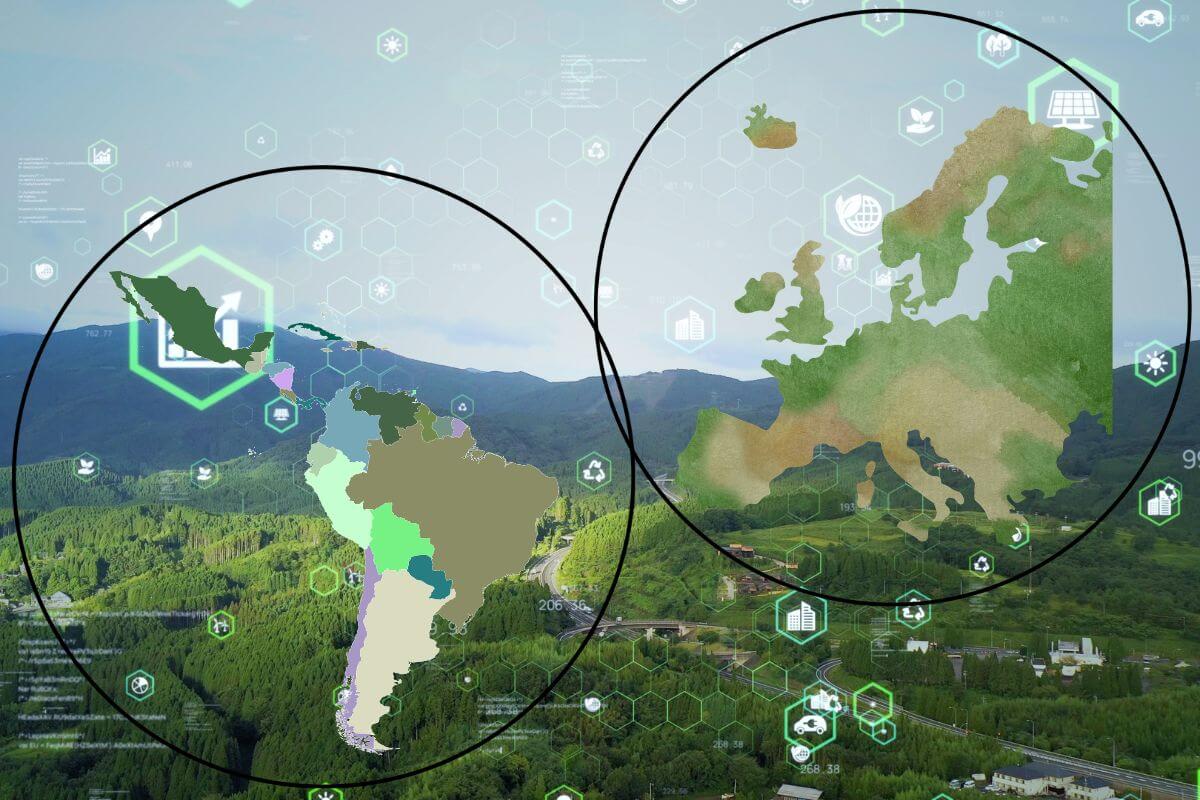

The shift to a climate-neutral economy requires fair, long-term partnerships that connect resources, technology and investment. EU–Latin America green partnerships can strengthen European competitiveness while creating opportunities for investment and industrial development in Latin America and the Caribbean (LAC).
Their success, however, depends on closing the gap between political ambition and bankable projects, and on ensuring that partnerships deliver mutual socio-economic benefits rather than simply securing strategic resources for the clean transition.
The strategic potential of green partnerships
Access to critical minerals, clean energy and low-carbon industrial products is central to the implementation of the European Green Deal and the Clean Industrial Deal. Green partnerships with third countries can support more sustainable value chains for the minerals needed for renewables, electric vehicles, batteries and grids, as well as for green hydrogen, sustainable biofuels and green steel.
LAC is increasingly strategic for the EU’s green industrial strategy and economic security. As the bloc seeks to reduce dependence on China and diversify access to critical raw materials, the LAC region’s reserves of lithium, copper and renewable energy potential are becoming more important. Its abundant reserves of CRMs, holds around 60% of global lithium reserves and 40% of copper reserves, while its potential to expand utility-scale solar and wind capacity by more than 460% by 2030 could strengthen the resilience of European green value chains. The political and economic basis for deeper connection already exists: the EU is among the region’s largest investors, its third-largest trading partner and maintains political relations with 27 of the region’s 33 countries.
For LAC countries, green partnerships offer a chance to attract investments, expand renewable electricity systems, develop storage infrastructure and move into higher value-added segments of green value chains. Yet the region still accounts for only 5% of privately financed global investment in clean energy. Since 2015, the region has attracted $45 billion in greenfield mining investment for copper and lithium, but progress in downstream industrialisation and value-added processing remains limited.
Existing green partnerships
The EU has already built a dense framework for green cooperation with Latin America and the Caribbean, combining political dialogues, trade agreements, raw materials partnerships and the Global Gateway.
Since 2023, this has included renewed EU-LAC bi-regional cooperation, raw materials memoranda of understanding with Argentina and Chile, the interim trade agreement with Chile, alongside €45 billion in planned Global Gateway investment for more than 130 projects. The EU-Mercosur trade deal, concluded in 2024, seeks to enhance trade in industrial goods and critical raw materials. Though provisionally applied since May 2026, the deal awaits full ratification, in particular due to opposition over increased imports of beef from LAC affecting European farmers and contributing to carbon emissions.
These instruments give the partnership a strong policy basis, but their impact will depend on whether they can move from announcements to bankable projects with clear local benefits.
Implementation gaps
The gap between announced initiatives and bankable projects remains a major challenge. Despite investment commitments under the Global Gateway, including 29 climate and energy projects in the LAC region, significant uncertainties remain regarding how the €45 billion will be mobilised by 2027, particularly given the limited pipeline of bankable projects.
Green projects fail to reach bankability due to lack of reliable data, fragmented standards and high investment risks. De-risking instruments such as blended finance, guarantees and green bonds are therefore essential to mobilise private capital, including the role for Multilateral Development Banks. However, these tools remain fragmented and insufficiently integrated into broader EU trade and industrial strategies.
Persistent ‘green premiums’ are another barrier. Low- and zero-emission technologies and products are often more expensive than conventional alternatives, making long-term investment less attractive without sufficient regulatory support and certainty. However, potential inconsistencies between EU trade instruments and “Made in EU” requirements under the proposed Industrial Accelerator Act may create regulatory uncertainty, raise costs further and limit the development of joint green value chains.
Ensuring mutual benefits
Facilitating capital flows is only one part of fair green partnerships. Ensuring that EU-LAC cooperation does not reproduce extractive patterns, but instead generates predictable, long-term benefits for both partners is equally important.
Financing models that prioritise export-oriented infrastructure and energy-intensive sectors risk reinforcing debt burdens and existing economic asymmetries. This stresses the importance of linking green partnerships with wider development objectives, including digital infrastructure and green industrialisation beyond the mineral sector. Previous partnerships, including Just Energy Transition Partnerships, have often concentrated on pre-implementation and project preparation, benefiting international actors more than local industries.
Local benefits are particularly important given the environmental and social risks associated with mining expansion. Globally, 54% of current and potential mining projects are located on or near Indigenous Peoples’ lands. According to the Environmental Justice Atlas, Latin America and the Caribbean account for 410 mining-related conflicts, around 41% of the global total. While recent EU simplification measures may incentivise investment, they risk weakening safeguards for environmental protection and community rights.
From ambition to delivery
To succeed, green partnerships must deliver a stronger pipeline of bankable projects backed by predictable, long-term financing. They should also support broader development goals, including digital and energy infrastructure, local value creation, social and environmental protection and industrialisation.
To close implementation gaps, the EU should:
- Strengthen policy coherence across the Global Gateway, CBAM, Industrial Accelerator Act, and trade agreements, including Clean Trade Investment Partnerships.
- Develop integrated project pipelines through a ‘Team Europe’ approach that connects investments across strategic sectors and value chains.
- Expand public-private partnerships that combine commercial viability with development impact, including through offtake agreements and joint purchasing mechanisms.
- Use demand-side tools such as green public procurement, price floors, and long-term purchase agreements and contracts for difference to reduce green premiums and provide long-term investment certainty in partner countries.
- Ensure the coherence of EU-LAC partnerships with wider sustainability goals. Given expected increase of beef imports from Mercosur countries, the forthcoming European Protein Plan should help scale-up investments and demand side measures for alternative, plant-based proteins with lower carbon footprint.
To deliver fair and mutually beneficial partnerships, the EU should:
- Anchor cooperation in regional development banks and trusted local institutions to strengthen legitimacy, reduce risks, avoid unsustainable debt burdens and increase local developmental benefits.
- Strengthen the role of de-risking instruments in the EU’s trade and industrial policies toward implementing green partnerships in LAC in coordination with Multilateral Development Banks.
- Uphold robust environmental, social, and governance (ESG) standards by aligning corporate accountability with both EU and partner-country frameworks.
Eszter Szedlacsek is a Policy Analyst at the European Policy Centre.
The support the European Policy Centre receives for its ongoing operations, or specifically for its publications, does not constitute an endorsement of their contents, which reflect the views of the authors only. Supporters and partners cannot be held responsible for any use that may be made of the information contained therein.