

Watching the public part of the meeting between US President Donald Trump, Ukrainian President Volodimir Zelenskyy, and European leaders in Washington last night, one thought inevitably crept in: how could Europeans possibly have gotten themselves into such a situation, considering all the tailwind of the post-Cold War 1990s and the subsequent political consensus to grow strong in unity, including in European foreign and security policy, laid down by successive treaty reforms? Yet in August 2025, there the Europeans were, exposed to the shifting moods of the leader of a country that has been a bedrock of transatlantic security and yet, just a few days before, had welcomed the Russian aggressor to Alaska with warm words, a red carpet, and no challenges to his war goals. It was difficult not to see the public part of the meeting between President Trump and European leaders last night as an undignified exposure of Europe’s weakness.
However, Europeans are showing some effort to make the best out of the overall situation. If yesterday’s meeting gave Trump the feeling that Europeans stood ready to support him in bringing peace to Ukraine (and, he hopes, win the Nobel Peace Price), and that he would not achieve these aims without Ukraine and Europe, then it was a necessary step. It was preparation for what is going to be a very challenging political and diplomatic process ahead—if it goes ahead at all, which is not a given when looking at Moscow’s overall goals.
It is difficult, therefore, to envisage how a meaningful diplomatic process can be aligned with a leader in the White House who does not believe in processes, but rather in big men turning the wheels of history by deals and handshakes.
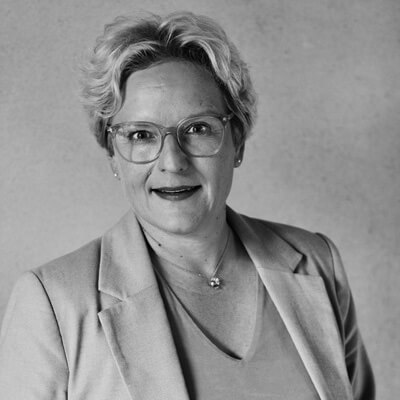
Almut Möller is Director for European and Global Affairs and head of the Europe in the World programme at the European Policy Centre.
The support the European Policy Centre receives for its ongoing operations, or specifically for its publications, does not constitute an endorsement of their contents, which reflect the views of the authors only. Supporters and partners cannot be held responsible for any use that may be made of the information contained therein.