

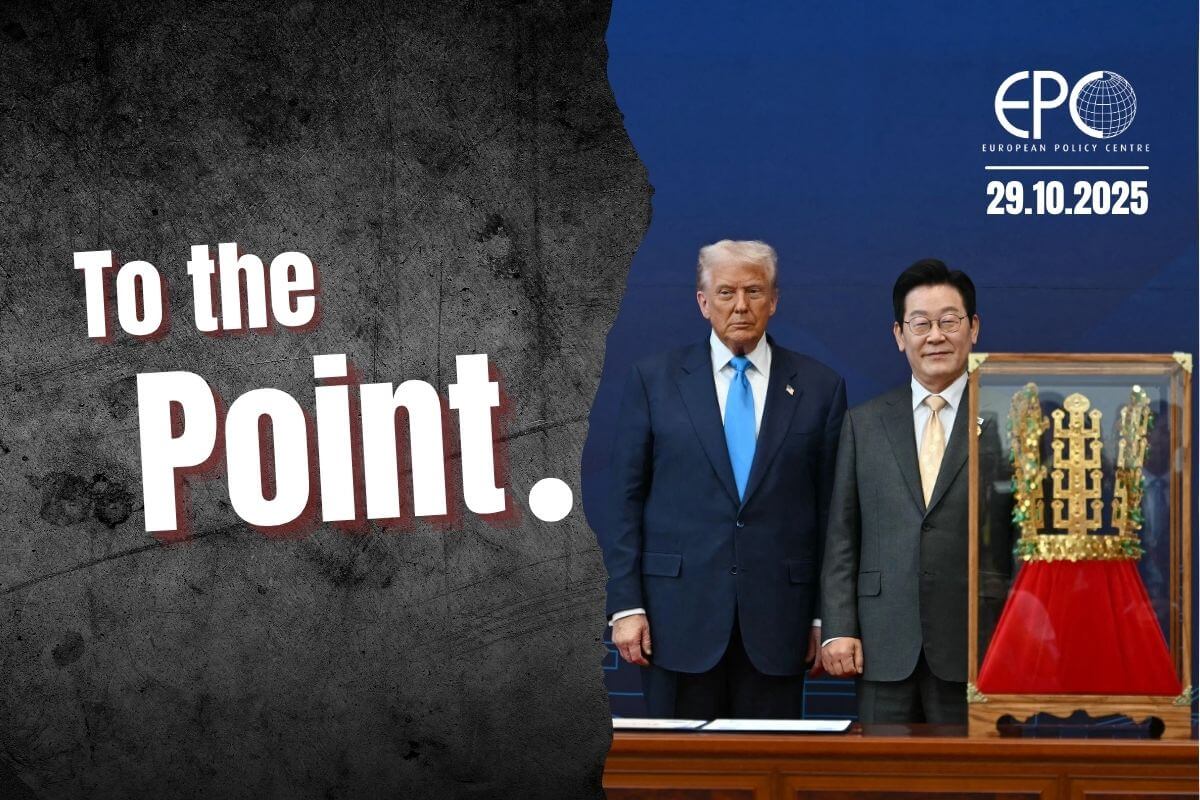

To many, it was yet another example of a diplomatic offensive to woo US President Donald Trump when his South Korean host honoured him with a replica of a historic golden crown on his visit to Asia this week. President Lee Jae Myung probably did not intend to take sides in US domestic politics. Yet there was much more to this protocol exchange than a generous token of appreciation.
Given the growing “No Kings” protest movement in the US, many Americans will have perceived this gift not as a friendly gesture by a foreign leader. A more pressing question arises: should democratic leaders around the world care about the future of US democracy?
Despite Europe’s tradition of non-interference in the domestic politics of allies, as The Guardian columnist Paul Taylor argues, it is beyond time to denounce Trump’s trashing of democracy at home.
Yet, for Europeans, this poses a dilemma. Their dependence on the US to push back on Russia’s war of aggression means they have so far been dancing to flatter Trump. But the more US democracy is eroded in the months ahead, the harder it will become for European leaders to navigate their own domestic politics. Voters across Europe will surely ask why they should align with Washington or heed its calls to raise defence budgets and “buy American”.
Europe certainly has its own arsenal for “crown diplomacy” – an ermine cape of King Louis XIV? Charlemagne’s crown? – but deploying it carries growing political risks at home.
Almut Möller is Director for European and Global Affairs and head of the Europe in the World programme at the European Policy Centre.
The support the European Policy Centre receives for its ongoing operations, or specifically for its publications, does not constitute an endorsement of their contents, which reflect the views of the authors only. Supporters and partners cannot be held responsible for any use that may be made of the information contained therein.