

Green steel for European defence: An enabler for decarbonisation, competitiveness, and security?

The importance of steel
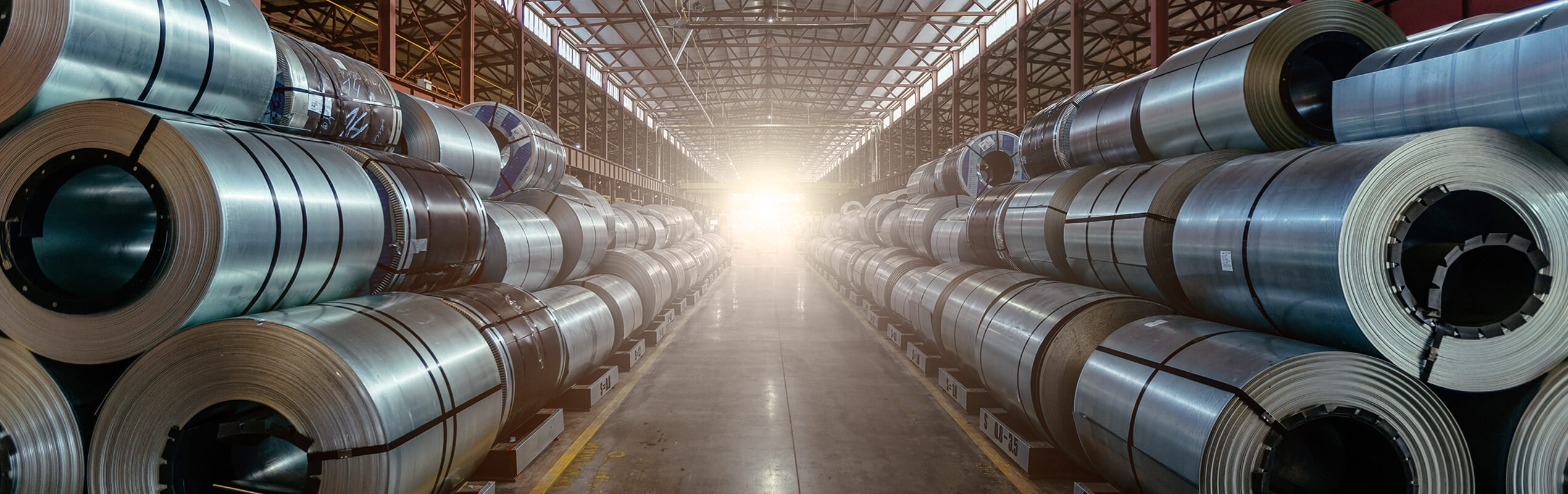
Steel is a central resource for the EU’s competitiveness and security, and is the backbone of its clean energy transition. Many downstream industries and products depend on its reliable supply, including clean energy infrastructure (e.g. wind turbines, grid infrastructure) and defence (e.g. military infrastructure, naval vessels). EU guidance for and regulation of the steel industry is spread across multiple papers and strategies, leaving several gaps between them.
The steel industry faces several fundamental challenges. Globally, the sector faces overproduction and an uneven playing field. Global steel excess capacity, primarily from China, could be 5 times that of the EU’s entire steel production in 2027. US President Donald Trump’s tariffs and the reorientation of cheap Chinese steel to the EU market also raise economic security concerns, as relying on foreign steel creates a dependency which can be weaponised. Finally, the steel sector faces a great decarbonisation and industrial transformation task, as one of the most emissions-intensive industries in Europe.
These wide-ranging challenges are multifaceted and often converging. The EU therefore needs to adopt an integrated industrial approach to steel, aligning decarbonisation goals with security considerations and leveraging different downstream sectors, including defence, to ensure the competitiveness of the European steel industry and meet decarbonisation targets.
Green steel
Conventional steelmaking in Europe relies on imported coal and iron ore, with an import dependency reaching 74.4% in 2022. This could render the EU economy vulnerable to the politics and priorities of other states, and expose its steel supply chain to global disruptions.
Green steel production is the manufacturing of steel with little to no use of fossil fuels. Produced either through hydrogen-based direct reduction of iron, or electric arc furnaces, green steel can help secure supply chains by encouraging more local production and reducing reliance on imports. Both methods need stable supplies of renewable energy and green hydrogen, which cannot be easily transported across long distances.
The clean transition offers substantial economic opportunities. Steel is no exception, with the global green steel market projected to grow from $3.75 billion to $129.08 billion between 2024 and 2032. The EU Emissions Trading System will make it more expensive for the steel sector to emit greenhouse gases over time. Additionally, the Carbon Border Adjustment Mechanism aligns the price of cheap Chinese steel and domestically produced steel on the EU market through a carbon border tax, further incentivising decarbonisation.
Defence as a leverage
Following Russia’s war of aggression against Ukraine, defence has risen to the top of the EU’s agenda. With its White Paper on European Defence, the EU aims to strengthen national defence capabilities and scale up defence production. This requires more steel.
Greater investment in the European Defence Technology Industrial Base (EDTIB) can boost the competitiveness of the European steel industry. With its long planning horizons, high-quality input requirements, and relative price insensitivity, the defence sector makes a good early adopter for green steel. Leveraging the defence sector to boost demand in green steel would lend the steel industry the necessary certainty to make costly decarbonisation investments. It would also render defence supply chains more secure, as they would not rely on importing foreign steel, nor would European steel making rely on imported coal.
The Clean Industrial Deal
The Commission's Clean Industrial Deal (CID) recognises that insufficient demand for clean products, including steel, is a principal challenge for industrial decarbonisation. It thus proposes several demand-boosting measures, not least in the upcoming Industrial Decarbonisation Accelerator Act (IDAA). These include revising procurement rules to include sustainability and resilience criteria, and the introduction of a voluntary low-carbon product label. The IDAA will also include streamlining permitting procedures for large-scale decarbonisation projects. Primarily targeting energy-intensive industries (e.g. steel), the IDAA will also consider related downstream industries where relevant, mentioning for example automotive, construction, housing and clean tech.
The CID does not acknowledge the potential role of the defence sector in boosting demand for green steel. In fact, the plan does not mention defence at all. Yet, as a downstream industry reliant on steel, and one which will grow with increased EU defence spending, the EDTIB could use its purchasing power to help create markets for green steel.
The defence industry should be included as a downstream industry in the IDAA. Among other things, this could accelerate the development and scaling of low-carbon technologies, as technological innovation often spills over from defence to civilian uses. Moreover, inclusion could also drive investment to reduce emissions across military supply chains.
The Steel and Metals Action Plan
The Steel and Metals Action Plan aims to respond to the challenges facing the steel sector. It notes the importance of steel in the production of weapon systems, asserting that a stable and resilient supply chain for steel is critical to strengthening the EDTIB. It also highlights the importance of decarbonisation investments. Without them, strategic sectors such as defence will be weakened, limiting its ability to deliver critical capabilities and equipment with sufficient flexibility.
Like the CID, the plan recognises the need for reliable demand to make decarbonisation investments profitable. The Commission will therefore work on creating lead markets for low-carbon steel, for example by introducing resilience and sustainability criteria to the steel and metals industries, and their downstream sectors: automotive, construction, and machinery. Defence is not mentioned as such an industry, despite its long planning horizons, relative price insensitivity, and increasing need for materials.
The plan also proposes a reform of the Research Fund for Coal and Steel, which provides funding for the steel sector’s decarbonisation, to strengthen defence-related research. However, it does not clarify the role of green steel in this context. This needs to be addressed to ensure that the fund’s emphasis on decarbonisation is not undermined, and that the security benefits of green steel are recognised.
Overall, the plan does not recognise how green steel has the potential to make defence supply chains more secure, or how it renders the EDTIB more autonomous. This indicates a gap in the Commission’s approach to the defence and industrial decarbonisation agendas, treating them as separate without acknowledging how they can converge.
Defence agenda
The White Paper for European Defence mentions the importance of steel to defence, arguing that greater investment in European defence readiness enables competitiveness for European steel manufacturing. To further develop this argument, the link should be expanded to green steel.
Russia’s invasion of Ukraine in 2022 drove a surge in European defence spending. After decades of underinvestment, the EU EDTIB needs to be urgently scaled up, with the Commission’s ReArm Europe plan aiming to mobilise up to €800 billion for defence investments by unlocking new financial mechanisms. These include the Security Action for Europe instrument, allowing the Commission to raise funds in capital markets to lend to member states for defence projects, as well as the activation of the Stability and Growth Pact’s escape clause, enabling countries to increase military budgets without breaching EU deficit rules.
This will boost input sectors such as steel production; as such, this reindustrialisation must also encompass decarbonisation. This could, in part, be done through green defence procurement, but more broadly, the synergies between sustainability and security must be more widely acknowledged and integrated into the EU’s industrial strategy.
Finally, the use of green steel in defence can also lead to more financing opportunities for the defence sector. The European Investment Bank has expanded its eligibilities for financing projects with both civilian and military applications (i.e. dual use projects). Eligible projects include green security: projects that enhance security while supporting the transition to renewable energy sources. This should be further developed, as it helps derisk decarbonisation investments for the steel sector by making green steel more attractive in military or dual use projects.
Conclusion
Only by treating defence, industrial policy, and decarbonisation as interconnected can the EU build a more resilient and competitive economy. The steel sector exemplifies this need: defence demand can drive investments in green steel, supporting decarbonisation and reducing strategic vulnerabilities. Fully exploring and realising these links is essential for the EU to meet its security and climate objectives while sustaining competitiveness.
Consequently, the EU must:
1. Set a vision to align decarbonisation and defence agendas, strengthening and expanding the defence-green steel link across relevant legislation.
2. Launch an impact assessment exploring and quantifying how defence procurement of green steel could accelerate the green transition while enhancing industrial competitiveness.
3. Include the defence sector as a downstream sector in the upcoming Industrial Decarbonisation Accelerator Act to boost demand for green steel.
4. Systematically include green criteria in defence procurement and investments under the ReArm Europe plan, allocating funding specifically for projects that advance clean technologies in defence supply chains.
5. Integrating green steel requirements into defence-related research in the Research Fund for Coal and Steel
6. Leverage the EIB’s expanded defence financing to prioritise “green security” projects that incorporate green steel.
Anna Crawford is a Policy Analyst in the Sustainable Prosperity for Europe Programme at the European Policy Centre.
The support the European Policy Centre receives for its ongoing operations, or specifically for its publications, does not constitute an endorsement of their contents, which reflect the views of the authors only. Supporters and partners cannot be held responsible for any use that may be made of the information contained therein.