

NATO Summit 2025: securing a lifeline in transition
As NATO members are converging on The Hague for the 2025 high-level NATO Summit, the role of the US in enabling the Alliance remains key. Yet, given a profound and likely long-lasting re-orientation of US policy in Europe, Europeans must build their own “European way of war”, as Christian Mölling and Thorben Schütz argued in an EPC commentary earlier this year.
As long as Europe is vulnerable without the US, Europeans need to do their best to keep Washington ‘in’ and hope for the US to play a helpful role in Europe’s own, long overdue trajectory towards taking responsibility for their own security. The focus on ‘the figure’—the 5% of GDP investment in defence that US President Donald Trump has been asking for—is meant to serve this aim. As unrealistic as it is for many NATO members, as politically unviable as it may prove in national contexts, and as little it might impress Russian President Vladimir Putin, ‘the figure’ is a lifeline in Europe’s transition.
The loss of trust between many governments in Europe and the US has made meaningful engagement very difficult on a matter as existential as security. Arguably, a security alliance does not need a joint value base. But, in this time of war in Europe, US policies—at best unpredictable and erratic, at worst malign—carry enormous political risks for European leaders. That is why the real work continues as soon as the US delegation is “wheels up” from The Hague. Trump 2.0 may have gotten Europe on its feet, but it is Putin who fuels the determination of European leaders to keep their citizens safe. With this existential threat in mind, Europeans will have to be able to deter and defend themselves—without US backing.
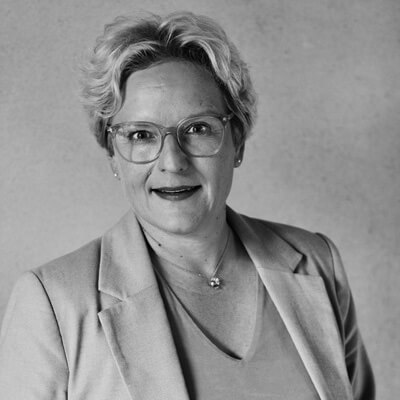
Almut Möller is Director for European and Global Affairs and head of the Europe in the World programme at the European Policy Centre.
The support the European Policy Centre receives for its ongoing operations, or specifically for its publications, does not constitute an endorsement of their contents, which reflect the views of the authors only. Supporters and partners cannot be held responsible for any use that may be made of the information contained therein.