


Serbian elections – the return of the political sphere
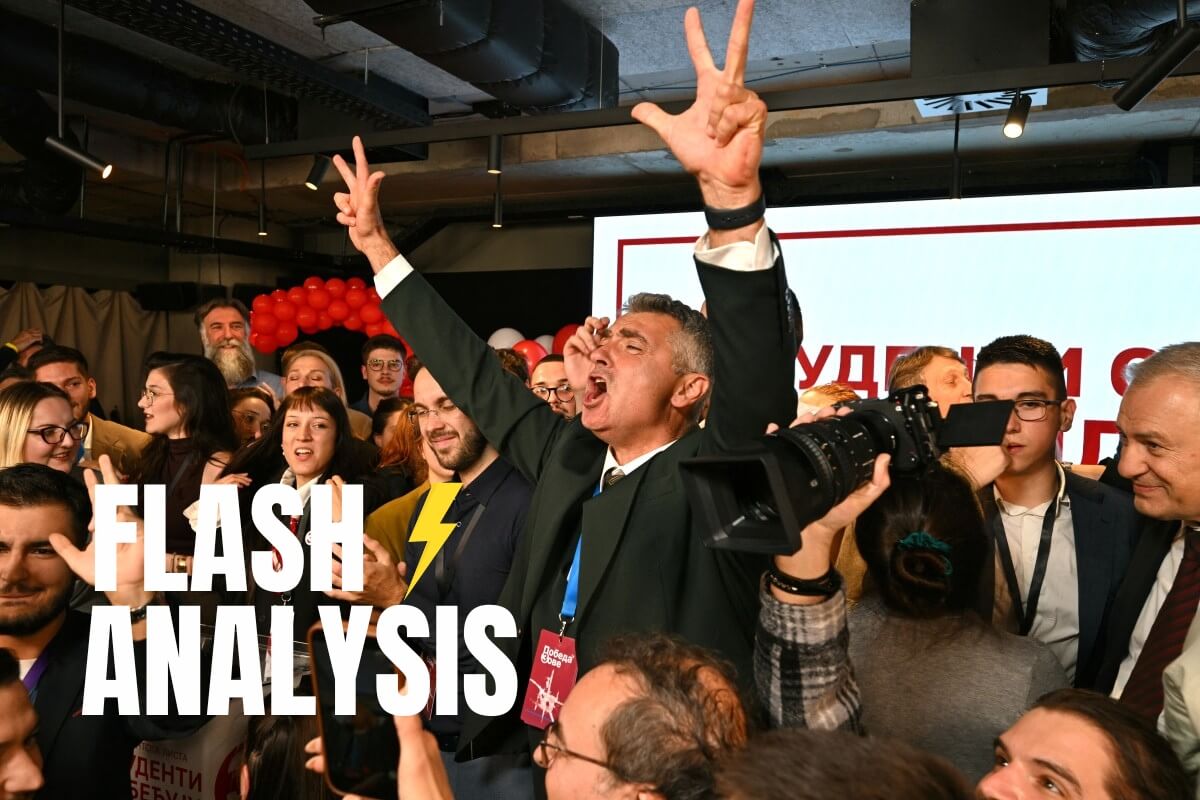

Serbia witnessed an unprecedented political U-turn after Aleksandar Vučić admitted defeat in the Serbian National Assembly elections on 25 October, bringing his 14-year rule to an abrupt end. While much of the population has welcomed the collapse of a regime marked by authoritarianism, corruption, clientelism and repression, it is important to recognise the magnitude of this change and its implications for EU-related political debates.
Vučić was defeated not by traditional political parties, but by a politically heterogeneous student movement. The movement includes progressives, centrists and the political right, with notable divisions over Kosovo, the future of Serbia’s EU accession process, and the country’s stance towards Russia. This diversity has been reflected both in disagreements within the movement itself and in broader public debates, as well as discussions within the EU about Serbia’s direction after Vučić. Notwithstanding the importance of a clear political programme, debates over specific policy agendas fail to recognise a more fundamental point: such discussions lose much of their value if there is no political and institutional framework capable of enabling meaningful political dialogue in the first place.
Since 2012, in response to sharp political divisions that often placed the country at odds with its Western partners, Serbia experienced a so-called “stabilocracy”, which effectively sidelined political pluralism while emphasising a managerial style of governance. Over time, Vučić’s regime effectively suspended key elements of the liberal democratic order and reached a point at which major international actors also viewed him with growing mistrust and disdain. The collapse of this stabilocratic model on 25 October clearly demonstrated that Serbian citizens will not indefinitely tolerate injustice and top-down decision-making. This outcome was also linked to growing scepticism and indifference towards the EU among the Serbian public, which correlated with the EU’s prolonged “loud silence” regarding the nature of Vučić’s regime.
Evidently, ignoring and suppressing public opinion is a risky long-term strategy, even in societies marked by deep political divisions. The challenge for the new government is not simply to resolve specific policy issues, but to create the political and institutional space in which different programmes and agendas can be debated inclusively. Only then can society gradually move towards addressing its longstanding dilemmas regarding Serbia’s foreign policy, borders and relations with its neighbours.
Serbia’s experience offers an important lesson for the EU and its member states: there are no shortcuts. Alongside the need for a clear and principled opposition to authoritarian styles of governance in Europe and beyond, it is essential to recognise that politics is a process. It requires engaging with those who hold different views and learning how to resolve outstanding disagreements, or at least how to disagree constructively. This is a long and unpredictable journey, yet it is one worth undertaking. Otherwise, the EU risks continuing to lose credibility both at home and abroad, while allowing populist forces to gain further ground at an even greater political cost in the future.
Stefan Šipka is the Head of Sustainable Prosperity for Europe and Senior Policy Analyst at the EPC
The support the European Policy Centre receives for its ongoing operations, or specifically for its publications, does not constitute an endorsement of their contents, which reflect the views of the author only. Supporters and partners cannot be held responsible for any use that may be made of the information contained therein.

